314Ah Cells Explained: How Deye GE-F Series Reaches 8,000+ Cycles
Jul 14,2026Deye GE-F128/F240/F256 Series Outdoor Battery Cabinet: Small-Scale C&I ESS Guide
Jul 14,2026Sub-10ms STS Switching Explained: MS-MPPT400-2 vs MS-TS500-2
Jul 14,2026Beyond Storage: How MS-EMS Turns Arbitrage and Demand Response Into Revenue
Jul 14,2026Keeping Cells Under 35°C: MS-GS215-2H3's Path to 6,000 Cycles and 70% EOL
Jul 14,2026Content
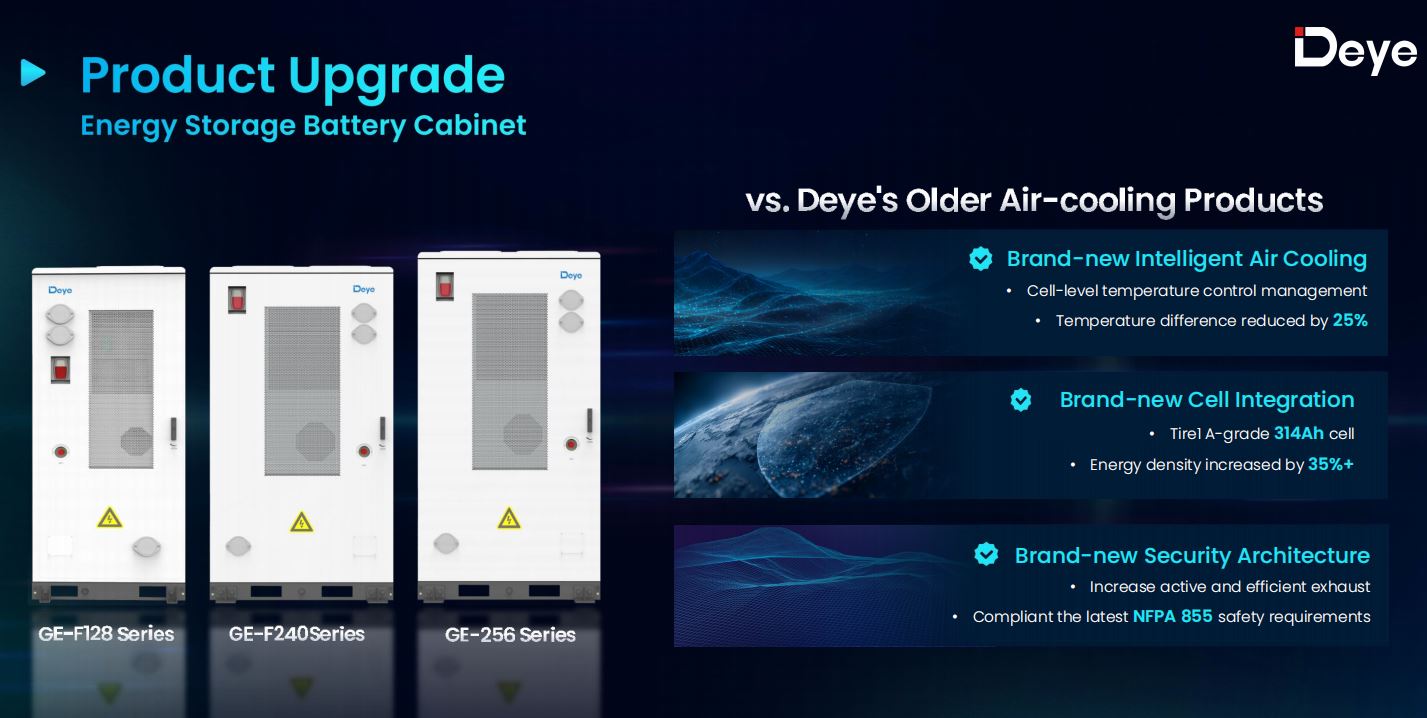
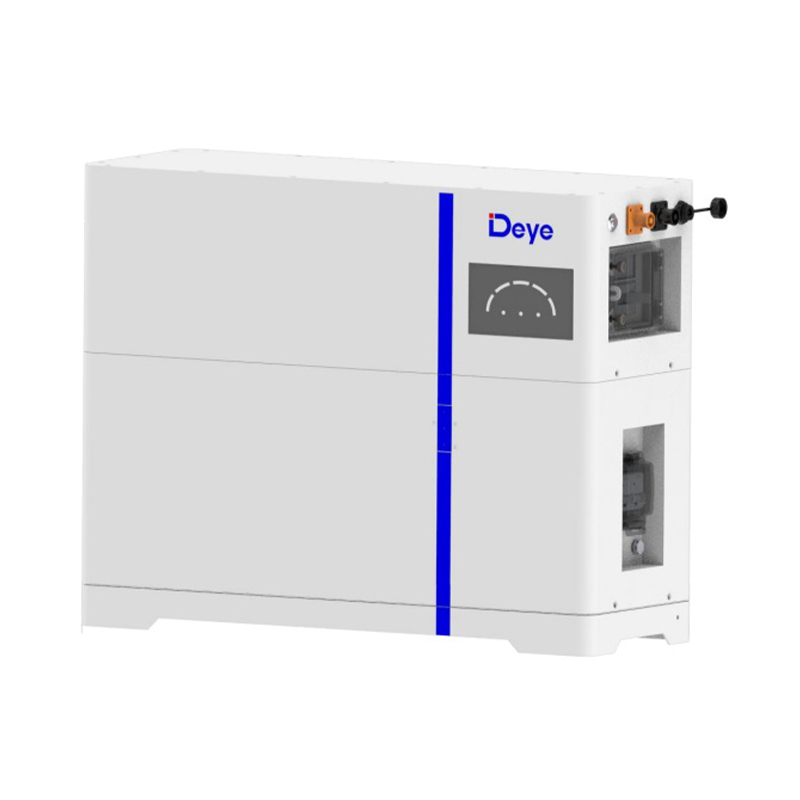
Most commercial and industrial sites don't need a megawatt-scale battery yard. A factory running peak shaving, a mall offsetting demand charges, or a farm backing up critical loads typically needs somewhere between 100kWh and 300kWh — enough to matter, not enough to justify a liquid-cooled containerized system with its own maintenance crew. That gap is exactly where the Deye GE-F128/F240/F256 series outdoor battery cabinet is positioned, as part of a broader family of small-scale C&I ESS solutions.
Built around a 314Ah lithium iron phosphate cell and paired with Deye's 30–125kW hybrid inverters or modular PCS units, the GE-F series compresses a full six-dimensional safety architecture, smart air cooling, and up to 10-unit parallel expansion into a cabinet that installs without wall-drilling or load-bearing structural work.

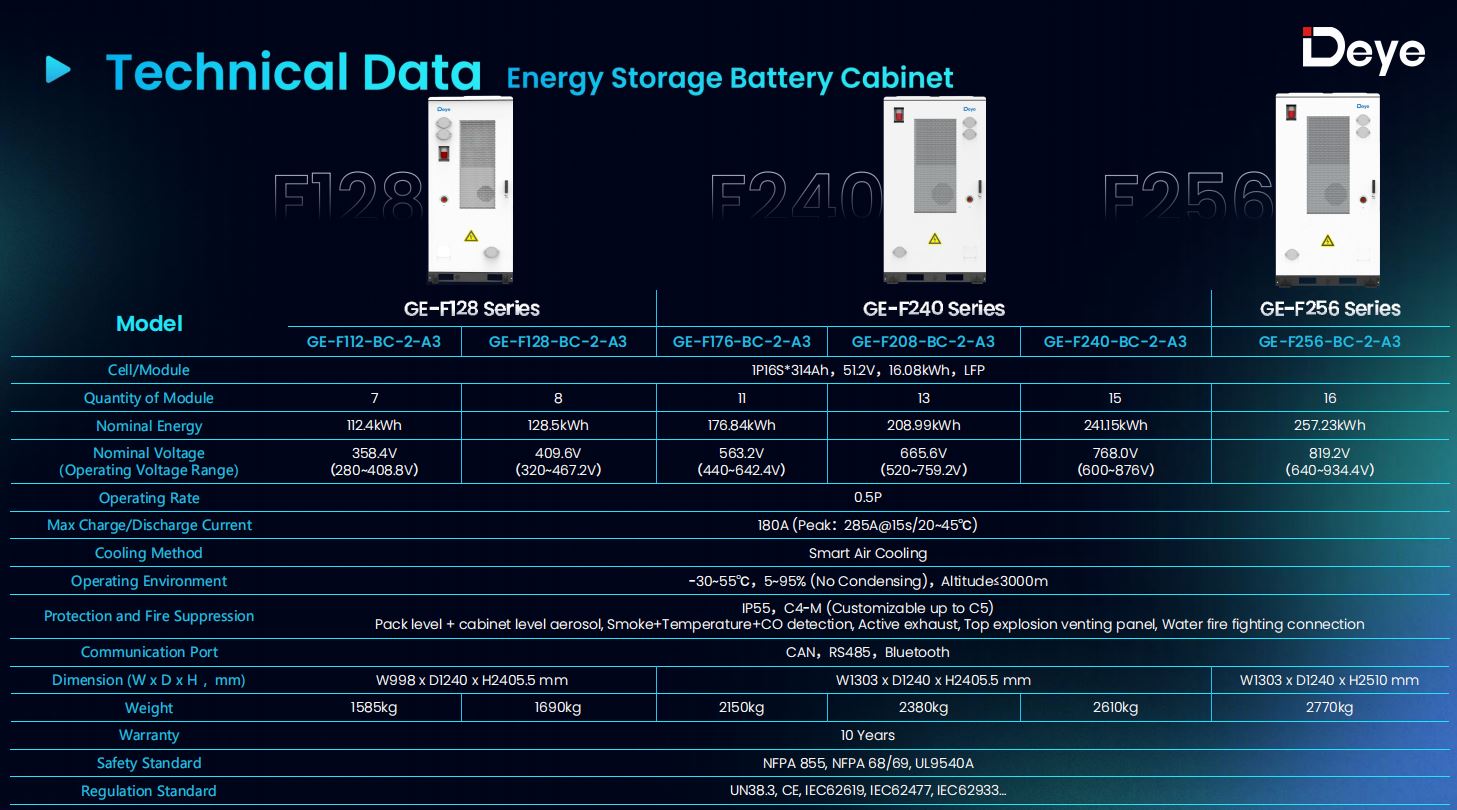
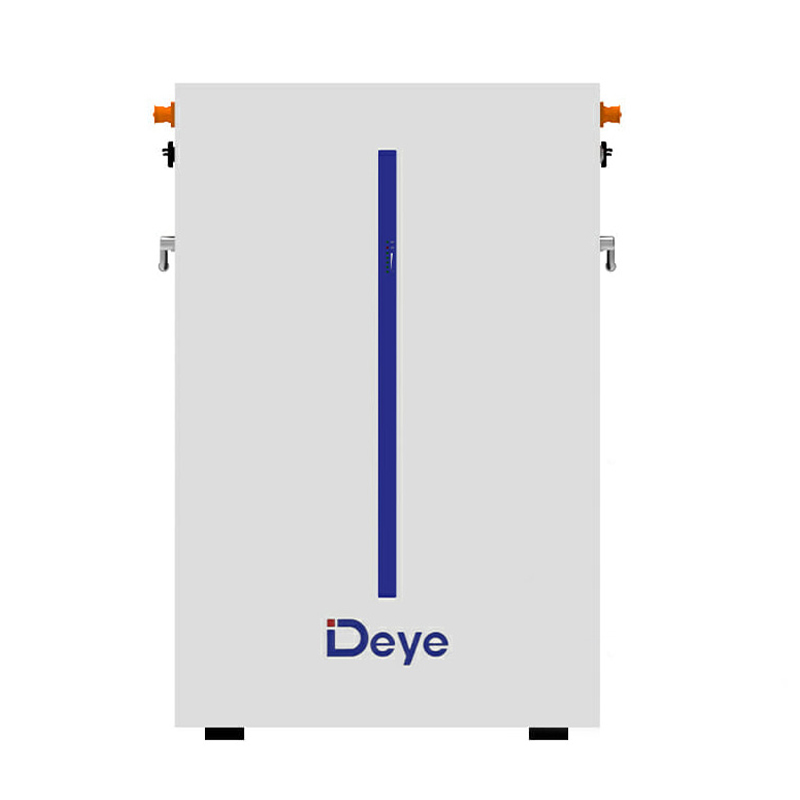
The series covers three physical cabinet sizes, each offered in multiple energy configurations built from the same 16.08kWh battery module:
Every variant shares the same underlying cell — a 1P16S 314Ah LFP pack rated at 51.2V — which keeps the accessory ecosystem, communication protocol, and safety systems consistent across the entire lineup. Operating voltage ranges from 280V on the smallest configuration up to 934.4V on the GE-F256, and every cabinet supports a maximum charge/discharge current of 180A with a peak of 285A for 15 seconds.

The move from the previous generation's 100Ah cell to a 314Ah cell isn't just a capacity bump. Fewer, larger cells mean fewer pack-level connections, fewer potential failure points, and a simpler internal wiring harness — which is a big part of why unit-price cost on the GE-F128 series drops by roughly 25% compared to Deye's older air-cooled cabinets, and around 15% on the larger GE-F240/256 platform.
Cycle life also improves meaningfully. The 314Ah cell is rated for 8,000 cycles at 0.5C and 25°C to 70% end-of-life, up from 6,000 cycles on the prior-generation cell, with no derating at 45°C and a cell-to-cell temperature difference held to within 6°C — a 25% tighter spread than the older design managed.
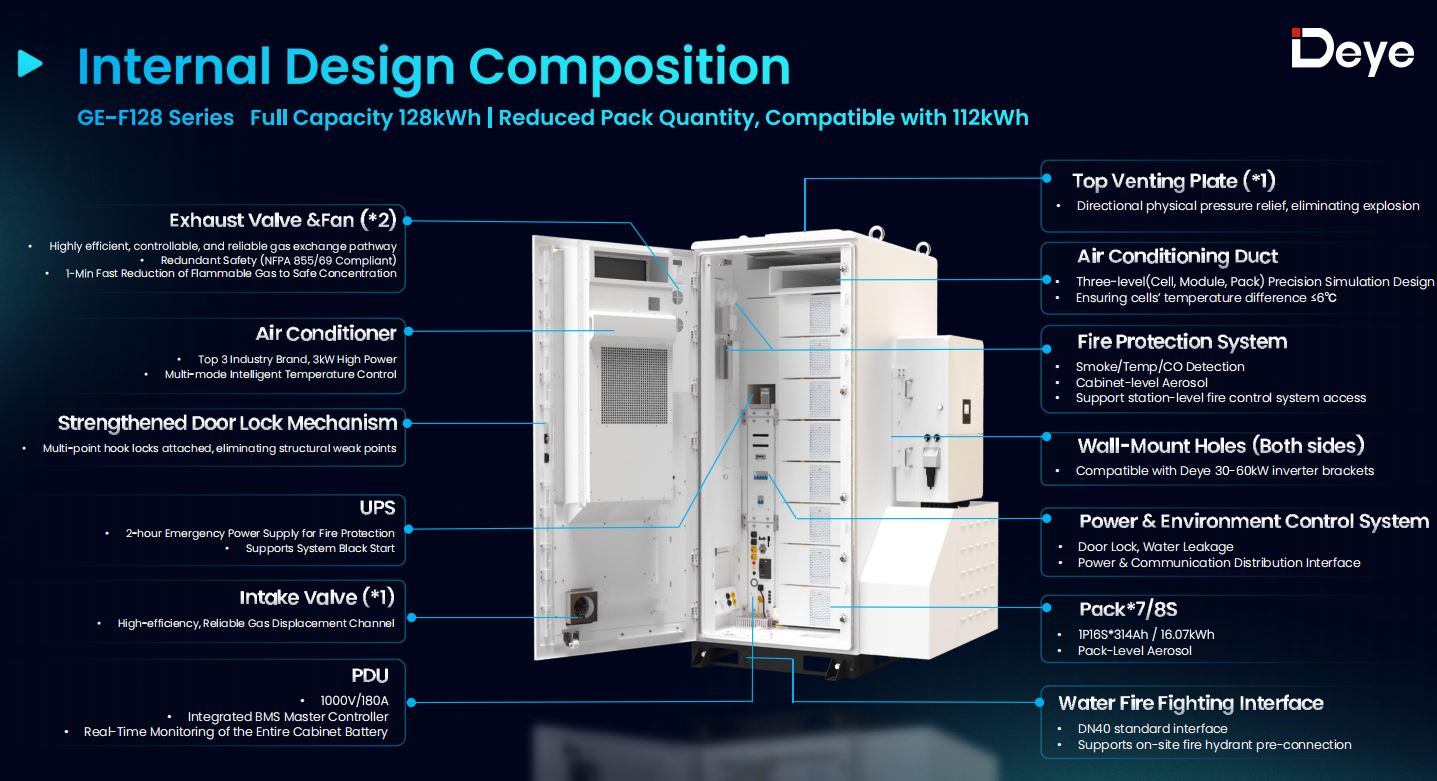
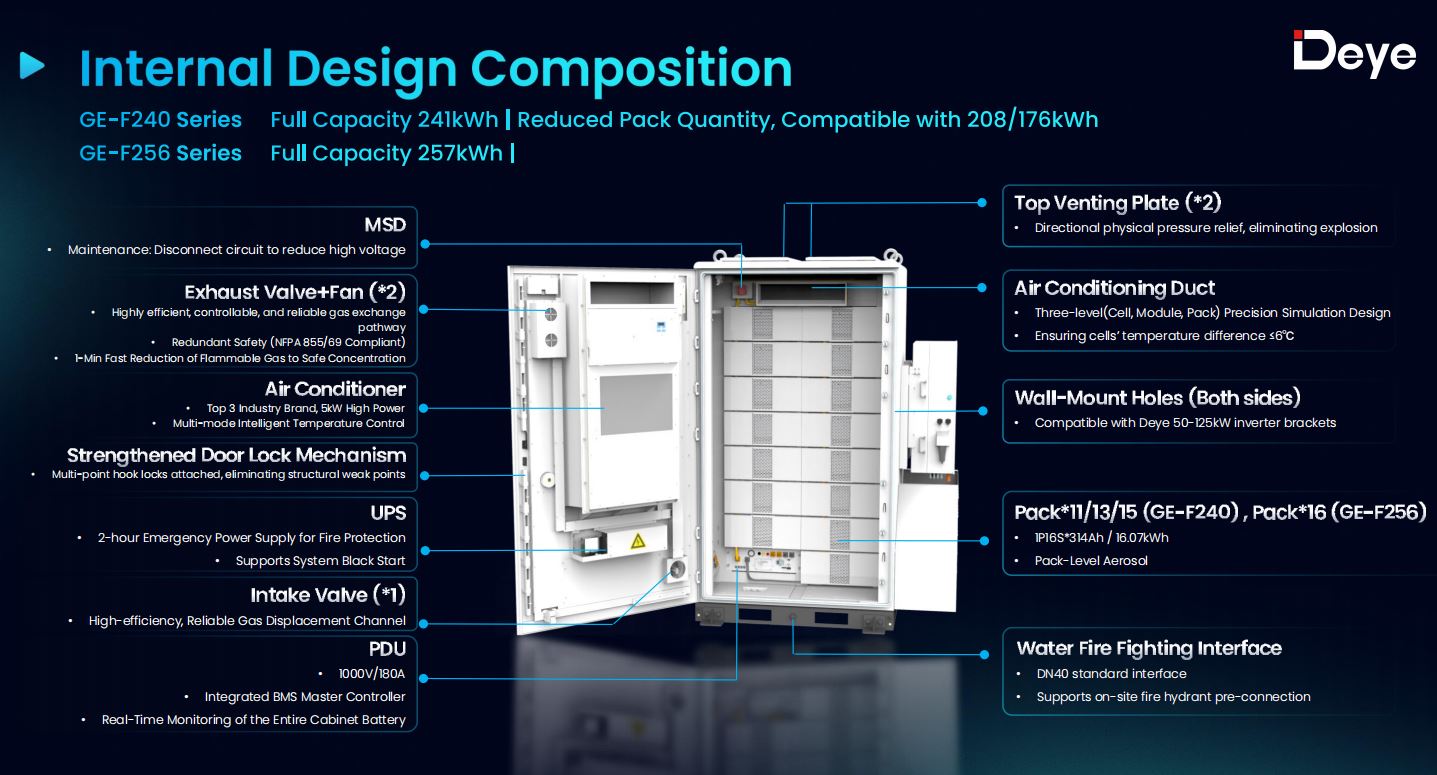
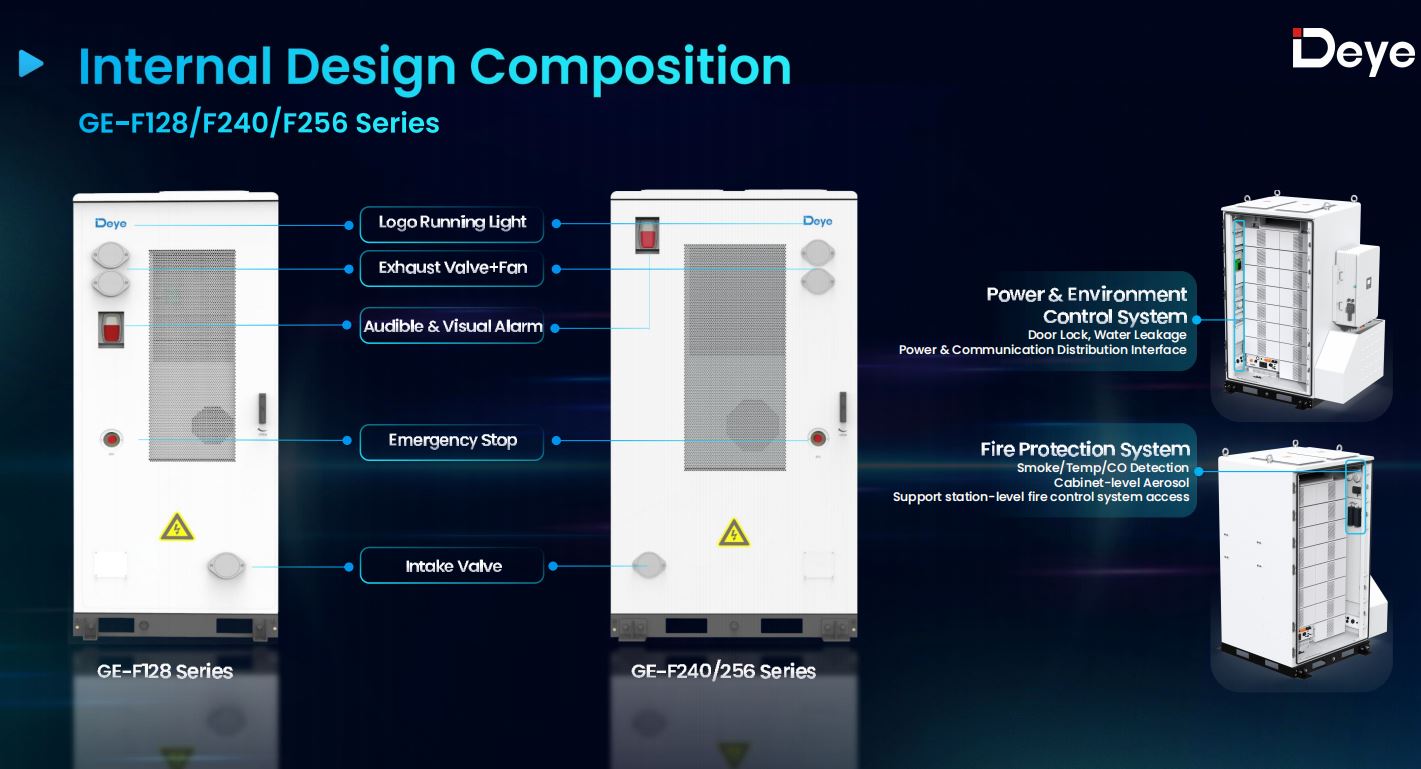
Battery cabinets that sit outdoors next to a loading dock or a factory wall don't get the luxury of a dedicated fire-rated room, so the safety design has to do more work on its own. Deye structures this into six layers, each addressing a different failure mode:
One detail worth flagging for anyone comparing spec sheets: the explosion venting sits on top of the cabinet rather than at the rear. That matters in back-to-back or side-by-side installations, where a rear-mounted vent panel would either be blocked or require extra clearance the site may not have. The cabinet also carries a 2-hour UPS-backed emergency power supply so the fire protection system keeps running even if the main power feed is interrupted, and it complies with NFPA 855, NFPA 68/69, and UL9540A.


Air cooling has a reputation for struggling in hot climates, which is usually where the "liquid-cooling only for anything serious" argument comes from. The GE-F series pushes back on that with a three-level (cell, module, pack) precision-simulated air conditioning duct, driven by a top-tier industry-brand air conditioner rated at 3kW on the GE-F128 and 5kW on the GE-F240/256.
The result is no derating up to 45°C ambient temperature — a threshold most air-cooled competitors either can't hit or only hit with a wider cell temperature spread. Deye's own comparison data puts several rival air-cooled cabinets at 40°C before derating kicks in, with temperature differentials of 8–10°C versus the GE-F series' 6°C. For a rooftop or loading-dock installation in southern Europe or the Middle East during summer, that gap is the difference between full-rated output and a system quietly throttling itself in the afternoon.
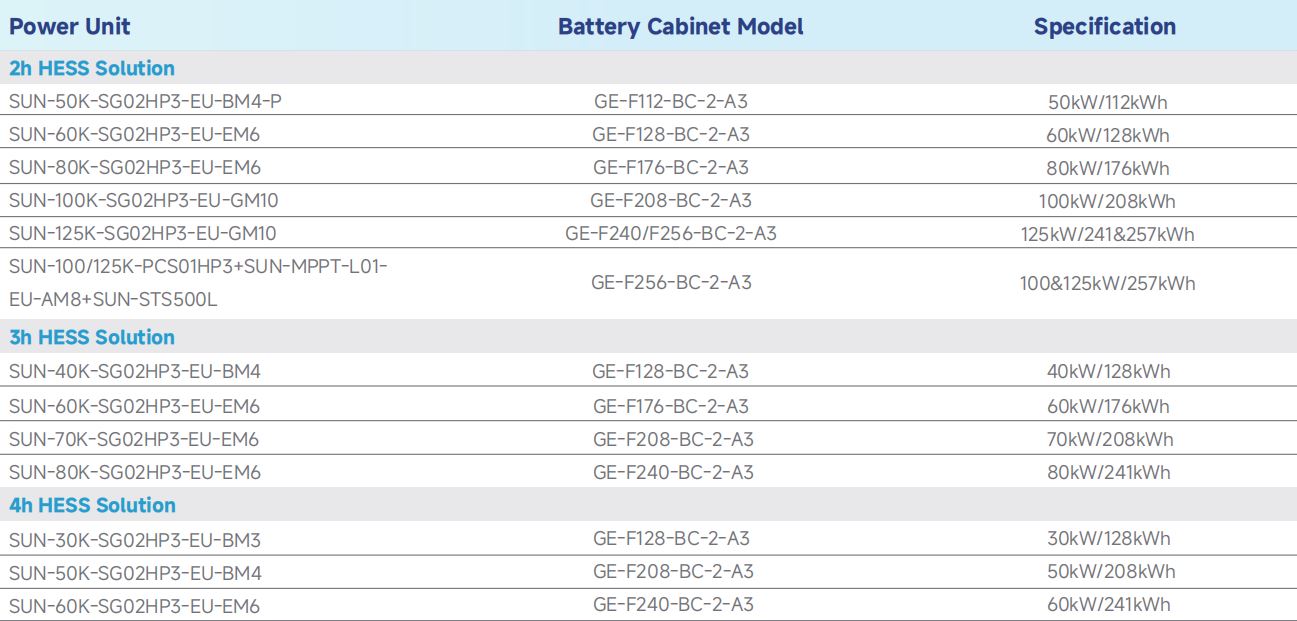
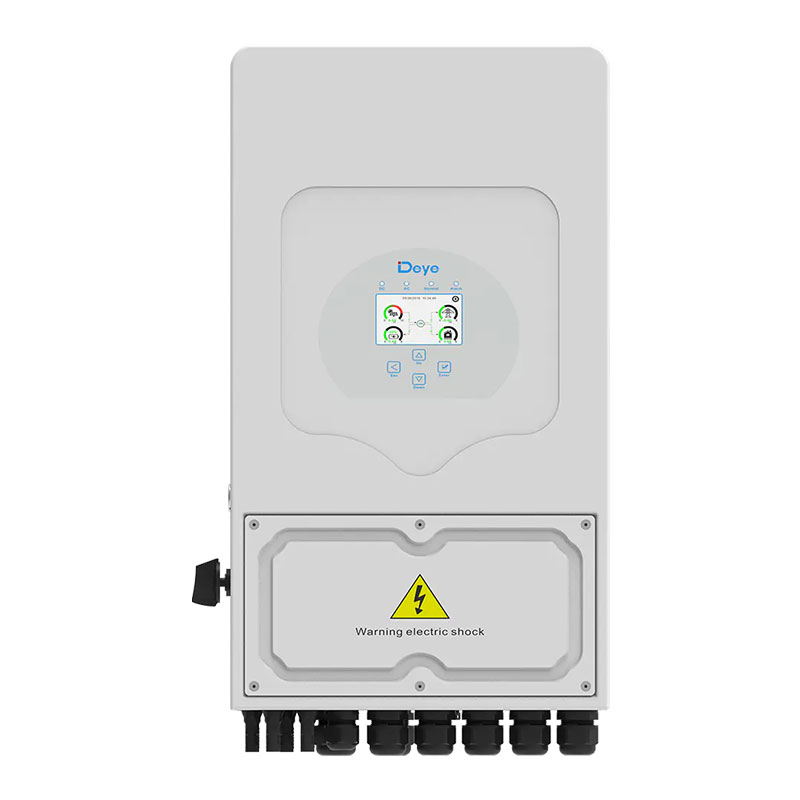
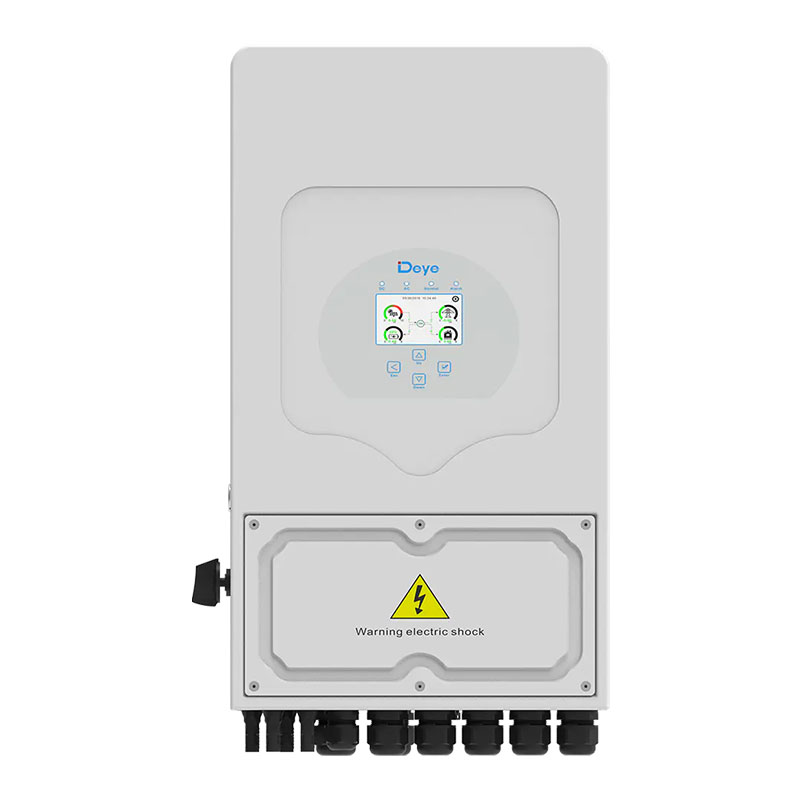
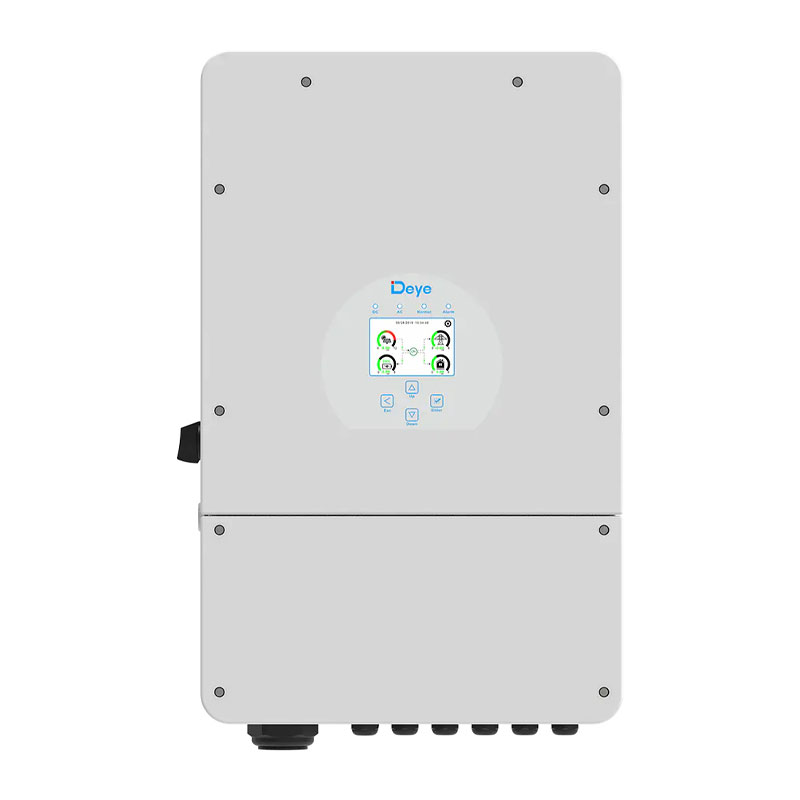
The GE-F series isn't sold as a single fixed bundle — it's a menu. Depending on desired discharge duration (2h/3h/4h) and total power, the same cabinet can pair with different Deye three-phase high-voltage hybrid inverters, or, for the larger GE-F240/256, with a modular PCS+MPPT+STS stack:
A single SUN-60K three-phase hybrid inverter matched to a GE-F128 outdoor battery cabinet, for example, delivers a 60kW/128kWh 2-hour system. Swap to a SUN-30K unit against the same cabinet and it becomes a 30kW/128kWh 4-hour configuration — same battery hardware, different duty cycle, selected purely by matching the inverter's rated current to the desired discharge window.

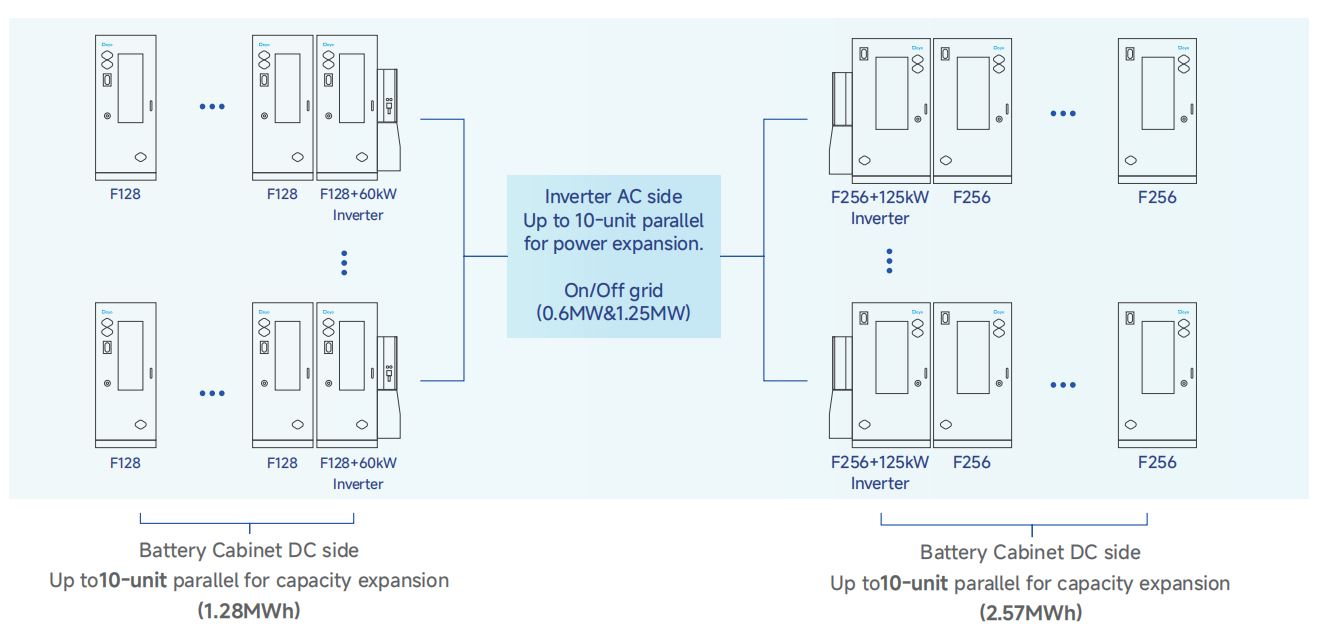
A single GE-F256 cabinet tops out around 257kWh, but most C&I projects grow over time, or start larger than one cabinet can cover. On the DC side, up to 10 cabinets can be paralleled per stack, which brings the GE-F128 series to 1.28MWh and the GE-F240/256 series to 2.41–2.57MWh — enough to bridge into the territory covered by Deye's dedicated large-scale BESS systems for projects that outgrow a modular cabinet approach entirely. On the AC side, Deye's HP3-series inverters support paralleling up to 10 units, pushing on/off-grid power capacity to 0.6MW or 1.25MW depending on the inverter model.
The inverter design also supports two independent battery inputs, which means cabinets of different specifications — say, an existing GE-F128 alongside a newly added GE-F240 — can sit on the same power unit rather than forcing a full fleet replacement when capacity needs change.

Site prep is where a lot of the total installed cost of a battery system actually hides — concrete pads, wall reinforcement, custom brackets. The GE-F cabinet's outer wall has preset inverter mounting positions on both sides, so the inverter bracket attaches directly to the cabinet rather than requiring a separate wall-mount survey. Deye offers three lifting methods depending on inverter weight and site access: crane/forklift hoisting for 100–125kW units (~150kg), a simple chain-hoist lift for 60–125kW units, and manual lifting for 30–50kW units (~80kg).
Once commissioned, the system is managed either locally over Bluetooth/USB or remotely through the Deye Cloud platform, which handles firmware upgrades, dynamic-tariff-aware charge/discharge scheduling, and real-time monitoring across more than 30 languages.
None of this is aimed at utility-scale storage — Deye is explicit that liquid cooling remains the better call above roughly 300kWh or in high-C-rate applications. What the GE-F128/F240/F256 series targets is the space just below that: factories, malls, farms, and off-grid island microgrids running PV-BESS, PV-BESS-diesel, or straight BESS configurations, where a full walk-in containerized system would be overkill but a residential-scale battery wouldn't cover the load. For comparison, projects that need a fully packaged rather than modular approach can look at Deye's battery energy storage systems for C&I projects, or, for smaller single-cabinet sites, the all-in-one hybrid energy storage inverters.
For an installer or system integrator evaluating a 100–300kWh C&I project, the practical questions come down to expected ambient temperature, required discharge duration, and whether the site is likely to expand later. The GE-F series answers all three without forcing a choice between them — no-derating air cooling up to 45°C, a duration set by inverter selection rather than a fixed hardware configuration, and a parallel-expansion path built in from day one.
←
314Ah Cells Explained: How Deye GE-F Series Reaches 8,000+ Cycles
→
Sub-10ms STS Switching Explained: MS-MPPT400-2 vs MS-TS500-2
+31610999937
[email protected]
De Werf 11, 2544 EH The Hague, The Nederland.
WhatsApp: +1 (917) 257 2995/Copyright © 2023 Uni Z International B.V. VAT: NL864303440B01 All Rights Reserved
Solar Energy Storage System Solutions and Products