-
 FAST SHIPPING
-
 COMPETITIVE PRICE
-
 EXCELLENT AFTER-SERVICE
 FAST SHIPPING
COMPETITIVE PRICE
EXCELLENT AFTER-SERVICE
FAST SHIPPING
COMPETITIVE PRICE
EXCELLENT AFTER-SERVICE
Content
In the UK, the Local Power Plan has moved local and community energy from a niche activity into a more structured investment pathway. For buyers, developers, local authorities, EPCs, and community organisations, the practical message is clear: 2026 is no longer just about policy discussion, but about building bankable local projects with clearer routes to funding, delivery, and ownership.
From our perspective as a solar and energy storage manufacturer and supplier, this matters because project selection is becoming more disciplined. Buyers are no longer asking only whether a site can host solar. They are asking whether the system can support long-term savings, local participation, simpler operations, and a procurement structure that can stand up to grant, loan, or blended-finance scrutiny.
The policy direction is commercially meaningful. The UK government and Great British Energy have framed the plan around up to £1 billion of support, with a goal to support at least 1,000 community and local energy projects by 2030. The plan also goes beyond grants by pointing to loans, capability support, business-model development, and regulatory work on shared ownership and local power use. That combination changes the profile of viable projects: buyers who prepare early with sound technical specifications and practical delivery plans should be in a much stronger position than buyers who wait for funding windows to open before doing any groundwork.
The strongest opportunities are likely to come from sites where daytime demand, roof or land availability, and local benefit can be demonstrated clearly. In practice, that usually means public and semi-public assets such as leisure centres, libraries, schools, health sites, community halls, depots, and mixed public-service estates. These sites are easier to justify because the energy savings are visible, the social case is stronger, and the ownership story is easier to explain to stakeholders.
We also expect growing interest in projects that combine generation with flexibility. A plain rooftop PV scheme can still be attractive, but projects become much more persuasive when buyers can show how solar, storage, smart controls, and in some cases EV charging or load shifting work together. The Local Power Plan places real emphasis on repeatable business models, and repeatability usually comes from systems that are operationally simple, modular, and measurable.
That is why many buyers are no longer procuring equipment in isolation. They are shaping a project platform that can be replicated across multiple locations with only limited redesign.
When local energy projects move from concept to procurement, weak technical scoping is one of the most common reasons budgets drift or delivery slows down. Our advice is to define the system around operational outcomes first and component choice second. In other words, start with the load profile, site restrictions, export conditions, resilience requirements, and operating model. Then specify the equipment stack.
In a policy environment that is trying to scale local energy, projects that are hard to maintain or hard to explain financially will struggle. We therefore recommend that buyers look for equipment combinations that are proven, modular, and straightforward for installers and operators to manage over time.
A first-phase project does not need every advanced feature on day one. In many cases, the better commercial choice is a scalable architecture that delivers immediate savings now and leaves room for storage expansion, control upgrades, or fleet-level aggregation later. A project that is simple enough to commission smoothly is often more valuable than one that looks ambitious on paper but is difficult to finance or operate.
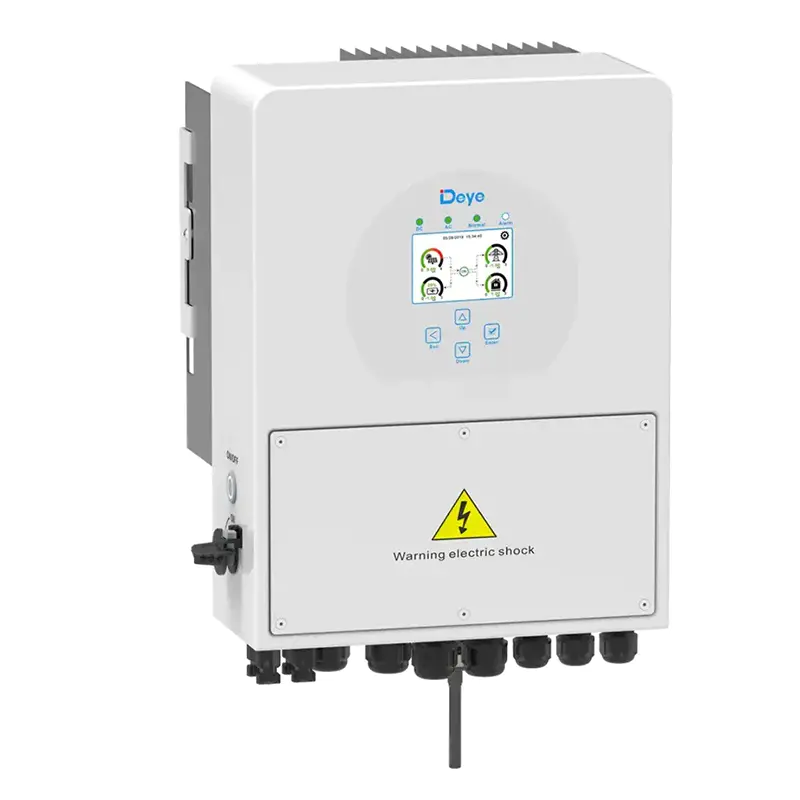
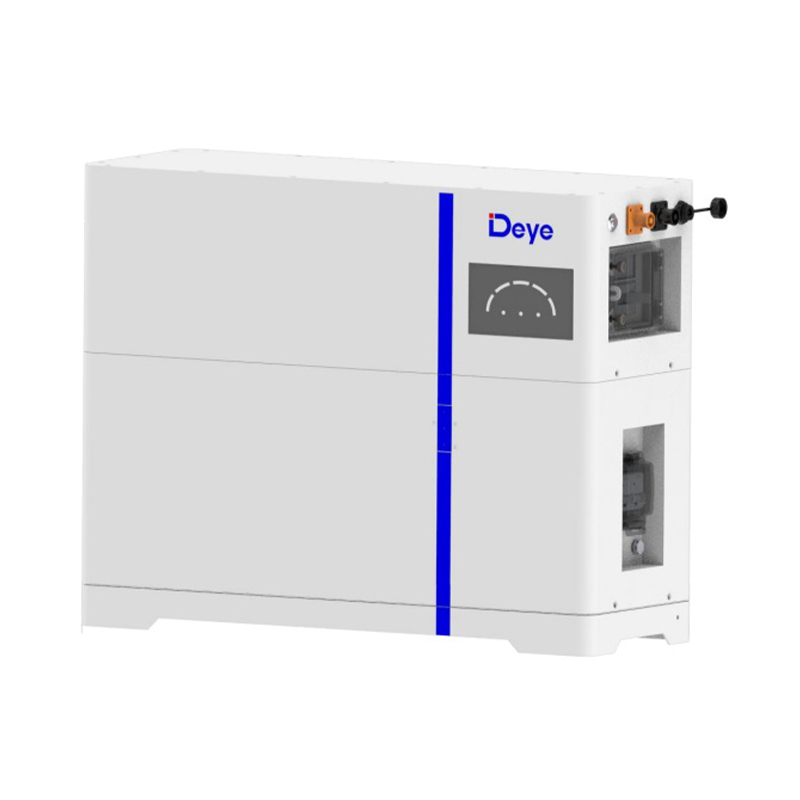
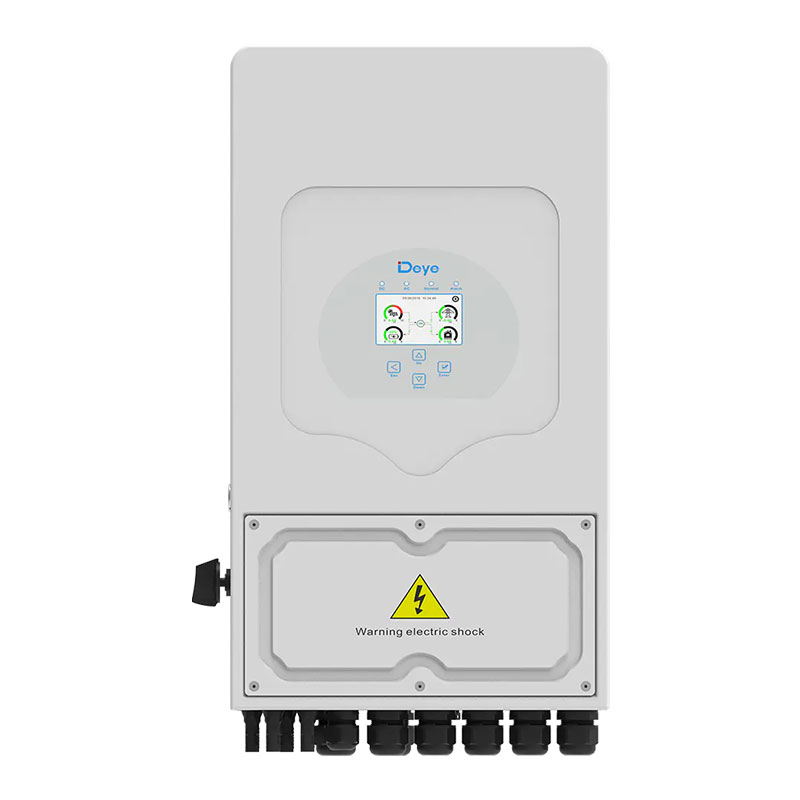
For readers who want to review our broader product range, we offer related solutions on our solar PV and energy storage products page. In summary, our range covers PV panels, hybrid and grid-tied inverters, solar storage batteries, residential and commercial energy storage solutions, mounting systems, accessories, and integrated photovoltaic kits, which helps buyers source compatible system elements from one supplier rather than piecing together a fragmented bill of materials.
Not every Local Power Plan project will use the same hardware mix, but the commercial logic is usually similar. Buyers need a generation layer, a conversion layer, a storage or flexibility layer where justified, and a physical installation approach that can be replicated safely across sites.
| Project need | Typical technical response | Commercial reason it matters |
|---|---|---|
| Reduce daytime electricity spend | Rooftop or ground-mounted PV with correctly sized inverter capacity | Creates the clearest and fastest savings case |
| Increase on-site self-consumption | Battery storage integrated with hybrid control logic | Improves value capture from local generation |
| Support multi-site rollout | Standardised inverter, battery, and mounting specifications | Reduces engineering variation and procurement friction |
| Improve operating visibility | Monitoring, accessory, and control integration | Supports reporting, maintenance, and investor confidence |
| Prepare for future flexibility services | Storage-ready or hybrid-ready architecture | Preserves upgrade options without full redesign |
From a supplier standpoint, the key is not to oversell complexity. The strongest projects typically use components that installers know well, that asset owners can maintain without difficulty, and that can be specified again for the next site with minimal deviation.
Battery storage is not mandatory for every project, but it is becoming much harder to ignore in local energy planning. For many public and community assets, the value of solar alone is limited if peak generation and peak demand do not align. Storage improves the economics by allowing more of the locally generated electricity to be used on site or used at a more valuable time.
This matters even more where buyers want to show community impact rather than only theoretical carbon savings. A system that visibly reduces a building’s dependence on imported electricity during expensive periods is easier to defend in board papers, grant applications, and stakeholder communications.
Because the Local Power Plan is explicitly interested in repeatable and investable local energy models, storage-ready project design is increasingly a commercial decision, not just a technical add-on.
As more UK buyers enter local energy procurement, we expect some repeat mistakes to appear. Most of them are preventable, but only if the procurement process is structured properly from the beginning.
We always encourage buyers to remember that policy-backed demand can tighten supply chains quickly. When funding momentum arrives, the most prepared buyers usually win not because they spend more, but because they have already standardised their technical assumptions, procurement criteria, and deployment sequence.
For organisations that want to move quickly, the smartest path is usually staged rather than rushed. The Local Power Plan points toward grants, loans, capability support, and more standardised delivery structures. That means the buyers who prepare technical and commercial groundwork now will be much better placed when individual programmes and funding routes become available.
Our view is straightforward: the Local Power Plan 2026 UK market will reward buyers who combine policy awareness with disciplined equipment and procurement decisions. The projects most likely to progress are not necessarily the biggest. They are the ones with clear site logic, repeatable specifications, sensible commercial controls, and a delivery structure that local stakeholders can understand and support.
←
Technical Compatibility and Application Guide for Three-Phase Energy Storage Systems
→
Your Inverter’s Smart Features – Are You Using Them Right?
 +31610999937
 [email protected]
 De Werf 11, 2544 EH The Hague, The Nederland.WhatsApp: +852 65283075
Copyright © 2023 Uni Z International B.V. VAT: NL864303440B01 All Rights Reserved
 Solar Energy Storage System Solutions and Products

 0
0


 italiano
 Polskie
 Nederlands
 Deutsch
 Français
 Español
 Український