SG06LP3 vs SG05LP3: What Actually Changed in Deye’s Latest Low-Voltage Three-Phase Hybrid Inverters
Mar 02,2026Your Inverter’s Smart Features – Are You Using Them Right?
Mar 01,2026Deye Inverter: Scheduled Work Mode Professional Guide
Feb 28,2026Why Your Deye Battery Wastes Grid Power — And How to Fix It
Feb 28,2026Hawaii Solar Incentives 2026: Complete Guide for Homeowners
Feb 28,2026SG06LP3 vs SG05LP3: What Actually Changed in Deye’s Latest Low-Voltage Three-Phase Hybrid Inverters
A field-focused comparison of design, interfaces and firmware behaviour for European residential and light-commercial installs.
28 February 2026 | Technical Brief

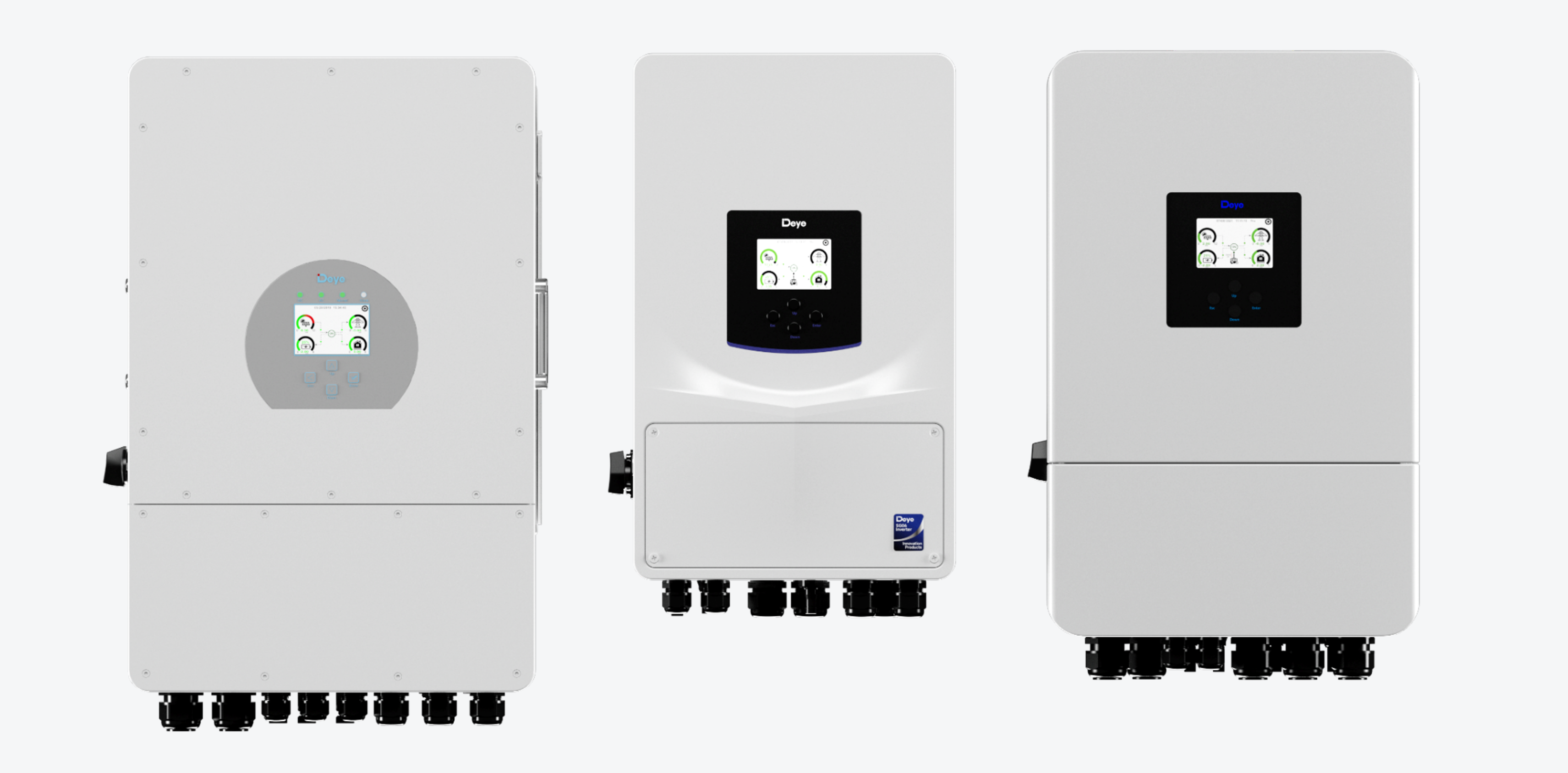
Hybrid inverters tend to be marketed as a list of headline numbers, yet most day-to-day questions from installers are more practical: how loud is it, what has changed on the wiring side, and which settings matter when the site is running on a generator, a weak grid connection, or no battery at all. Deye’s SG06LP3 series arrives as the next step on from the widely deployed SG05LP3 range, targeting the 3–8 kW segment and bringing a set of refinements that are easiest to understand from the inside out.
The SG05LP3 family covers 3–12 kW three-phase, low-voltage (48 V-class) hybrid inverters. SG06LP3 narrows the focus to 3–8 kW. That matters, because many European homes with three-phase service still land in the 6–8 kW range, where acoustic comfort and clean installation details can matter as much as maximum power.
|
Area |
SG06LP3 (3–8 kW) |
SG05LP3 (3–12 kW) |
Why it matters on site |
|
Cooling / noise |
Only the 8 kW model uses an external fan; 6 kW and below rely on natural cooling via the heatsink. |
All models use an externally controlled cooling fan (temperature-sensed, variable operation). |
Fewer moving parts and lower noise for common 3–6 kW installs; fan-cooled designs may be preferable where sustained high output meets high ambient temperatures. |
|
Front panel & indicators |
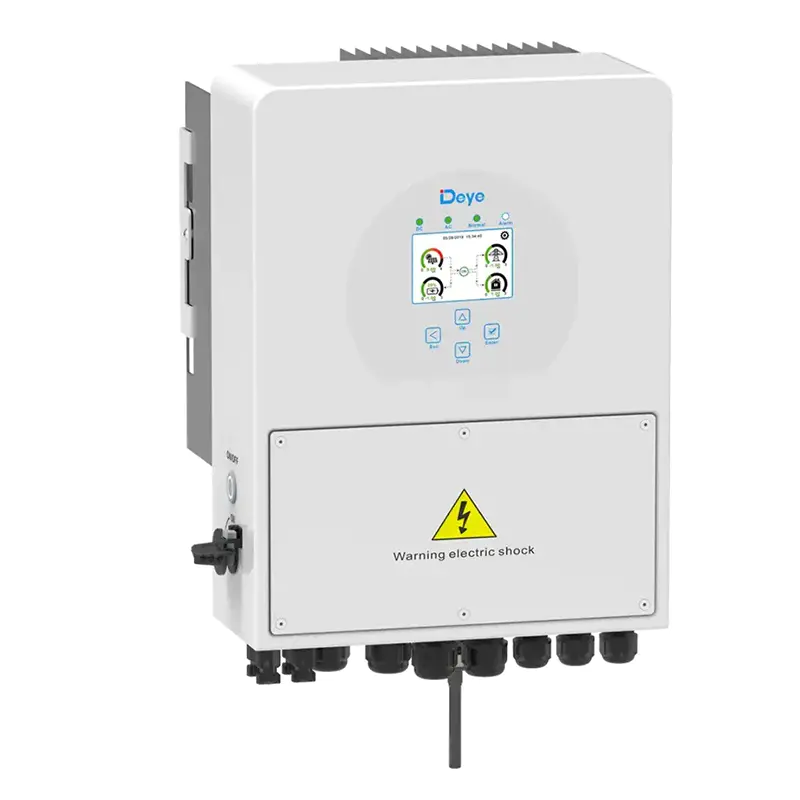
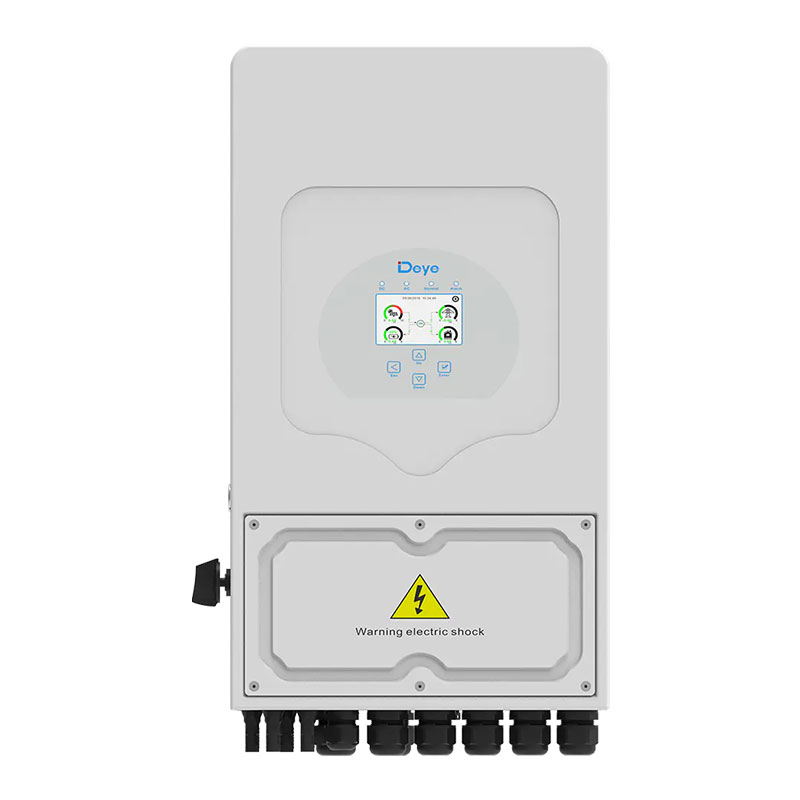
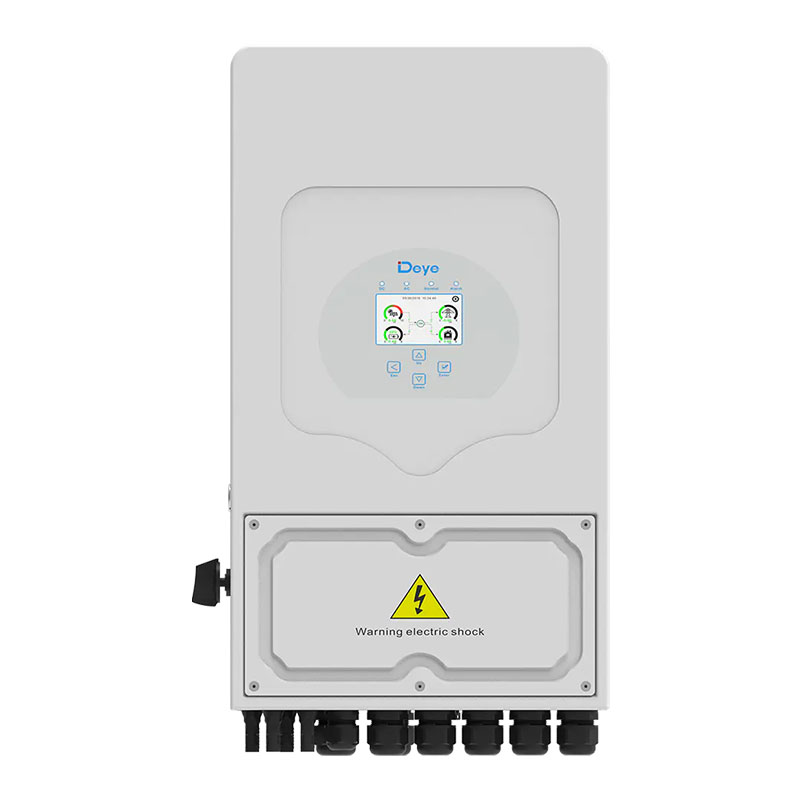
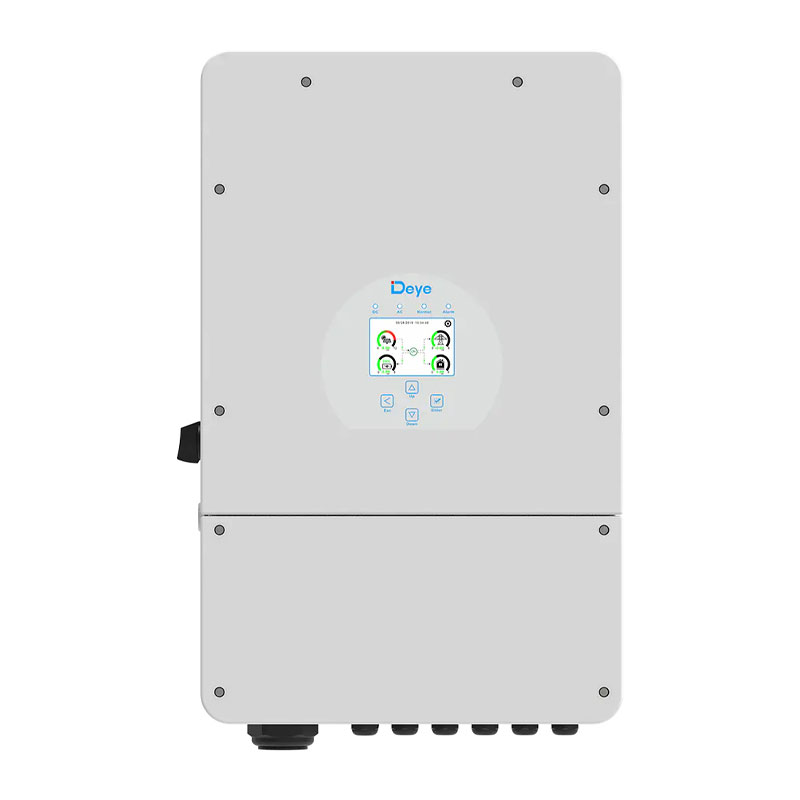
Black front panel; rubberised buttons; the former DC/AC/Normal/Alarm LEDs are removed, with the brand mark acting as the status indicator. |
Grey front panel on earlier units; discrete status LEDs are present. |
Simpler visual language, fewer apertures and potential ingress paths; slightly different commissioning ‘muscle memory’ for technicians used to the older LED set. |
|
Data logger / monitoring |
The external data-logger interface is removed and monitoring is integrated internally. |
Common deployments used an external logger interface. |
Less clutter at the bottom of the unit and fewer external parts to fit or replace. |
|
Grid-control input (Germany) |
Adds D+ / D- control input intended for applications aligned with EnWG §14a, enabling a controlled limit on grid import (commonly referenced as 4.2 kW). |
No dedicated D+ / D- interface highlighted in the SG05LP3 generation. |
Relevant for German projects where controllable consumption / import limiting is part of the compliance conversation with the DSO. |
|
Additional sensing |
Adds a dedicated input for PV string open-circuit detection (port located beside the D+ / D- terminals). |
Not highlighted as a dedicated input in SG05LP3 generation. |
Faster fault localisation when a string is disconnected, isolator is left open, or a connector is compromised. |
|
Meter port power |
Meter port provides DC 5 V supply to power a LoRa ‘smart TX’ node; supply can be enabled/disabled via a nearby DIP switch. |
Meter port focused on communications rather than powering an external LoRa node. |
Cleaner integration for wireless meter / gateway scenarios—one less PSU and one less point of failure. |
|
Internal PCB architecture |
Board count is reduced; several functions are integrated into fewer assemblies, with a tighter internal layout. AFCI remains an optional variant. |
More separate boards for functions that are now consolidated in SG06LP3; AFCI remains optional. |
A more integrated build can improve manufacturability and serviceability, while keeping optional safety features as a configuration choice. |
The headline change visible to anyone unboxing an SG06LP3 is the enclosure and front-panel redesign. The housing borrows from the earlier SG04LP3 form factor while keeping the secure latch-style approach associated with SG05LP3. More importantly for end users, the cooling strategy shifts: in the SG06LP3 line, only the 8 kW unit is fitted with an external fan, while 6 kW and below rely on natural convection through the heatsink.
For indoor installations—utility rooms, basements, small plant cupboards—that change can translate into a noticeably calmer acoustic profile. It also removes a wear component on the most common power classes. Installers should still treat cooling as a system-level topic: placement, clearances and temperature rise in enclosed spaces remain decisive, and any inverter will derate if it cannot shed heat.
European grid codes are moving quickly, and much of the SG06LP3 story is about control and observability rather than raw power. The most explicit addition is the D+ / D- interface aimed at Germany’s §14a framework. The policy intent is that network operators can temporarily curb grid loading while maintaining a guaranteed minimum supply level—often referenced as 4.2 kW for a single controllable device connection.
On the inverter side, SG06LP3’s D+ / D- input is presented as a way to accept an external command and limit grid import accordingly. For projects in Germany, it gives planners and electricians a clearer hardware endpoint for a conversation that otherwise gets pushed into ‘settings’ and ‘workarounds’.
Two further interface refinements also focus on field realities. First, a dedicated PV string open-circuit detection input supports quicker diagnostics when a string is unplugged or isolated. Second, the meter port is no longer ‘data only’: it can provide a 5 V supply for a LoRa smart TX node, controllable via a DIP switch. That is a small detail, but it removes the need to mount and power an additional device in the cabinet.
SG06LP3 reduces the number of internal PCB assemblies compared with SG05LP3 by consolidating functions that previously lived on separate boards. In Deye’s comparison notes, examples include integrating the arc-fault (AFCI) option board, DRM functions and connection board into a more unified assembly—while still keeping AFCI as an optional configuration.
From a service perspective, this kind of integration usually aims to simplify harnessing and reduce potential points of assembly error. It can also make the internal layout more compact, which is consistent with SG06LP3’s smaller physical envelope in the 8 kW class.
Hardware refinements are only half the picture. SG06LP3 also introduces a handful of control behaviours that are worth calling out, because they affect how a system behaves in edge cases—particularly when time-of-use schedules are active, when a generator is used, or when the site is running without a battery.
Key firmware-side additions and clarifications highlighted for SG06LP3 include:
For distributors and EPCs, SG06LP3 is best read as a refinement of the SG05LP3 platform aimed at the heart of the residential three-phase market. The decision is therefore less about feature parity and more about fit.
SG06LP3 is the stronger choice when:
SG05LP3 remains compelling when:
If your team has spent years commissioning SG05LP3 units, most of the workflow remains familiar. The following quick checks help avoid 'surprises' when swapping to SG06LP3 on an otherwise similar site.
Model codes, certificates and grid approvals are country-specific in Europe. For procurement, commissioning and warranty records, always match the exact suffix (e.g., EU / SM2) on the nameplate to the corresponding Deye datasheet and compliance certificates. When a project hinges on grid-control functionality (such as §14a-related requirements), confirm the wiring method and the DSO’s accepted signalling scheme in advance.
#Deye #HybridInverter #SG06Series #SG05Series #ThreePhase #SolarInverter #ESS #EnergyStorage #PVSystem #SolarStorage #LFPBattery #GridSupport #BackupPower #PeakShaving #LoadShifting #EMS #BMS #CANBus #RS485 #EUCompliance#NewModel #HotSale #SG06LP3 #SG05LP3 #InStock #EUStock #FastDelivery #Wholesale #Distributor #ProjectSupply #BestPrice #RequestAQuote #OEM #SolarBusiness #Renewables
+31610999937
[email protected]
De Werf 11, 2544 EH The Hague, The Nederland.
WhatsApp: +1 (917) 257 2995/Copyright © 2023 Uni Z International B.V. VAT: NL864303440B01 All Rights Reserved
Solar Energy Storage System Solutions and Products