-
 FAST SHIPPING
-
 COMPETITIVE PRICE
-
 EXCELLENT AFTER-SERVICE
 FAST SHIPPING
COMPETITIVE PRICE
EXCELLENT AFTER-SERVICE
FAST SHIPPING
COMPETITIVE PRICE
EXCELLENT AFTER-SERVICE
NEWS | April 2026
Choosing a Battery for the SG05LP1 Series
What fits best with Deye's low-voltage hybrid inverter range, and what compatibility really means in practice
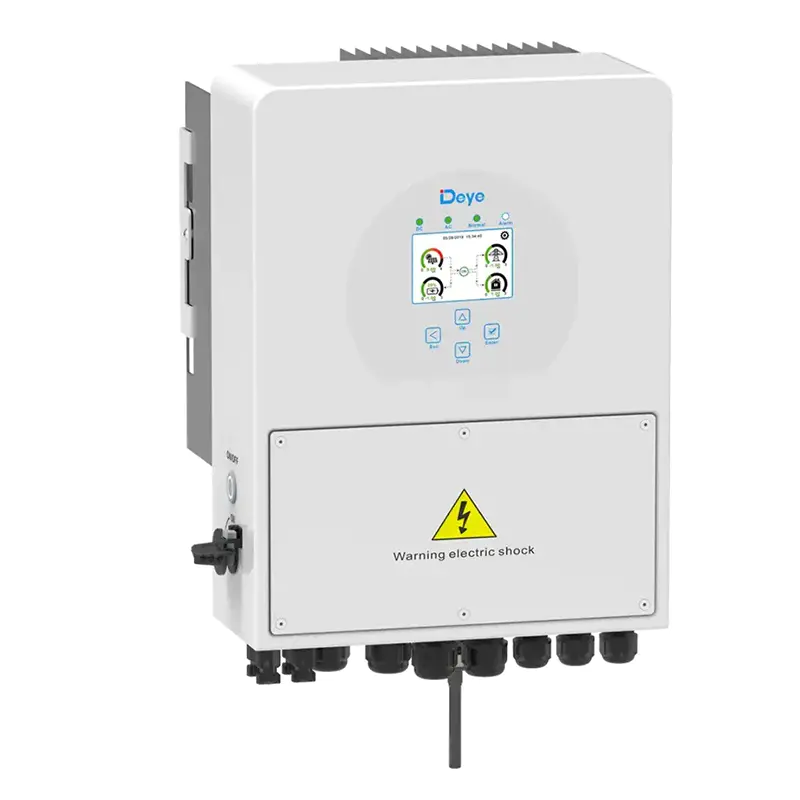
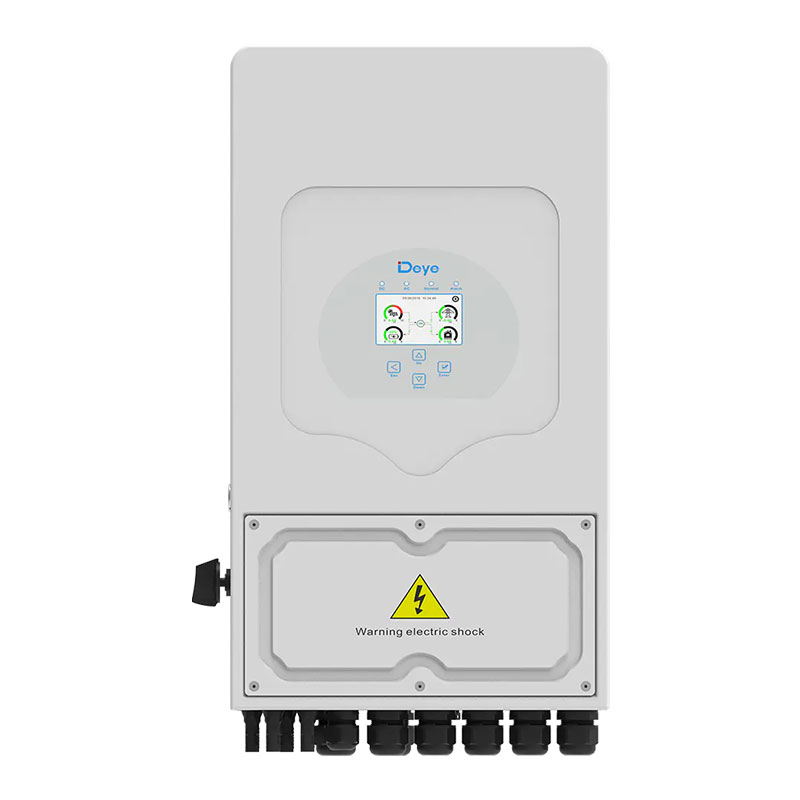
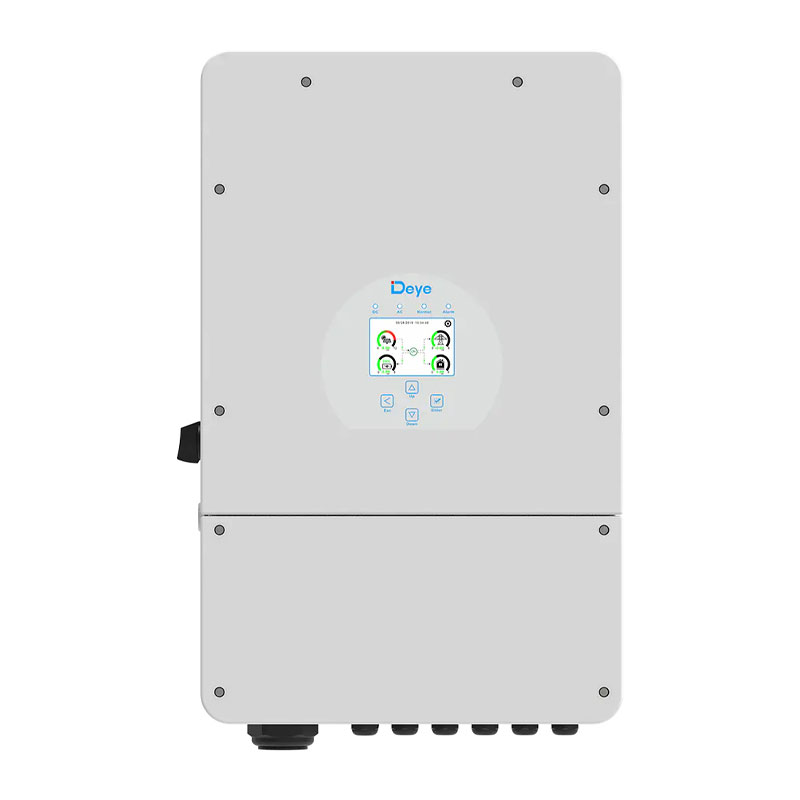
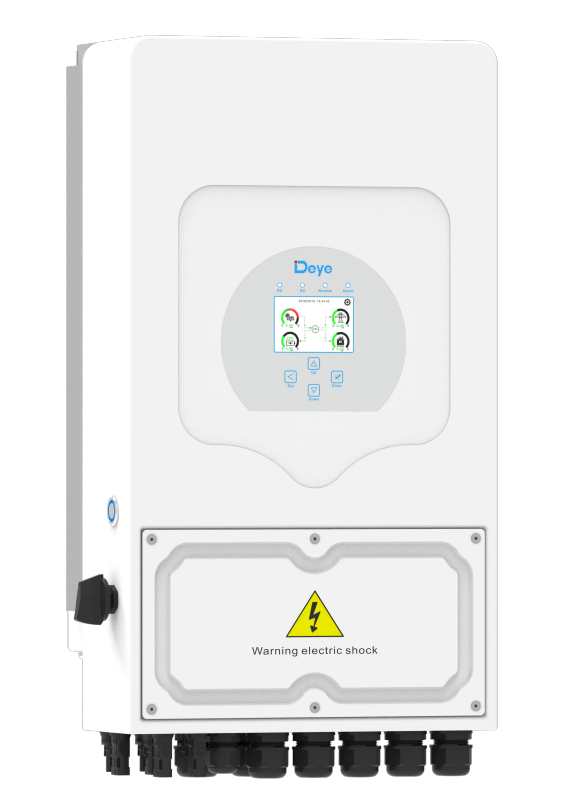
For buyers of the SUN-3.6/5/6/7/7.6/8/10K-SG05LP1-EU-AM2-P, battery choice can look deceptively simple. On paper, the inverter accepts a broad low-voltage battery window. In the field, the right answer is narrower: exact model approval, communication protocol, and commissioning setup matter far more than a generic "48V" label.
|
At a glance |
What Deye officially says
|
Item |
Official position |
|
Battery input type |
Lead-acid or lithium-ion |
|
Battery voltage window |
40-60V |
|
Lithium control |
Self-adaption to BMS |
|
Battery interfaces |
RS485 / RS232 / CAN |
|
Commissioning rule |
Use the correct lithium setup for the selected battery |
Deye's own documentation is a good place to begin, and it also explains why so many battery decisions go wrong. The current datasheet for the SG05LP1-EU-AM2-P family describes the inverter as a low-voltage hybrid unit for lead-acid or lithium batteries, with a 40-60V battery range, one battery input, lithium BMS self-adaptation, and RS485/RS232/CAN communication interfaces. That is the broad electrical picture. It tells you what the inverter can work with in principle, but it does not by itself tell you which battery will deliver the least friction at commissioning.
The more practical document is Deye's current low-voltage approved battery list, which names specific batteries and, just as importantly, the setup path needed for them. In that document, the SG05LP1-EU platform appears in the approved range, and the battery entries are tied either to CAN or RS485 communication together with an inverter setup number. Deye also adds a plain warning at the end of the list: installers must enter the correct lithium setup number for the corresponding battery, and the purchaser should confirm compatibility with the battery supplier. In other words, compatibility is not just a matter of voltage. It is a matter of model, protocol, and configuration.
That distinction matters for European residential projects. A battery may be sold as a 48V LiFePO4 unit. It may even use the right physical connector and offer CAN or RS485 on its label. Yet none of that automatically makes it a clean match for the SG05LP1 series. The safest pairing is the one that sits inside Deye's own published compatibility framework and is easy for the installer to commission without guesswork.
Deye's approved list does not read like a marketing brochure. It is operational guidance. The document is model-specific, not brand-wide. That point is often overlooked. A brand can appear on the list, while only certain batteries from that brand are actually approved. For that reason, it is better to think in terms of approved model families rather than approved logos.
There is one nuance worth stating clearly. Deye's published low-voltage list names the SG05LP1-EU platform rather than spelling out every AM2-P suffix in full. The current AM2-P datasheet, however, keeps the same low-voltage battery architecture: a 40-60V battery window, lithium BMS self-adaptation, and RS485/RS232/CAN communication. Taken together, those documents make the approved list the most useful official reference for present-day AM2-P projects. Even so, final model and firmware confirmation remains the right last step before shipment or commissioning.
For most customers, the lowest-risk answer is also the simplest one: a Deye battery with a Deye inverter. In the current approved low-voltage list, Deye includes a wide spread of its own battery families under CAN communication with setup 00. That includes rack, wall-mounted, and higher-capacity residential options, which means the installer is usually working within one manufacturer's communication logic rather than bridging across two separate ecosystems.
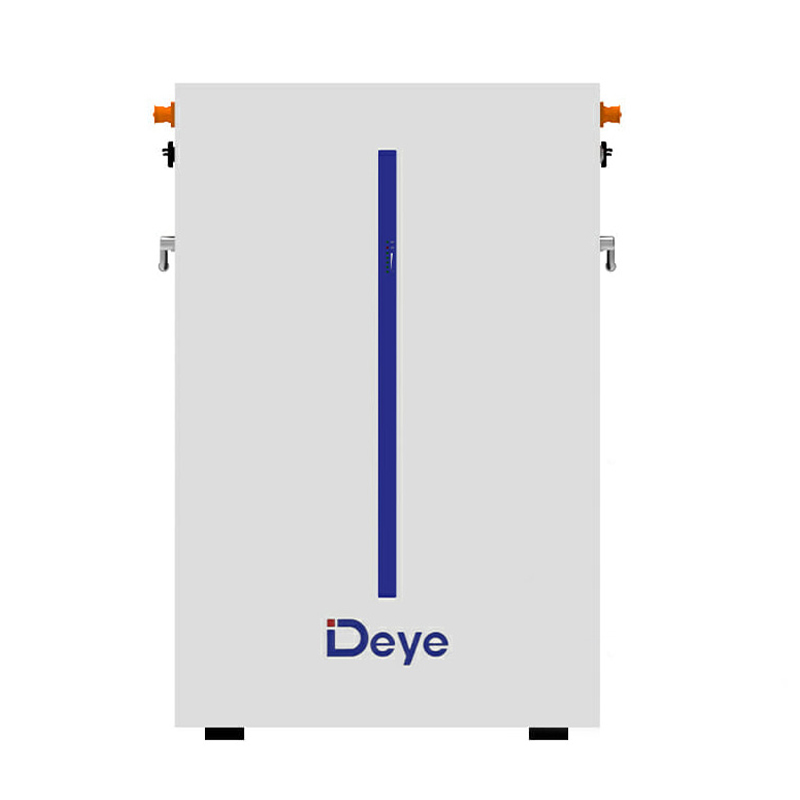
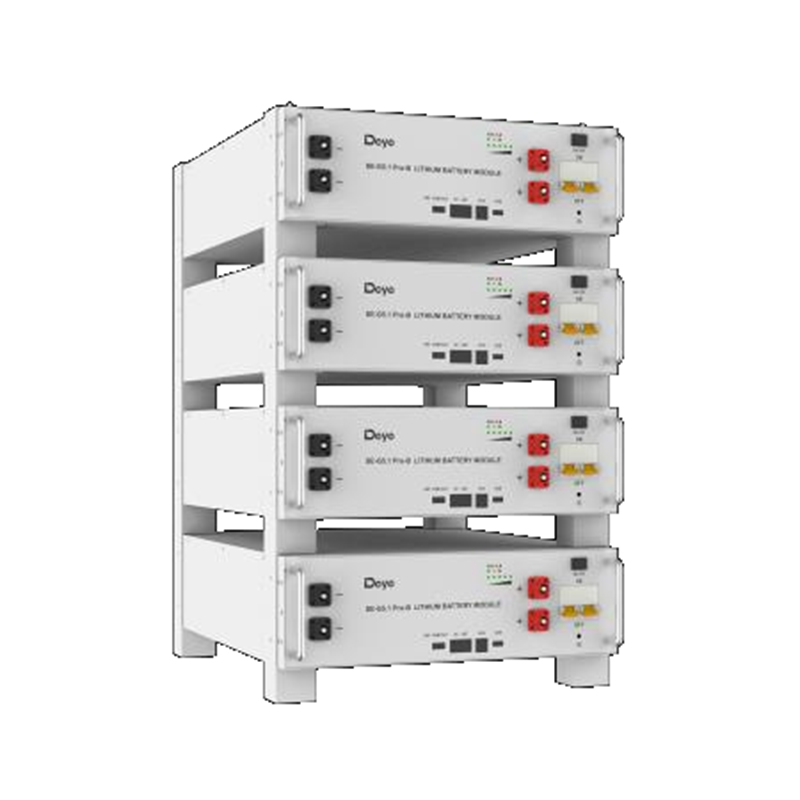
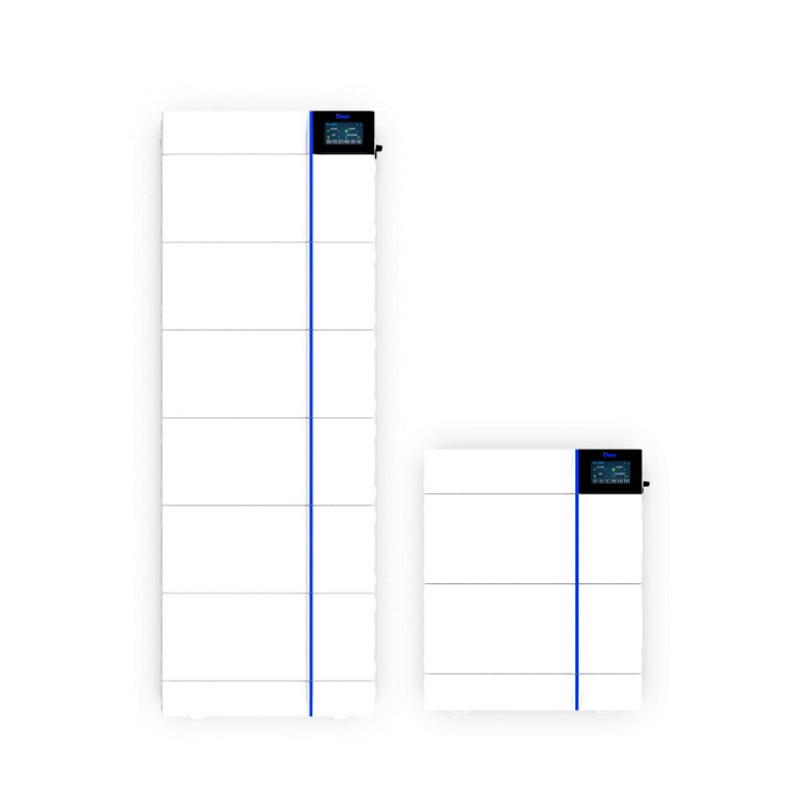
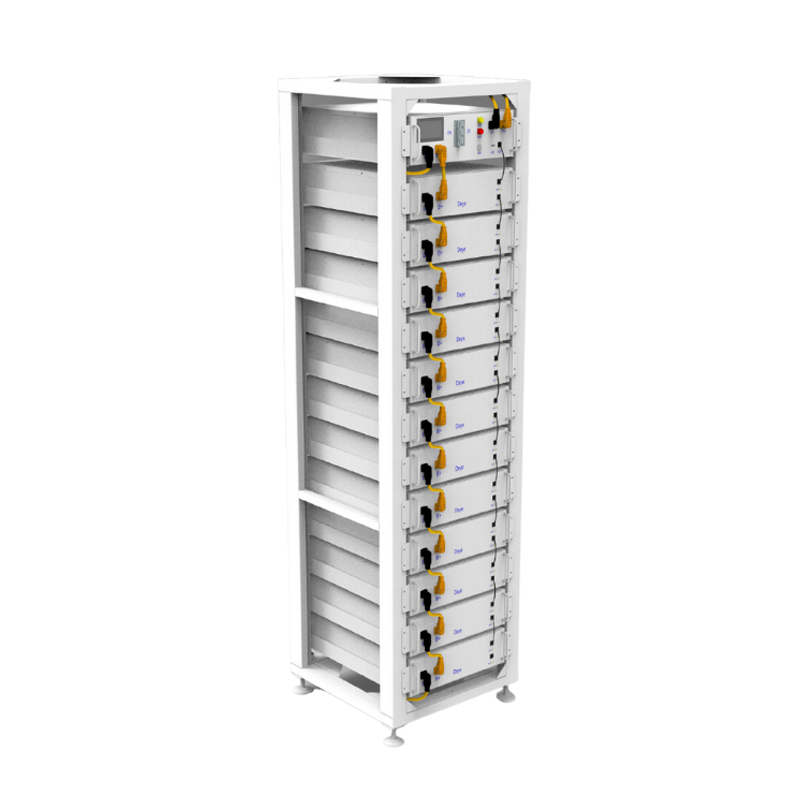
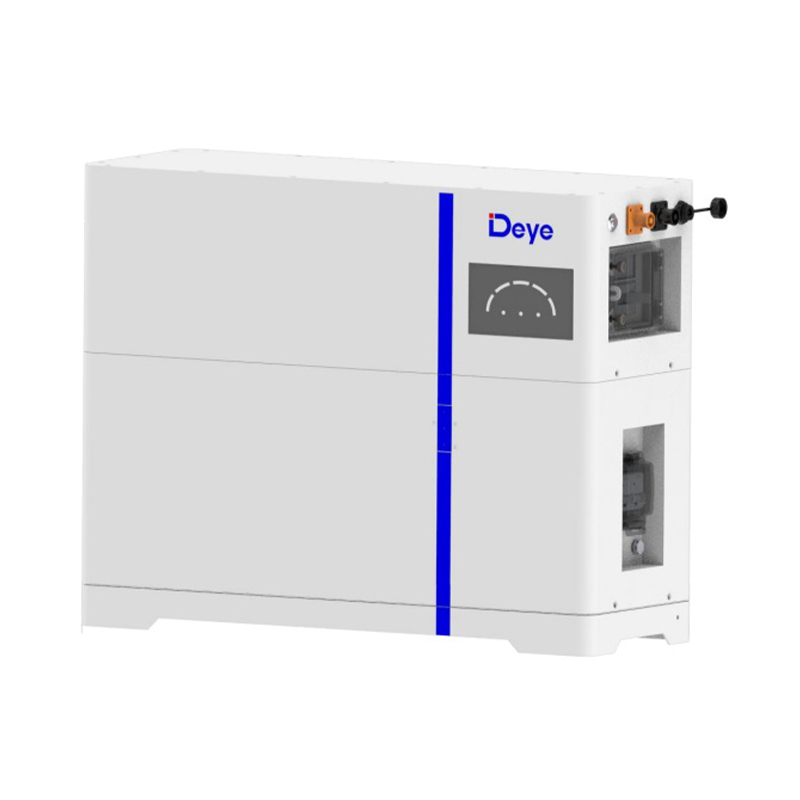
That overlap matters because Uni Z's own catalogue already covers the Deye low-voltage range that buyers in Europe are most likely to ask about. For smaller or more cost-conscious residential systems, the SE-F5 Pro and SE-F5 Plus sit in the familiar 5kWh class. The RW-M6.1-B moves up slightly in per-unit capacity and suits projects where wall-mounted or compact residential storage is preferred. For homes with heavier evening consumption or stronger backup expectations, the SE-F12, SE-F16, and RW-F16 families make more sense because they raise stored energy without forcing an overly fragmented battery stack. The SE-G5.1 Pro-B remains a useful rack-style modular route where a more structured expansion plan is preferred.
In practical terms, a same-brand pairing tends to reduce uncertainty around communication mapping, setup numbers, and support responsibility. That does not mean third-party batteries cannot work well. It means the path from delivery to handover is usually more straightforward when both sides of the system come from the same approved ecosystem.
Battery families from the Uni Z range that sit most naturally with the SG05LP1 platform
|
Battery family |
Typical fit |
Why it stands out |
Watchpoint |
|
Deye SE-F5 Pro / SE-F5 Plus |
Best for smaller residential systems and daily self-consumption |
A straightforward starting point in the common 5kWh class |
Good entry point for 3.6-6kW homes where backup duration is modest |
|
Deye RW-M6.1-B |
Best where a compact unit with a little more stored energy is preferred |
Moves beyond the basic 5kWh class without stepping into a large battery footprint |
Useful when wall-mounted or compact residential storage is preferred |
|
Deye SE-F12 / SE-F16 / RW-F16 |
Best for larger homes, heavier evening use, or stronger backup expectations |
Higher stored energy per unit reduces fragmentation and simplifies larger residential layouts |
Better suited where stored energy matters as much as inverter power |
|
Deye SE-G5.1 Pro-B |
Best for modular rack-style builds |
Flexible for installers who prefer a more structured expansion path |
Confirm the final module count and cabinet plan early |
|
Dyness B4850 / A48100 |
Best for buyers who want a recognised third-party route |
Explicitly named in Deye's current low-voltage approved list |
Treat this as an exact-model pairing, not a brand-wide assumption |
Dyness remains a credible option, but it should be approached with more discipline than a same-brand pairing. Deye's current approved battery list names Dyness B4850 and A48100 under CAN with setup 00. That is useful because Dyness is also part of the Uni Z product range, and it gives buyers a recognised third-party alternative rather than an untested guess.
The important qualification is that approval is model-level, not brand-level. A customer who sees Dyness on the list should not immediately assume that every low-voltage Dyness battery will behave identically on the SG05LP1 platform. If the order is moving outside the exact references named by Deye, the right approach is to stop treating the project as a straightforward approved pairing and start treating it as a confirmation case. That means checking the exact model name, the communication method, the inverter setup requirement, and any firmware expectations before the system reaches site.
Compatibility on the SG05LP1 series has four layers. The first is electrical fit. The inverter's battery window is 40-60V, and the available charging and discharging current rises across the range, from 90A on the 3.6kW model up to 210A on the 10kW model. A battery can sit inside the voltage window and still be a poor choice if its current capability, expansion plan, or intended duty cycle does not match the inverter and the household load profile.
The second layer is communication. Deye's datasheet says the inverter supports lithium BMS self-adaptation, but the approved battery list shows that this still depends on a defined communication path. In the published low-voltage list, most mainstream residential options sit under CAN with setup 00, while a smaller number rely on RS485 with their own setup numbers. In the field, this matters because a battery can be electrically suitable and still fail to deliver smooth battery reporting, control, or alarm handling if the communication side is wrong.
The third layer is setup. Deye's own note is unambiguous: the installer must enter the corresponding lithium setup number. A battery that is genuinely approved can still look troublesome if the inverter is left on the wrong battery profile. That is why a clean pre-shipment checklist matters more than last-minute improvisation on site.
The fourth layer is commissioning detail. Exact part number, cable standard, firmware revision, parallel quantity, and final protection settings all matter. None of these items is glamorous, but they are often the difference between a system that behaves like a finished product and one that feels only half-integrated.
|
A simple rule |
Battery choice should follow the household's use pattern rather than the inverter label alone. A 3.6kW or 5kW home focused mainly on evening self-consumption can often begin comfortably in the 5kWh class, provided the owner understands the limits on backup duration. Once night-time consumption is higher - for example where a family is shifting more cooking, laundry, or heat-pump demand into the evening - the logic begins to favour the 6kWh to 12kWh range. In larger homes, or where backup autonomy is a selling point rather than a bonus, 16kWh-class batteries become easier to justify because they reduce the number of units and simplify the overall layout.
The mistake is to size the battery by inverter power alone. A 10kW inverter does not automatically mean the customer needs the largest possible battery on day one, and a small battery on a large inverter will not necessarily deliver the backup experience the customer imagines. The right question is not simply, "How powerful is the inverter?" It is, "How much energy does the home need after sunset, and how much of that energy should come from storage rather than the grid?"
If the aim is the smoothest route to installation, commissioning, and after-sales support, a Deye battery remains the strongest answer for the SG05LP1 family. That is especially true where installers want to minimise commissioning time and avoid avoidable protocol disputes. Within the Uni Z range, that usually points buyers towards the Deye low-voltage families that already sit inside Deye's published approved list: SE-F5 Pro or SE-F5 Plus for modest residential demand, RW-M6.1-B where a slightly larger compact unit makes sense, and SE-F12, SE-F16, or RW-F16 where stored energy and backup duration matter more.
Dyness is still a sensible alternative when the project is built around an exact approved model and the communication path is confirmed in advance. What does not make sense is treating every 48V battery as interchangeable simply because the headline voltage looks right. Deye's own documents do not support that view, and installers should not rely on it.
The best battery for the SG05LP1 series, then, is not the one with the most attractive headline spec. It is the one that satisfies three conditions at the same time: it appears in the relevant official compatibility path, it matches the customer's real energy pattern, and it can be commissioned cleanly with the correct communication and setup parameters. That is the difference between a battery that merely fits on paper and one that performs properly in a finished European residential system.
←
Buying a Home with Leased Solar Panels: Complete Buyer's Guide (2026)
→
Deye Home Battery Installation Practical Guide: Common Faults and Solutions for SE-F16 and RW-F16
 +31610999937
 [email protected]
 De Werf 11, 2544 EH The Hague, The Nederland.WhatsApp: +852 65283075
Copyright © 2023 Uni Z International B.V. VAT: NL864303440B01 All Rights Reserved
 Solar Energy Storage System Solutions and Products

 0
0


 italiano
 Polskie
 Nederlands
 Deutsch
 Français
 Español
 Український