-
 FAST SHIPPING
-
 COMPETITIVE PRICE
-
 EXCELLENT AFTER-SERVICE
 FAST SHIPPING
COMPETITIVE PRICE
EXCELLENT AFTER-SERVICE
FAST SHIPPING
COMPETITIVE PRICE
EXCELLENT AFTER-SERVICE
Content
I work with homeowners and businesses across Catalonia who want solar and also want to capture every available incentive. When we talk about solar energy grants in Catalonia (and “ayudas energía solar Cataluña”), the best results usually come from combining multiple levers: tax deductions, municipal bonuses, and the ongoing value of self-consumption plus surplus compensation.
In 2026, large one-off subsidy programs can be open or closed depending on the specific call, while many projects still move forward thanks to stable mechanisms: personal income tax (IRPF) deductions tied to energy efficiency, IBI/ICIO bonuses in many municipalities, and monthly bill credits from exporting surplus energy to the grid.
| Incentive | Who applies it | What you can gain | What it requires (in practice) |
|---|---|---|---|
| IRPF efficiency-related deduction | National tax rules / income tax filing | 20%–60% depending on the route | Energy certificates before/after + eligible dates |
| IBI property tax bonus | Your municipality | Often up to 50% for several years | Application window + local ordinance conditions |
| ICIO construction tax bonus | Your municipality | Commonly up to 95% (varies) | Linked to permits/works; timing is critical |
| Simplified surplus compensation | Retailer / regulatory framework | Monthly bill credit for exported energy | Correct grid registration; typically ≤ 100 kW |
| Call-based regional/national subsidies | Catalonia / national agencies | Variable amounts, often first-come rules | Strict documentation, deadlines, and eligibility |
For many private customers, the IRPF deduction is the most meaningful lever—when the project is documented correctly. From my side as a manufacturer and supplier, I focus on making the installation technically consistent and easy to justify: clear bills of materials, product documentation, and traceability.
My rule is simple: design + documentation must work together. If the paperwork can’t stand up to a review, the incentive becomes uncertain—so we plan it from day one.
In Catalonia, municipal bonuses can make a real difference because they reduce local taxes rather than depending on a competitive subsidy call. The key point: every municipality sets its own rules and application deadlines. That’s why I always ask customers where the property is located before we finalize the scope.
Some municipalities publish bonuses such as up to 50% IBI for a number of years and up to 95% ICIO tied to the building permit/works tax. The exact figures and conditions vary, but the impact is easy to understand: reducing recurring IBI for several years compresses the payback period without changing the technical system at all.
My advice: always keep a copy of the filed application and the registration receipt. It’s the difference between “we assumed it was done” and “we can prove it was done.”
Even if you never receive a one-off subsidy, exporting surplus energy can still generate a monthly credit on your bill when the system is correctly registered and contracted. That’s why I treat “surplus strategy” as part of the design, not as an afterthought.
Many customers operate under the simplified scheme where the installation is tied to the supply point and typically remains within the ≤100 kW framework. In plain terms: you want a system that produces what you can use—not just the biggest number on the quote.
To keep this realistic, I often model a conservative productivity band for Catalonia of around 1,400–1,600 kWh per kWp per year, depending on roof tilt, orientation, and shading. Using that range, you can estimate annual production and stress-test payback.
What usually changes the outcome most is not “marginally cheaper panels,” but combining: municipal bonuses + a higher self-consumption ratio (through load shifting or storage) + clean paperwork so incentives are not lost to administrative issues.
When you compare offers in Catalonia, evaluate not only price and equipment, but also whether the provider can support the incentive file. This is the checklist I use with customers to avoid “we missed the deadline” or “the invoice isn’t acceptable” problems:
If you follow this sequence, you eliminate most of the friction that delays incentives—and you also end up with a system that performs predictably year after year.
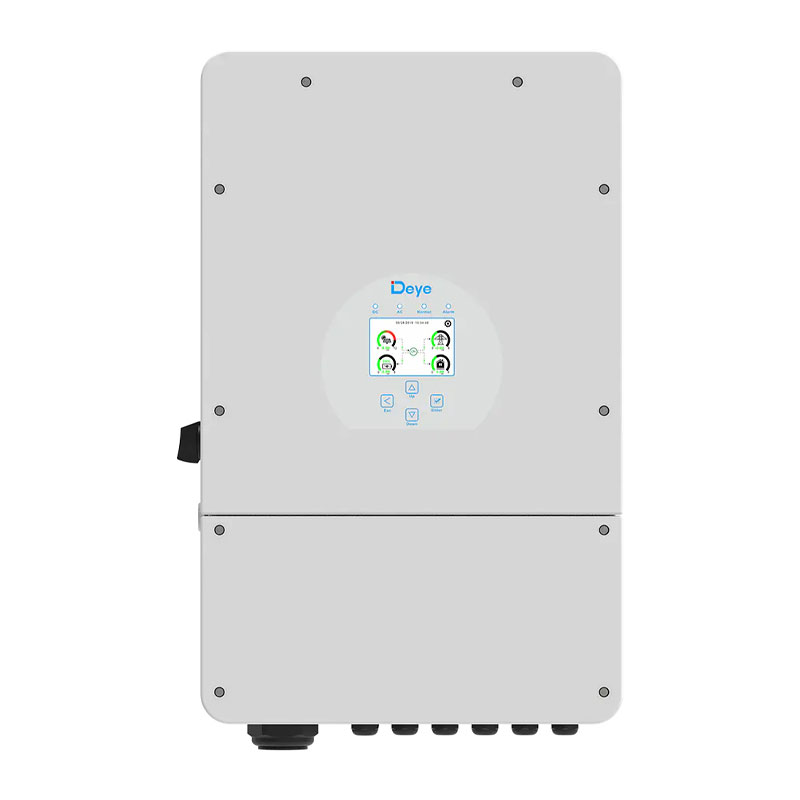
I’m not here to force a product into your conclusion. My role is to supply reliable components that fit your technical and incentive strategy: PV modules, inverters (including hybrid options), storage batteries, residential kits, and the core electrical/mechanical accessories that make an installation robust and serviceable.
If you want to scan the full catalog (including integrated solutions and accessories), you can use our solar products page to identify what matches your roof, consumption profile, and timeline.
←
BOS-B Pro-A3 vs BOS-B: What Deye’s latest rack changes for small-scale C&I storage
→
Île-de-France Solar Incentives: Grants, VAT 5.5%, Steps
 +31610999937
 [email protected]
 De Werf 11, 2544 EH The Hague, The Nederland.WhatsApp: +852 65283075
Copyright © 2023 Uni Z International B.V. VAT: NL864303440B01 All Rights Reserved
 Solar Energy Storage System Solutions and Products

 0
0


 italiano
 Polskie
 Nederlands
 Deutsch
 Français
 Español
 Український