Solar Home Appliances: Which Devices Can Run on Solar Power & How to Size Your System
May 09,2026Deye SUN-SMART-TX01: How to Set Up Smart TX Without Confusion
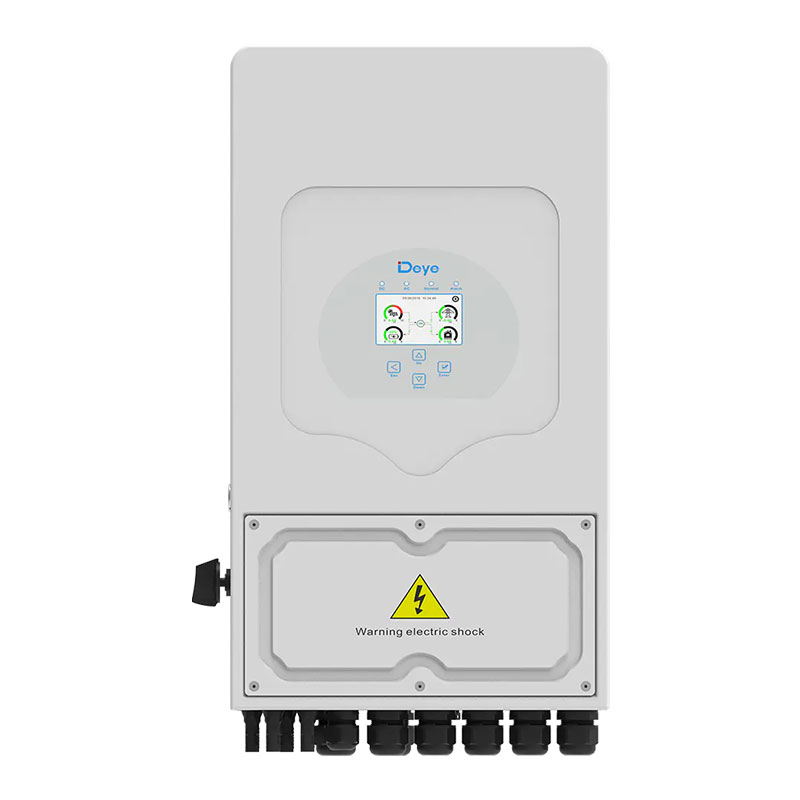
May 08,2026Deye SUN-12/14/16K-SG01LP1-EU-High Efficiency Energy Management&Control
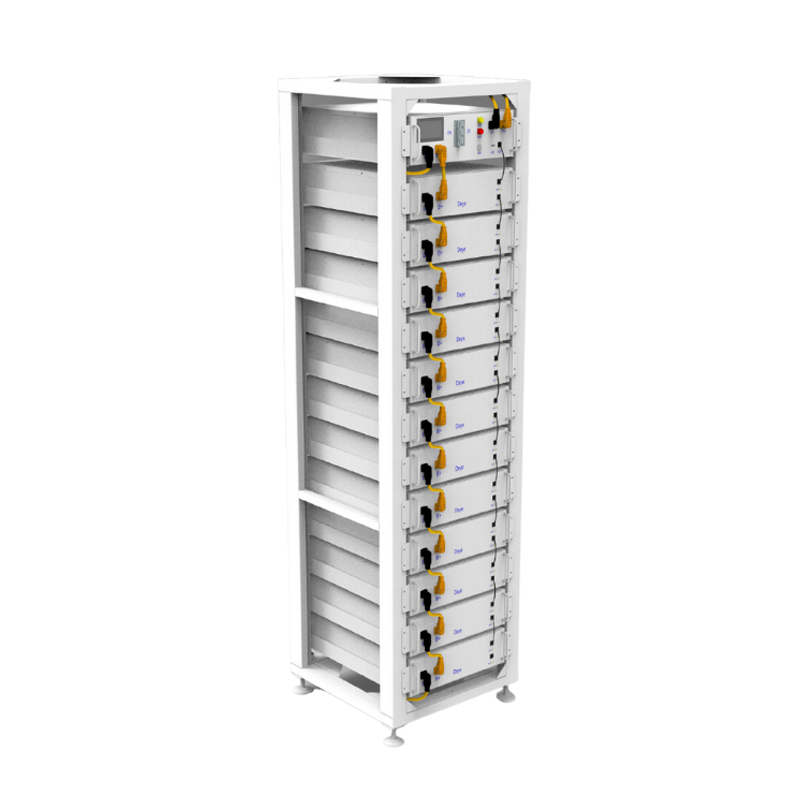
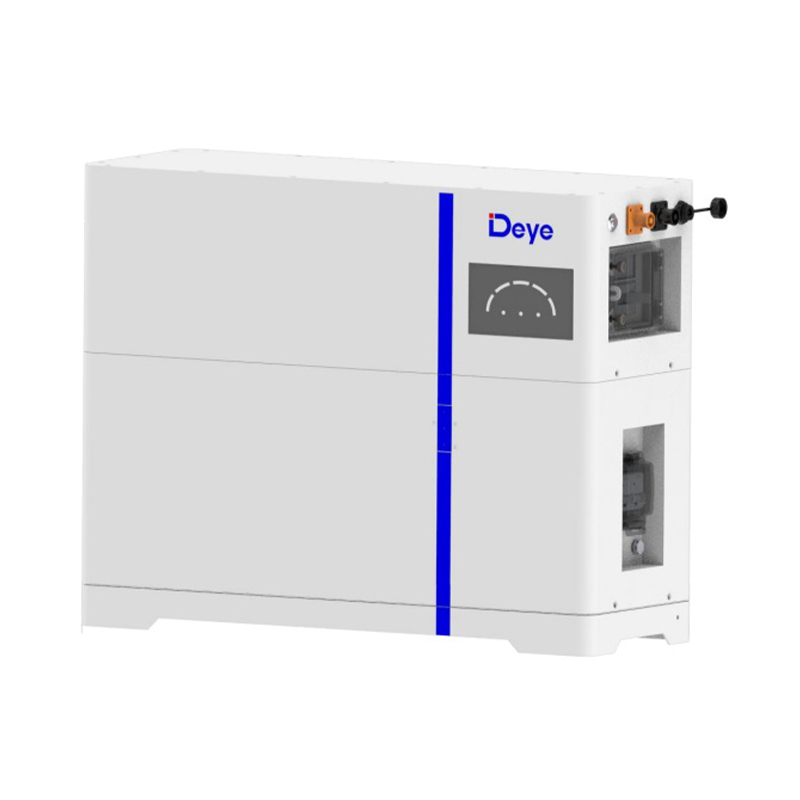
May 06,2026Deye SE‑G5.1 Pro‑B: Compact, Scalable Home Energy Storage
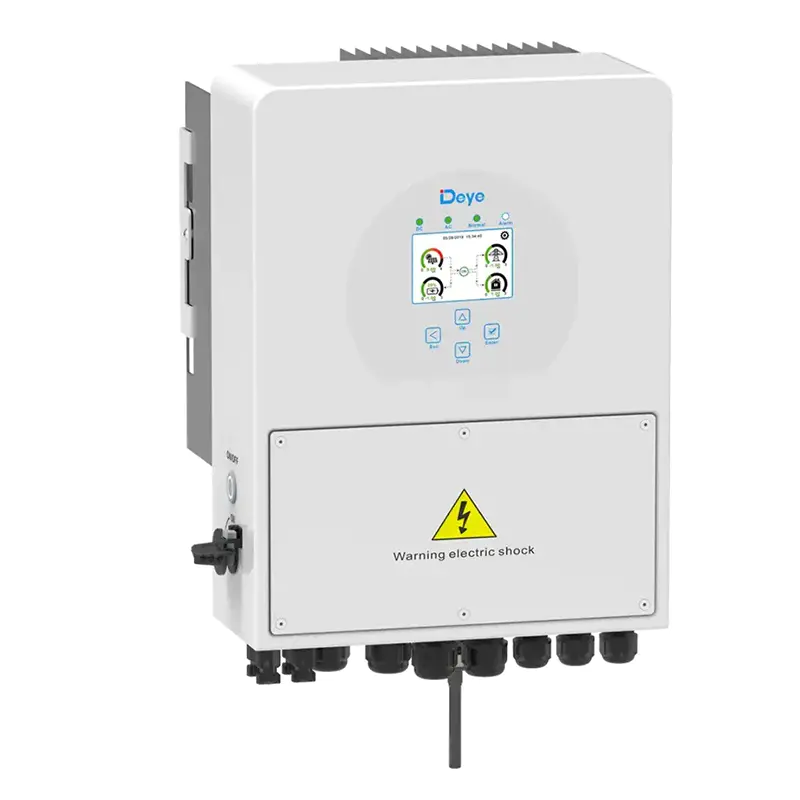
Apr 30,2026Deye 8K‑SG06LP3 Hybrid Inverter: Compact, Quiet & Smart Three‑Phase Energy Solution
Apr 28,2026Solar PV generation surpassed 2,000 TWh globally in 2024 — accounting for 7% of the world's electricity, according to the International Energy Agency's renewable energy data. Behind that number are millions of households that have stopped waiting for permission from the grid and started running their fridges, washing machines, and air conditioners on sunlight. The question is no longer whether solar can power home appliances — it's how to do it properly.
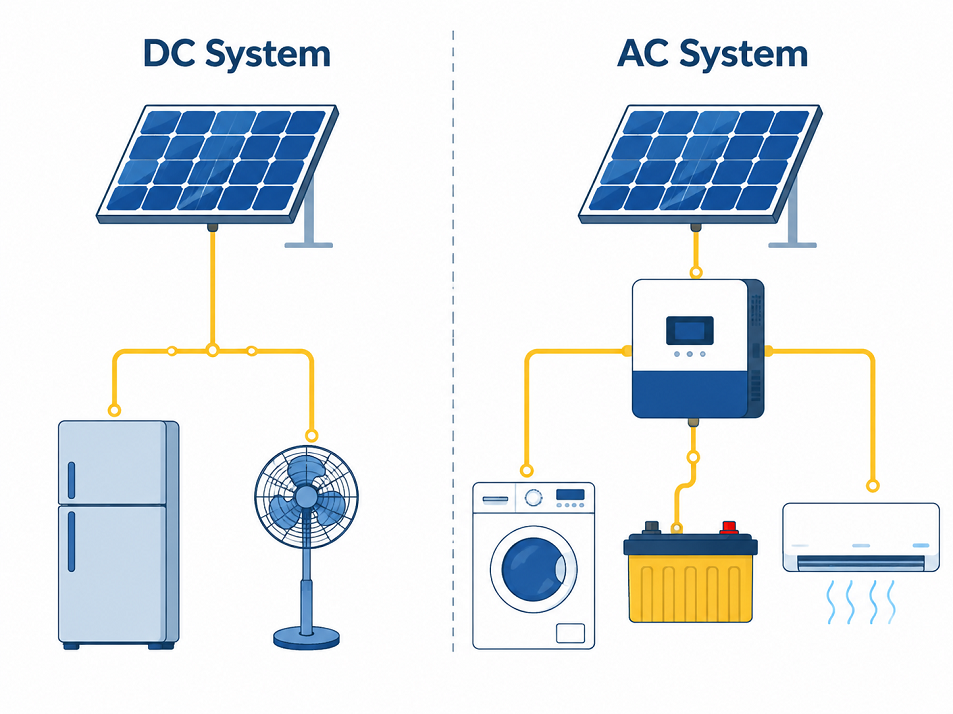
There are two fundamentally different ways a home appliance ends up running on solar energy, and confusing the two leads to expensive mistakes.
The first is direct DC supply: a solar panel generates direct current (DC), which flows straight into a DC-rated appliance — typically a 12V or 24V refrigerator, fan, or LED light. No conversion happens. What the panel produces is what the appliance consumes. This setup is compact, efficient, and ideal for off-grid cabins, rural homes, and mobile installations.
The second is grid-tied or battery-backed AC supply: panels feed power into a solar inverter, which converts DC to standard AC (110V or 220V). Your conventional home appliances — the ones already in your kitchen and laundry room — run on that converted power exactly as they would from the grid. A hybrid inverter adds a battery bank to the loop, giving you stored energy for nights and cloudy days.
Both approaches are valid. The right one depends on your location, existing appliances, and how much grid independence you want.

Every time electricity is converted from DC to AC, energy is lost. A quality inverter operates at 93–97% efficiency, meaning 3–7% of every watt your panels generate disappears as heat before it reaches your appliances. In a small system, that loss compounds quickly.
DC-native solar appliances bypass this entirely. A 12V DC refrigerator drawing 45W consumes exactly 45W from your battery bank. Run the same cooling capacity through an inverter on an AC model and your system must supply 48–50W to deliver the same result. Over a year, that gap adds up to real amp-hours — and real money in battery capacity you either buy or don't.
That said, DC appliances require a purpose-built solar system and aren't always available in the sizes or features you need. For households transitioning from full grid reliance, hybrid solar inverters for residential use offer the most practical path: keep your existing appliances and let the inverter handle the conversion.
The bottom line: DC appliances win on efficiency for dedicated off-grid systems; AC inverter setups win on flexibility for partial or full home transitions.
Nearly any electric appliance can run on solar — the variable is system size, not compatibility. Here are the most commonly powered devices and the approximate wattage you need to plan for:
| Appliance | Typical Power Draw | Daily Usage (hrs) | Daily Energy Need |
|---|---|---|---|
| LED Lighting (10 bulbs) | 60–100 W | 5 | 0.3–0.5 kWh |
| DC Solar Refrigerator | 30–60 W | 24 | 0.7–1.4 kWh |
| Ceiling Fan | 40–75 W | 8 | 0.3–0.6 kWh |
| LED Television (40") | 60–100 W | 4 | 0.2–0.4 kWh |
| Washing Machine | 500–800 W | 1 | 0.5–0.8 kWh |
| Solar Water Heater | 1,000–3,000 W | 1–2 | 1–6 kWh |
| Split Air Conditioner (1.5 ton) | 1,200–1,800 W | 6 | 7–11 kWh |
Lighting and fans are the easiest entry point. Low wattage, long daily run times, and immediate visible savings make them the first appliances most households transition to solar. DC LED systems require minimal panel capacity and a small battery bank.
Refrigerators run continuously, so they reward the efficiency of DC solar-specific models. A well-insulated 12V solar fridge can operate reliably on two 200W panels with a modest 100Ah battery, even accounting for two consecutive cloudy days.
Washing machines draw significant power but only briefly. Running a load during peak solar hours — typically 10am to 2pm — means the panels supply the power directly without draining battery reserves. This "solar shifting" strategy is one of the most cost-effective ways to use high-draw appliances.
Air conditioners are the most demanding appliance in any solar plan. A 1.5-ton split unit running six hours a day needs roughly 8–11 kWh — equivalent to the entire daily output of a 3–4 kW panel array in many climates. Dedicated inverter-type AC units with variable compressors are significantly more compatible with solar systems because their power draw scales with actual cooling demand rather than cycling at full load.
System sizing starts with your appliance load, not with the solar panels. Add up the daily energy consumption of every device you want to run on solar (using the table above as a reference), then work backward to calculate the panel capacity, battery size, and inverter rating you need.
A household running lights, a DC refrigerator, a television, and ceiling fans can typically manage on a 3–5 kW system with 5–10 kWh of battery storage. Adding a washing machine and small appliances pushes the requirement toward a 6–10 kW system. Homes with air conditioning need 10 kW or above, with battery banks sized to cover night-time consumption.
Three components determine whether your system delivers reliably:
For households that want a pre-engineered solution rather than designing from scratch, complete residential solar energy storage kits from 3 kW to 20 kW provide matched panel, inverter, and battery combinations that eliminate the guesswork of component compatibility.
The distinction between off-grid and grid-tied systems matters most when you start adding high-draw appliances to your solar plan.
Grid-tied systems are the right choice when you have reliable utility access and primarily want to reduce electricity bills. Your appliances draw from solar during the day and switch to the grid at night or during peak demand. No large battery bank is required, which significantly lowers upfront cost. The tradeoff: you lose power during grid outages unless you add battery backup.
Off-grid systems are the right choice for remote locations, areas with unreliable grid supply, or households that want full energy independence. The entire appliance load — 24 hours a day, 365 days a year — must be covered by your panels and battery bank. This means oversizing both to handle winter low-sun periods and consecutive cloudy days. Off-grid planning is more demanding, but the payoff is complete independence from utility pricing and outages.
Hybrid systems combine the best of both: solar and batteries handle the base load, with the grid serving as a backup that rarely gets used. For most households adding appliances progressively to solar, this is the most future-proof architecture.
Apartments and homes with limited roof space can start with compact solutions: balcony and small-space solar power solutions let renters and urban residents offset the energy consumption of lighter appliances — lighting, phone charging, fans — without a full rooftop installation.
A well-sized system underperforms if the appliances and usage patterns aren't optimized around it. These practices make a measurable difference:
Solar home appliances aren't a single product category — they're the result of matching the right devices to the right system. Get that matching right, and the combination of clean energy and lower operating costs runs itself.
+31610999937
[email protected]
De Werf 11, 2544 EH The Hague, The Nederland.
WhatsApp: +1 (917) 257 2995/Copyright © 2023 Uni Z International B.V. VAT: NL864303440B01 All Rights Reserved
Solar Energy Storage System Solutions and Products