Off-Grid Solar System Design: A Step-by-Step Guide to Sizing & Component Selection
Jun 17,2026Lithium Battery for Solar System: Buyer’s Guide to Costs, Brands & Setup
Jun 12,2026EV Charging Demand 2026: Trends, Infrastructure Growth & Home Solar Solutions
Jun 04,2026How Long Does a Solar Battery Last at Night? Real-World Runtime Guide
May 30,2026Maximize Your Solar Savings with Deye Copilot
May 27,2026Content
In 2023, over 180,000 U.S. homes operated entirely off the grid, with that number growing 15% annually. Yet nearly half of first-time DIY designs fail to meet demand within a year, usually because the load was miscalculated. Your entire system hangs on the accuracy of this first step. A 10% underestimate can cascade into undersized batteries, frequent generator runs, and premature component failure.
Start by listing every electrical device you plan to run, from LED lights to well pumps. For each item, note the wattage (check the nameplate or use a plug-in power meter) and the estimated hours of daily use. Multiply watts by hours to get watt-hours (Wh) per day. Then sum all the Wh values to find your total daily consumption.
You must account for inverter efficiency when calculating the load that the battery must supply. Divide total AC watt-hours by 0.85 to account for typical conversion losses; DC loads (like 12V lights) can be added directly. The table below shows a realistic load estimate for a modest off-grid home.
| Appliance | Power (W) | Hours/Day | Daily Wh (AC) |
|---|---|---|---|
| LED lights (8 bulbs) | 80 | 5 | 400 |
| Refrigerator (Energy Star) | 150 | 8 (compressor) | 1200 |
| Laptop & router | 60 | 6 | 360 |
| Ceiling fan | 70 | 8 | 560 |
| Water pump (shallow well) | 750 | 0.5 | 375 |
| Microwave | 1000 | 0.3 | 300 |
| Miscellaneous (phone charging, etc.) | 50 | 4 | 200 |
| Total AC Wh/day | 3395 | ||
| Adjusted DC load (AC / 0.85) | 3994 Wh |
Round up to 4 kWh/day to add a small margin. This number feeds directly into the battery and array sizing formulas later. If your climate demands air conditioning, add 1.5–2 kW per hour of operation; an efficient mini‑split might draw 800 W per ton, which can push daily usage above 15 kWh in hot months.
A battery bank must store enough energy to carry you through cloudy periods without damaging itself. The core formula is:
Battery capacity (Ah) = (Daily DC Wh × Autonomy days) / (Battery voltage × Depth of Discharge × Battery efficiency)
For lithium iron phosphate (LiFePO4) batteries, use a depth of discharge (DoD) of 80% and an efficiency of 95%. For flooded lead-acid, limit DoD to 50% and use an efficiency of 85%. Autonomy days typically range from 1 to 3, depending on local weather and how often you can run a backup generator.
In practice, a home consuming 4 kWh/day with 2 days of autonomy and a 48V LiFePO4 bank needs: (4000 × 2) / (48 × 0.8 × 0.95) ≈ 219 Ah. You would select a 48V, 230‑Ah battery module, such as the stackable Felicity LPBF series, which can later expand by simply adding more modules.
| Daily DC Load (kWh) | 1‑Day Autonomy (Ah) | 2‑Day Autonomy (Ah) | 3‑Day Autonomy (Ah) |
|---|---|---|---|
| 4 | 110 | 219 | 329 |
| 8 | 219 | 438 | 657 |
| 12 | 329 | 657 | 986 |
| 20 | 548 | 1096 | 1644 |
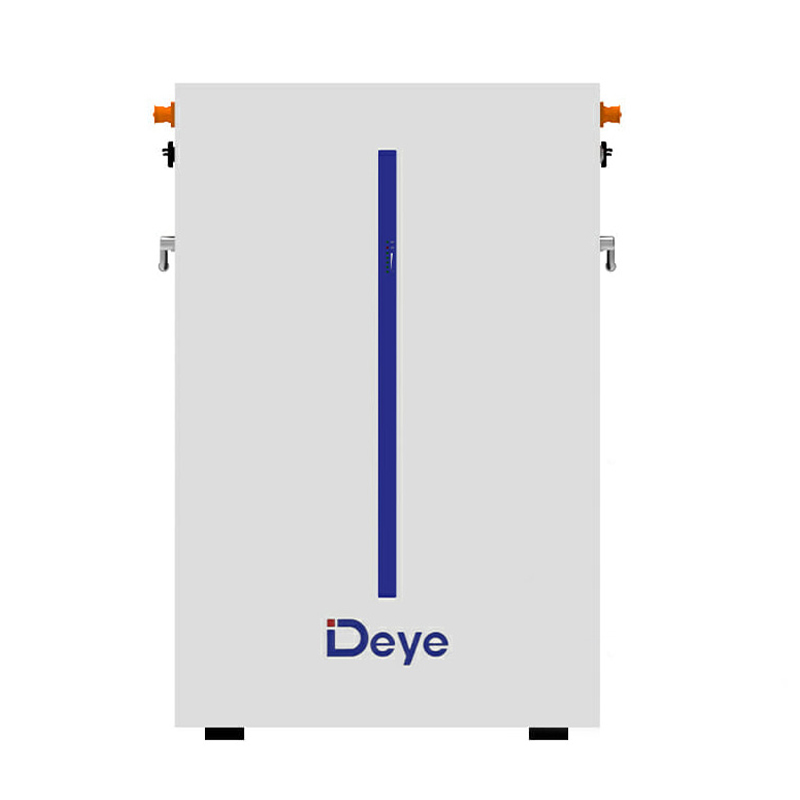
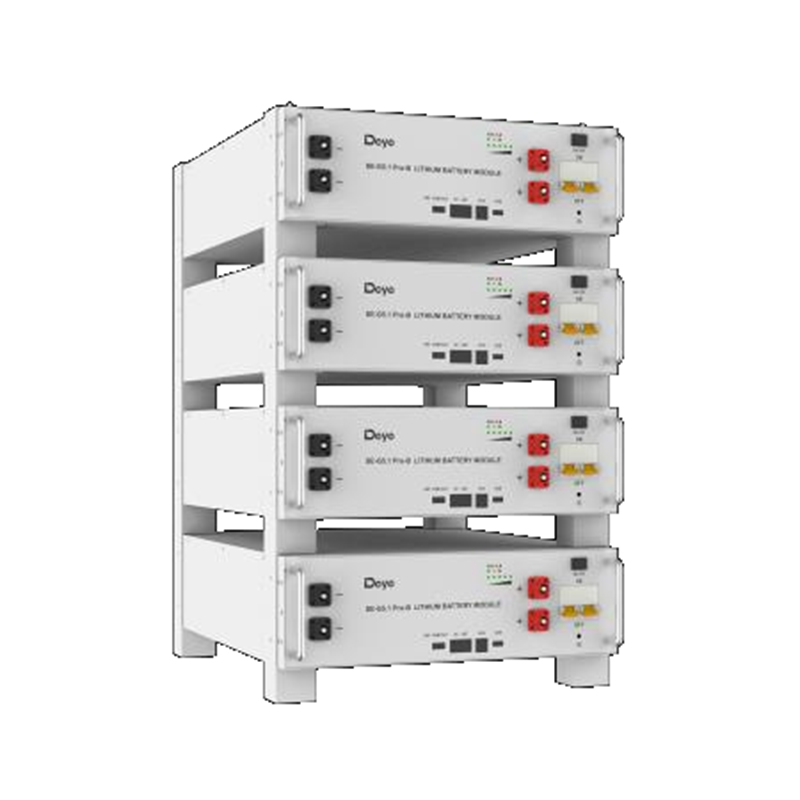
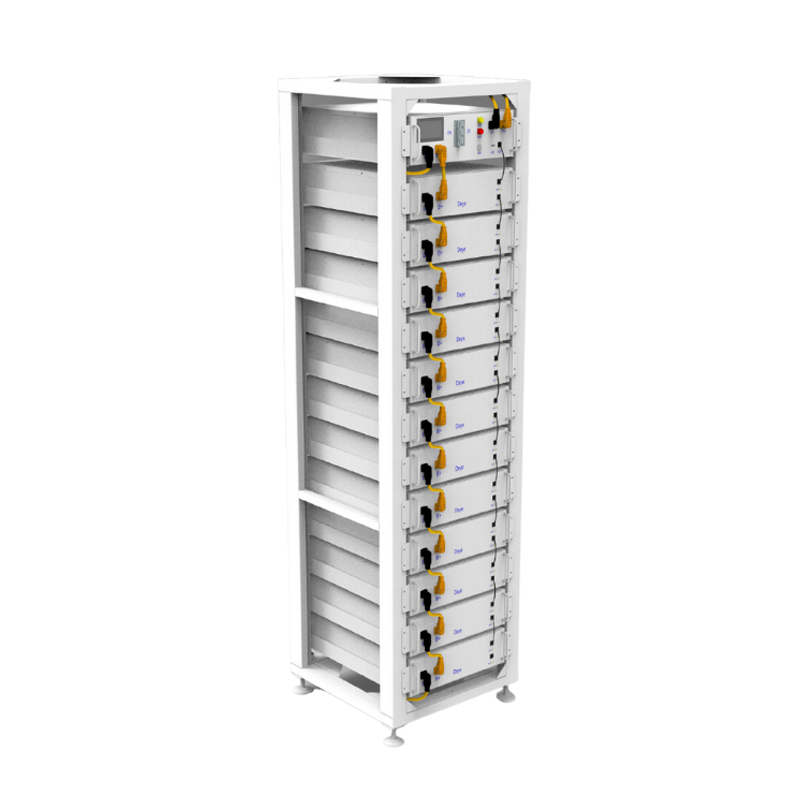
Modular low‑voltage batteries make scaling easy. If you start with a 5‑kWh module and later add a second, the parallel connection only requires matching cables and a few configuration changes. You can explore low‑voltage LiFePO4 storage batteries built for this kind of expansion. Always keep battery interconnects short and use equal‑length cables to avoid imbalance.
With the daily load and battery capacity defined, you can calculate the solar array size. The formula is:
Array size (kW) = Daily DC Wh / (Peak Sun Hours × system efficiency)
Peak Sun Hours (PSH) is the equivalent number of hours a location receives 1,000 W/m² of irradiance per day. Most U.S. locations receive 4–5 PSH; deserts can reach 6 or more. System efficiency factors in wiring, inverter, and charge controller losses; use 0.75–0.85 for well‑designed systems.
For a 4‑kWh daily load with 4.5 PSH and 0.80 efficiency, you need 4000 / (4.5 × 0.80) = 1.11 kW of solar panels. Rounding up to 1.5 kW gives you margin for low‑light days. Tilt angle is critical: fixed arrays should be set to latitude minus 15° in summer‑dominant regions or latitude plus 15° in winter‑dominant areas. In mid‑latitudes, latitude itself is often the best compromise, yielding the highest annual production.
| Latitude | Recommended Tilt | Approximate Location |
|---|---|---|
| 25°N | 25° | Miami, FL |
| 35°N | 35° | Charlotte, NC |
| 45°N | 40–45° | Portland, OR |
| 55°N | 50–55° | Edmonton, AB |
When selecting panels, consider voltage compatibility with your charge controller. Connecting panels in series increases voltage, but the total open‑circuit voltage (Voc) at the coldest expected temperature must stay below the MPPT maximum input rating. High‑wattage bifacial panels, like the JA Solar JAM54D40 410‑435W or TW Solar 610W models, can minimize roof footprint while delivering up to 25% more energy from rear‑side reflection. For a 48V battery bank, aim for an array Voc of 150–200V when using a 250‑V‑rated MPPT.
Charge controllers regulate power from the array to the battery. Pulse‑width modulation (PWM) controllers are simple and cheap, but they essentially connect the panels directly to the battery, forcing the array to operate at battery voltage—wasting up to 30% of available power. Maximum Power Point Tracking (MPPT) controllers, by contrast, continuously find the panel’s optimum voltage/current point and convert voltage differences into additional charging current.
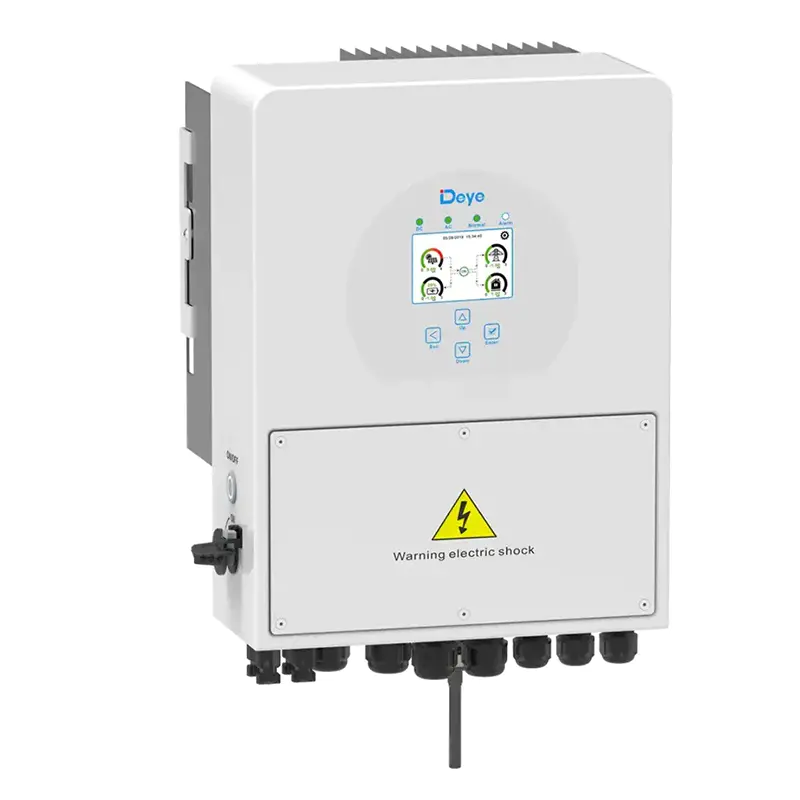
In practical terms, an MPPT controller can deliver 20–30% more energy daily than a PWM unit with the same panel configuration. For any system above 200 watts, MPPT is the standard. The energy gain alone recovers the higher cost within the first year of operation. Modern hybrid inverters from Deye and Solis integrate sophisticated MPPT trackers, often with dual‑channel inputs that handle multiple array orientations, so you may not need a separate controller.
When sizing a dedicated MPPT, verify that the array’s maximum Voc, corrected for the lowest expected temperature (use a temperature coefficient of -0.3%/°C), does not exceed the controller’s input limit. For a 48V battery, a 150‑V MPPT unit can safely handle three 40‑V panels in series in most climates; any more and you risk damage.
Off‑grid inverters fall into two categories: high‑frequency (HF) and low‑frequency (LF). HF inverters use electronic transformers and are lighter, quieter, and more efficient—typically 92–96%—but they struggle with heavy motor startup surges. LF inverters employ a heavy iron‑core transformer that gives them immense surge capacity (often 2‑3x the rated power for several seconds), making them ideal for well pumps, compressors, and large power tools. The trade‑off is lower steady‑state efficiency (85–90%) and larger size.
For all‑residential systems, an LF inverter or a well‑engineered HF inverter with high surge rating is recommended if you run a water pump or air conditioner. The table below compares two capable off‑grid inverters available for 48V battery banks.
| Feature | Deye SUN‑8K/5K SG01LP1 | Solis S6‑EH1P (5‑10kW) |
|---|---|---|
| Rated power | 5 kW / 8 kW | 5–10 kW |
| Surge capacity | 2x rated (10 sec) | 1.5x rated (short duration) |
| Max. PV input | 6 kW (dual MPPT) | 8 kW (dual MPPT) |
| Parallel capability | Up to 9 units | Up to 6 units |
| Emissions / compliance | UL 1741, IEEE 1547 | UL 1741, NEC 2020 |
| Off‑grid mode | Full, with generator start signal | Full, seamless switching |
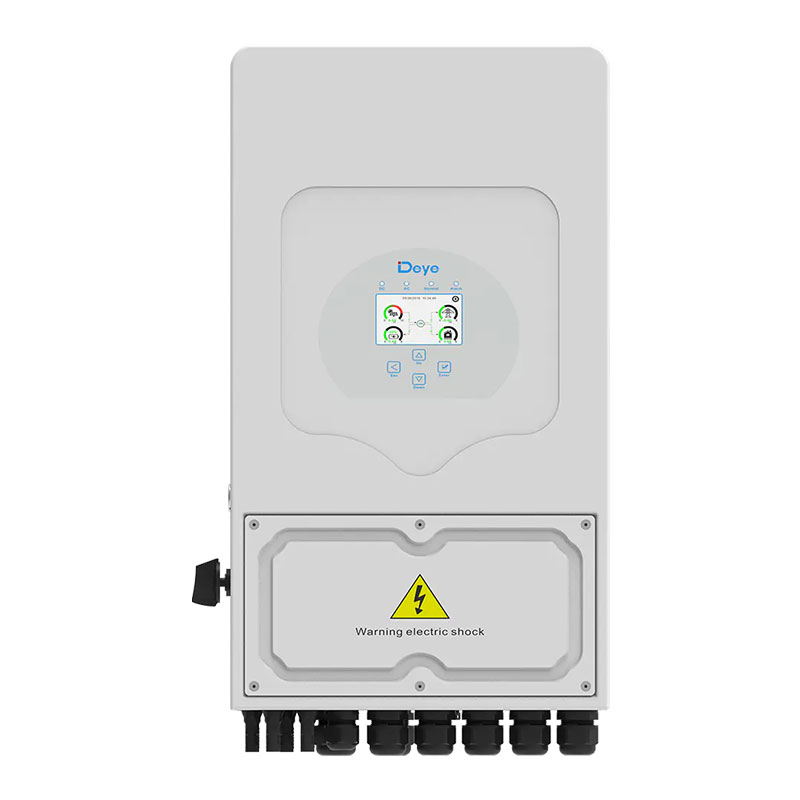
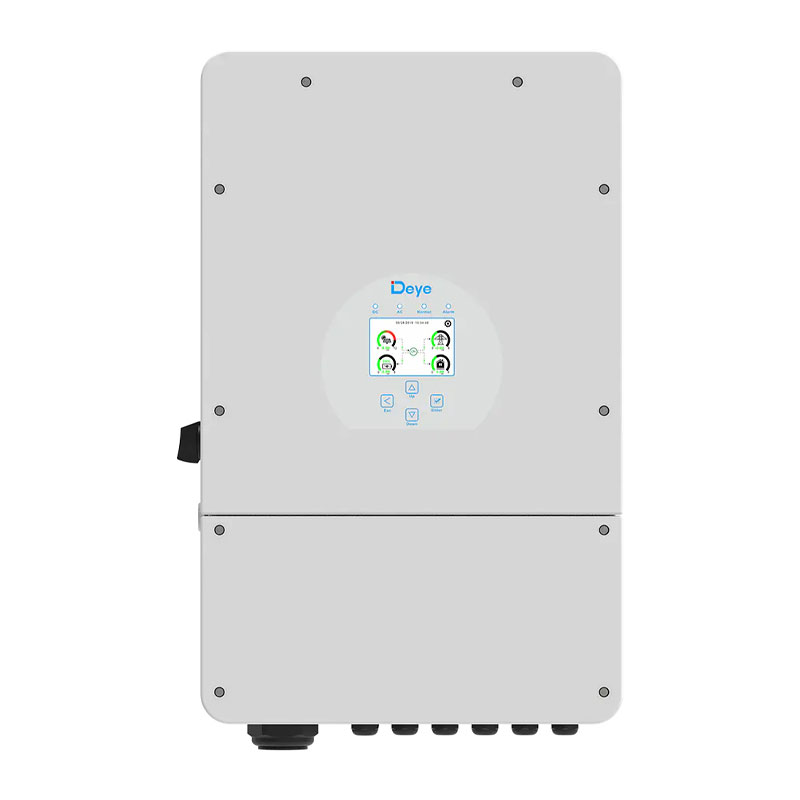
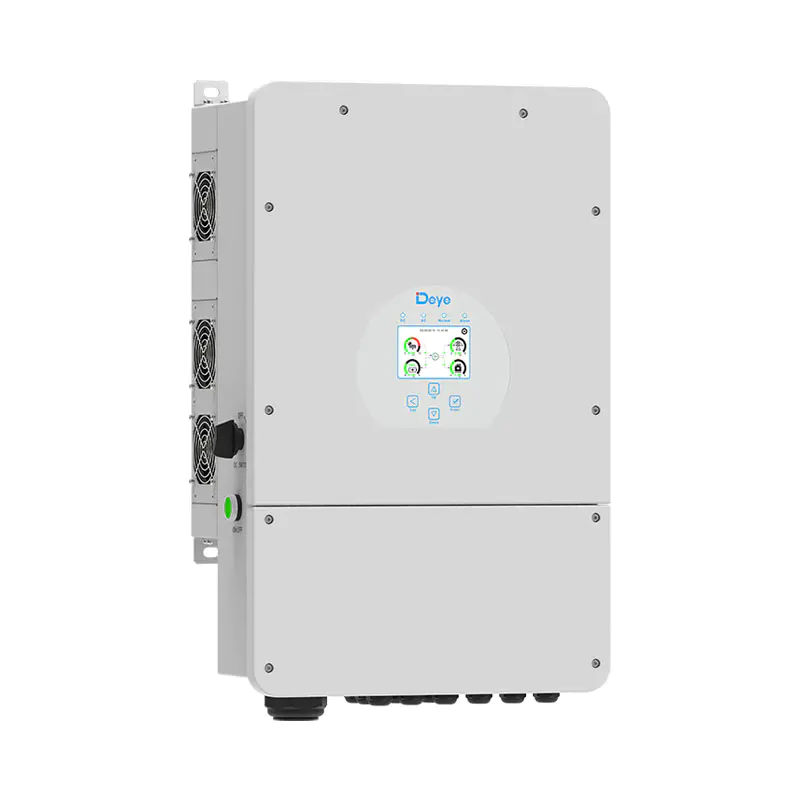
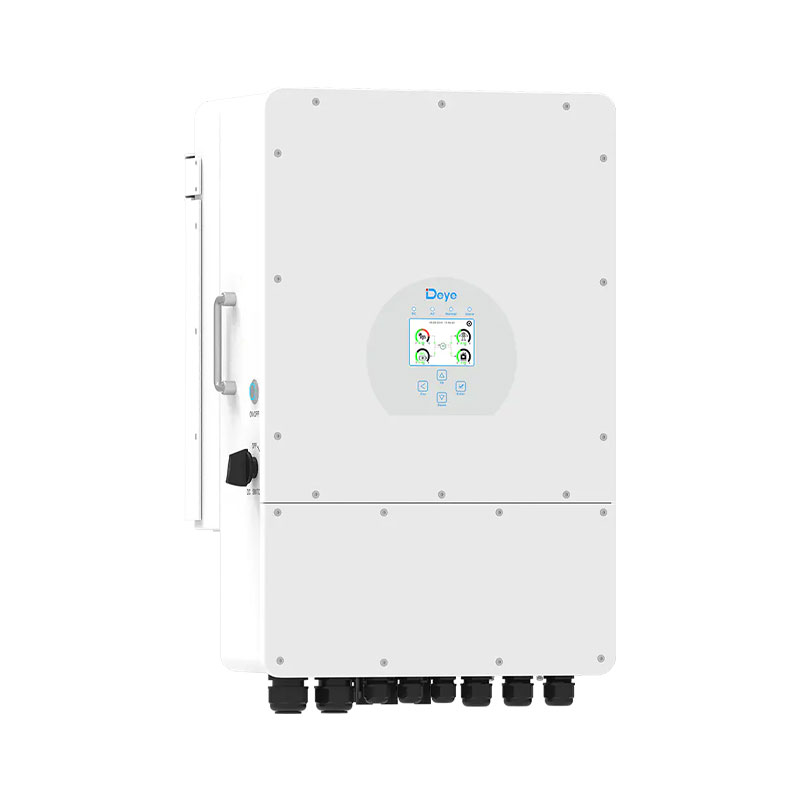
Both inverters support parallel stacking for future expansion and have built‑in MPPT, eliminating the need for an external charge controller. The Deye unit’s higher surge rating makes it a better fit for homes with large inductive loads, while the Solis platform offers a slightly wider PV input window. You can find detailed specs on our complete line of single‑phase low‑voltage hybrid inverters.
Safe wiring is not just about neatness; it prevents fires and ensures system longevity. The three pillars are proper conductor sizing, overcurrent protection, and grounding. Use the voltage‑drop formula to select cable gauge:
Voltage drop (%) = (2 × current × one‑way distance × resistivity of copper) / system voltage
A drop of less than 3% is acceptable for most circuits. The table below offers a quick reference for 12V, 24V, and 48V systems at different power levels.
| System Voltage | Power (W) | Current (A) | Minimum AWG |
|---|---|---|---|
| 12V | 600 | 50 | 6 |
| 12V | 1200 | 100 | 2 |
| 24V | 1200 | 50 | 8 |
| 48V | 2400 | 50 | 10 |
| 48V | 5000 | 104 | 4 |
48V systems dramatically reduce wire size and line losses — a major advantage as solar arrays move farther from the home. NEC 2020/2023 requires rapid shutdown of array conductors within 1 foot of the array boundary for rooftop installations, and all ungrounded conductors must have arc‑fault and ground‑fault protection. Install class‑T fuses or DC breakers sized at 1.25× the maximum continuous current on every battery string, and bond all metal enclosures to a single earth‑ground rod.
Include a surge protective device (SPD) at the array combiner box and the main AC panel to protect against lightning‑induced transients. A proper schematic with these components — fuses, disconnects, and SPDs — will satisfy both inspectors and insurance underwriters.
Even experienced installers can trip over these pitfalls. Recognizing them early saves thousands of dollars and hours of troubleshooting.
Consider a modern 400 sq‑ft tiny house in the southeastern U.S. with a daily DC load of 10 kWh (air conditioning, refrigerator, lights, electronics). The owner wants at most 2 days of autonomy without generator, and the site receives an average of 4.8 PSH in winter.
Battery capacity: (10,000 Wh × 2) / (48V × 0.8 × 0.95) ≈ 548 Ah. Select two 48V 280‑Ah LiFePO4 modules in parallel for 560 Ah usable. The solar array must provide: 10,000 / (4.8 × 0.80) = 2.6 kW; round up to 3 kW. Six 500‑W bifacial panels in a 3S2P configuration yield 3 kW, with a Voc of about 180V — well within a 250‑V MPPT input. Tilt the array to 30° (latitude 30°N for year‑round performance).
Inverter choice: A Deye SUN‑5K‑SG01LP1 single‑phase unit handles the 5 kW peak load (air conditioner startup plus other appliances) and integrates dual MPPT inputs. The full component list is below.
| Component | Model | Qty |
|---|---|---|
| Solar panel | JA Solar JAM54D40 500W bifacial | 6 |
| Inverter/charger | Deye SUN‑5K‑SG01LP1 | 1 |
| Battery bank | Felicity LPBF48280 (48V 280Ah) | 2 |
| PV combiner box | 4‑string with SPD | 1 |
| Cable set | 4 AWG battery + 10 AWG PV | As required |
| Grounding kit | 6 AWG bare copper, rods, clamps | 1 set |
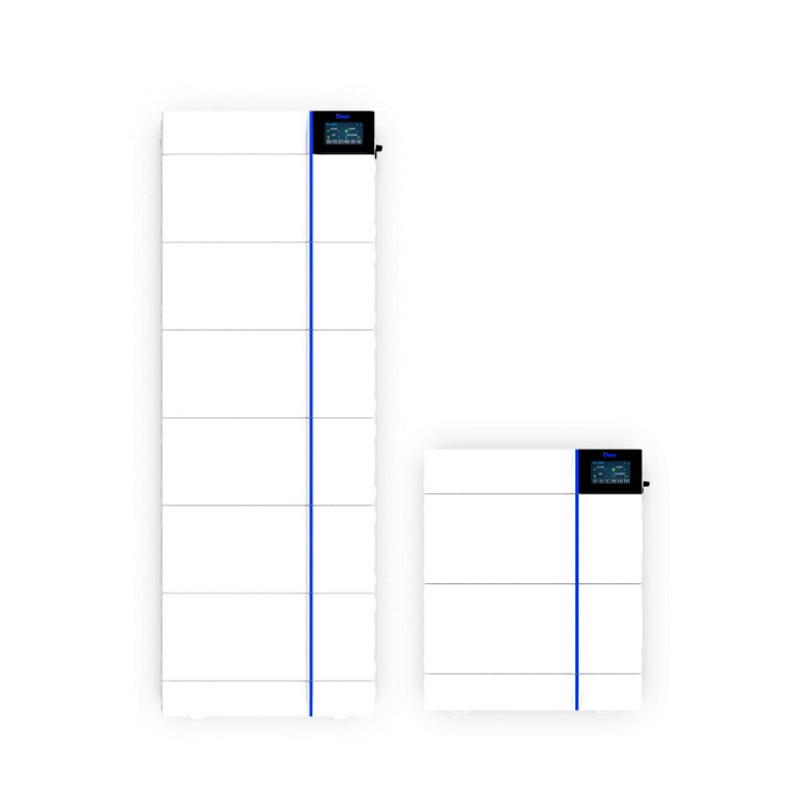
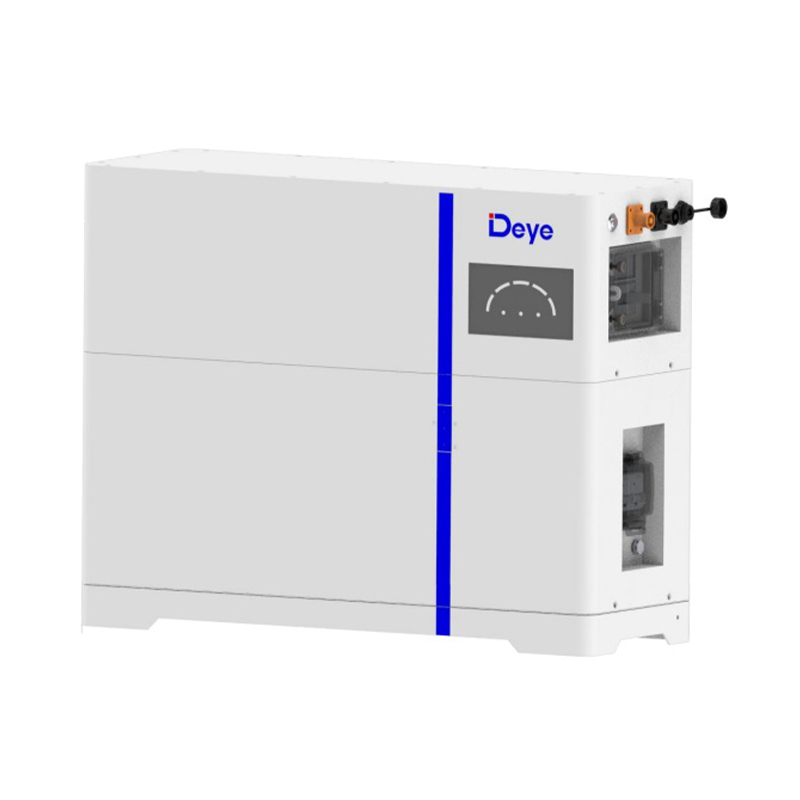
An alternative for faster deployment is a pre‑wired all‑in‑one system like the low‑voltage hybrid energy storage unit that packages the inverter, MPPT, and battery management into a single cabinet. Either path yields a reliable, expandable power plant that can run indefinitely with proper sun and occasional generator support.
+31610999937
[email protected]
De Werf 11, 2544 EH The Hague, The Nederland.
WhatsApp: +1 (917) 257 2995/Copyright © 2023 Uni Z International B.V. VAT: NL864303440B01 All Rights Reserved
Solar Energy Storage System Solutions and Products