-
 FAST SHIPPING
-
 COMPETITIVE PRICE
-
 EXCELLENT AFTER-SERVICE
 FAST SHIPPING
COMPETITIVE PRICE
EXCELLENT AFTER-SERVICE
FAST SHIPPING
COMPETITIVE PRICE
EXCELLENT AFTER-SERVICE
Content
Mounting a solar panel on a pole sounds simple until you're standing in a field with the wrong bracket, a mismatched pole diameter, and a manual that covers three different products at once. The hardware decision you make here—top-of-pole or side-of-pole, aluminum or steel, fixed or adjustable—determines how much energy you actually harvest and how long the whole structure survives. This guide cuts straight to what matters so you can match the right mount to your project before you order anything.
These two categories cover virtually every pole-mount application, and they serve fundamentally different use cases.
Top-of-pole mounts sit at the crown of a steel pipe, supporting anywhere from 2 to 16 panels in a single array. The panel face points skyward at your chosen tilt angle, and you can usually adjust that angle seasonally. This configuration is the standard choice for off-grid cabins, agricultural pumps, and any installation where maximizing panel area on a single pole is the goal. Foundation requirements are heavier—typically a concrete-embedded post—but the structural result is a clean, purpose-built array that behaves like a miniature ground-mount system.
Side-of-pole mounts clamp onto an existing pole—a fence post, a street light column, a gate arm—and hold one to two smaller panels at the side rather than the top. Installation is faster and rarely requires new concrete work. The trade-off is capacity: side-of-pole hardware is designed for panels in the 20W–200W range, making it the right call for security cameras, remote sensors, gate openers, and trickle-charge applications rather than primary power generation.
The decision rule is straightforward: if you're building a standalone solar source for meaningful loads, choose top-of-pole. If you're adding solar to an existing structure with limited footprint, choose side-of-pole.
Four specifications separate a mount that works from one that causes problems at year two.
Pole diameter compatibility. Most top-of-pole mounts specify a sleeve that accepts a standard Schedule 40 or Schedule 80 steel pipe. Common pole OD ranges are 2–4 inches for smaller arrays and 4–6 inches for larger ones. Verify the mount's sleeve inner diameter against your intended pole before purchasing—a 0.25-inch mismatch can mean the sleeve won't close.
Panel count and frame width. Manufacturers rate mounts by the number of 60-cell or 72-cell modules they accept. A "4-panel mount" assumes modules in roughly the 1,000mm × 1,700mm range. If you're using high-efficiency PV panels for pole-mounted arrays with non-standard dimensions, confirm the rail span accommodates your exact frame width.
Material: aluminum vs. galvanized steel. Aluminum hardware (typically 5000 or 6000 series alloy) resists corrosion without paint, weighs less, and stays stable across temperature swings—the right choice for coastal or humid environments. Galvanized steel handles heavier structural loads at lower cost per kilogram, making it practical for large multi-module arrays in drier climates where weight is less of a concern during installation.
Tilt angle range. A mount that adjusts from 0° to 90° covers every latitude and every seasonal scenario. Some budget mounts lock at a fixed angle or offer only two or three preset positions—adequate for a stable location but limiting if you plan to optimize quarterly.
Wind load is invisible at installation and only reveals itself during a storm. By then, the calculation conversation is over.
The structural baseline most engineers reference is IEC 61215, which sets a minimum structural wind test at 50 PSF (2,400 Pa) for certified solar panels. A 50W panel with roughly 3.5 square feet of face area generates approximately 175 lbs of horizontal force at that pressure. Mounted on a 12-foot pole, that force translates to 2,100 ft-lbs of torque at the base—far beyond what a standard gravity-load footing can absorb.
For grid-tied and larger off-grid installations, the current U.S. structural design reference is ASCE 7-22, which supersedes earlier standards and is referenced by the 2024 International Building Code. The practical implication: if your project is in a coastal, high-altitude, or hurricane-prone zone, use a mount rated explicitly for high wind and snow loads, and source an engineering calculation pack before permitting.
| Panel Power | Approx. Face Area | Horizontal Force (50 PSF) | Torque at 12-ft Pole Base |
|---|---|---|---|
| 50W | 3.5 sq ft | ~175 lbs | ~2,100 ft-lbs |
| 100W | 7 sq ft | ~350 lbs | ~4,200 ft-lbs |
| 200W | 13.5 sq ft | ~675 lbs | ~8,100 ft-lbs |
| 400W | 22 sq ft | ~1,100 lbs | ~13,200 ft-lbs |
Snow load matters equally in northern latitudes. Look for mounts that allow you to tilt panels close to vertical in winter—this sheds snow passively and reduces structural stress without a service visit.
The mount is only as good as the pole it sits on, and the pole is only as good as its foundation. Getting this sequence right prevents the most common field failure: a pole that leans or rotates after the first major storm.
For most top-of-pole applications, the foundation involves a concrete-embedded post set below the local frost line. A general starting point for residential single-pole mounts (2–4 panels) is a 10-inch diameter concrete pier extending at least 42 inches below grade—deeper in colder climates. Larger arrays (8+ panels) benefit from professional engineering to determine exact pier diameter and rebar requirements.
For arrays of four panels or fewer, confident DIY installers with basic tools can complete the work in a day. Systems with eight or more panels involve heavier components, higher stakes on foundation sizing, and in many jurisdictions, a permit that requires stamped engineering drawings—professional installation is the practical choice.
Fixed-angle systems leave output on the table. Pole mounts with seasonal tilt adjustment can increase annual energy production by 10–25% compared to a fixed installation at the same site—a meaningful gain that compounds over a 25-year panel lifespan.
The adjustment itself is straightforward on modern hardware: most mounts include a manual tilt adjuster operable from the ground, allowing two to four angle changes per year without a ladder or tools beyond a standard wrench. The optimal angles depend on your latitude:
For locations above 45° latitude, the winter adjustment is particularly impactful because the sun traces a low arc across the sky. A panel fixed at the summer angle in January can lose 30% or more of its theoretical yield simply from poor alignment—no degradation, no fault, just geometry working against you.
A pole-mounted array is the visible part of a system that includes several interdependent components. Selecting the mount and the panels together—then working backward to storage and conversion—avoids the common mistake of pairing hardware that is technically compatible but operationally mismatched.
Start with high-efficiency PV panels for pole-mounted arrays—higher wattage per panel means fewer poles and less foundation work for equivalent total output. Match panel voltage and string configuration to your chosen inverter's input range before finalizing the array size.
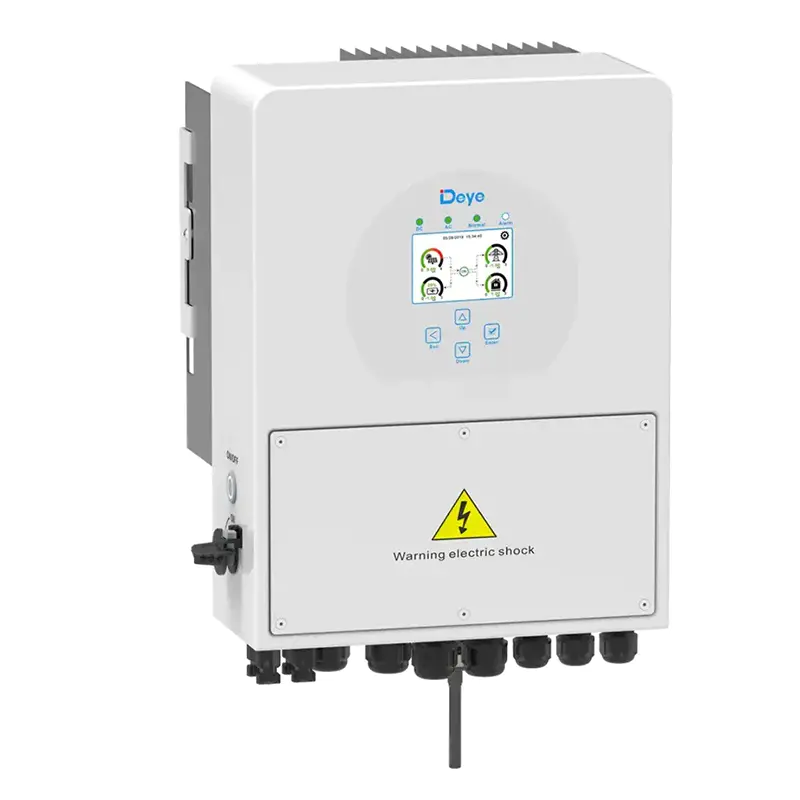
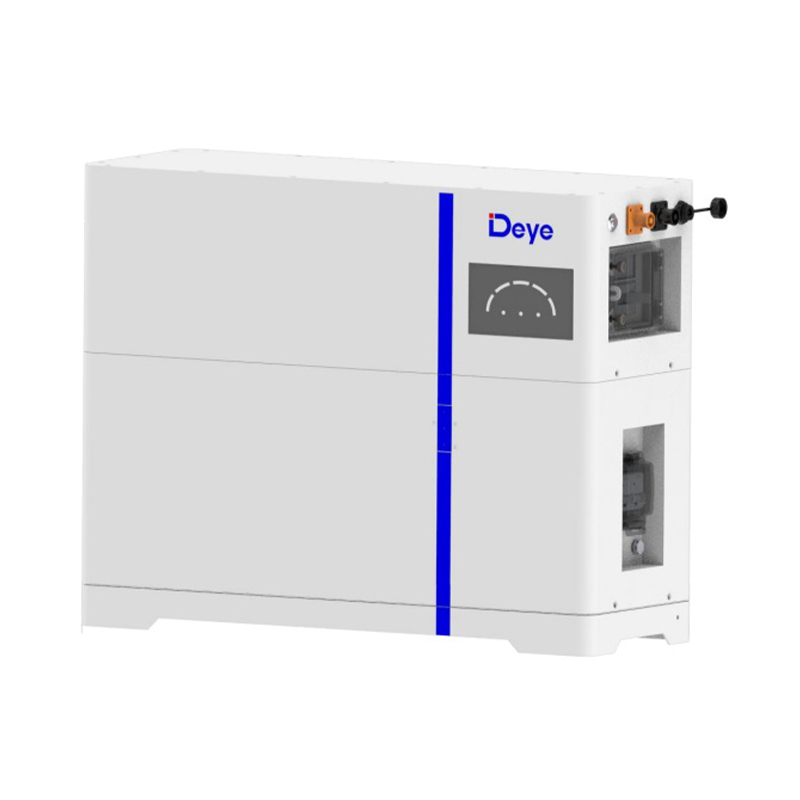
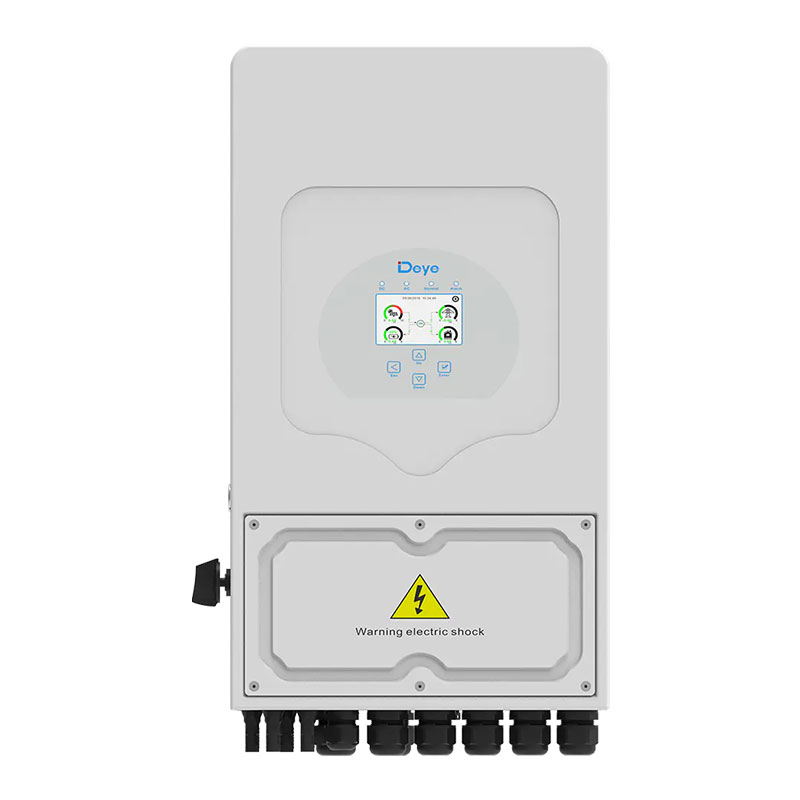
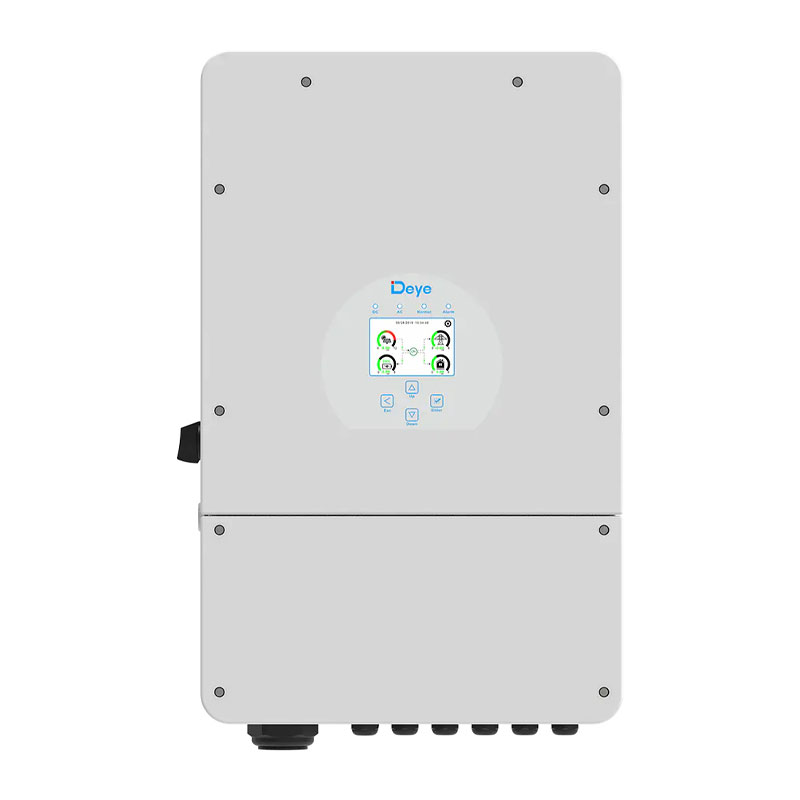
For off-grid and hybrid applications, the inverter selection determines how the system behaves during grid outages and low-sun periods. Hybrid solar inverters for off-grid and grid-tied setups handle both scenarios from a single unit, simplifying wiring and reducing overall equipment cost. Pair the inverter with appropriately sized lithium solar storage batteries to cover overnight loads without oversizing the array itself.
If you're planning a full home or small commercial installation, residential solar energy storage systems that bundle panels, inverter, and battery into a pre-matched kit eliminate the compatibility guesswork and typically carry a unified system warranty—an underappreciated advantage when something needs servicing years down the road.
The pole mount anchors the whole chain. Size it for the load you plan to carry, build the foundation for the wind zone you're in, and the rest of the system has a solid place to start.
←
Charge a Battery with Solar: Components, Steps & Sizing Guide
→
Pennsylvania Solar Incentives 2026: SRECs, Net Metering & Local Rebates Explained
 +31610999937
 [email protected]
 De Werf 11, 2544 EH The Hague, The Nederland.WhatsApp: +852 65283075
Copyright © 2023 Uni Z International B.V. VAT: NL864303440B01 All Rights Reserved
 Solar Energy Storage System Solutions and Products

 0
0


 italiano
 Polskie
 Nederlands
 Deutsch
 Français
 Español
 Український