Are solar panel batteries worth it: Practical Applications, Selection, Performance, and
Oct 26,202612V Amp Hour Calculator: Convert Ah to Watt Hours and Estimate Runtime
Oct 23,2026Alternative to tesla powerwall: Applications, Selection Criteria, and Practical Guidance
Oct 16,2026How to Size a 2000 kWh Solar System: Panels, Inverters, and Battery Storage
Oct 10,202648V Battery Bank Guide: Sizing, Wiring, and Hybrid Inverter Matching for Homes
Sep 28,2026Content
Solar panels are easy to fall in love with: they turn daylight into lower bills, and the math is usually straightforward. A solar battery is a different purchase. It does not generate a single extra kilowatt-hour. It moves the solar you already make from one part of the day to another, and that shift is valuable only when the timing, tariffs, and your reasons for buying line up. After years of helping homeowners and installers compare storage options, we have found that the honest answer to “are solar panel batteries worth it?” is: sometimes, and for very specific reasons. Here is how we help customers decide without the sales gloss.
A solar battery is usually worth it when it has a clear job: soaking up surplus solar that would otherwise be exported for very little, covering evening loads on a time-of-use tariff, or keeping essential circuits alive during an outage. It is usually not worth it when the grid is reliable, the export credit is close to the retail rate, and the battery is bought mainly because it sounds future-proof. The hardware is mature and safe, but it is still a premium addition. Treat it as an energy-management purchase, not an automatic add-on to every PV system.
Without storage, a home uses solar in real time. Surplus power flows to the grid, and the house imports electricity at night. With a battery, the inverter diverts some of that surplus into a battery, then discharges it later to serve lights, refrigeration, broadband, or other loads. Modern lithium batteries typically return roughly 90% of the energy you put in, so round-trip losses are real but modest.
The practical detail is backup. Many batteries can power a dedicated backup panel, not the whole house, unless the system is designed for full-home backup. If keeping a well pump, boiler, or medical equipment running matters, say so early. That requirement changes the inverter, battery, and wiring more than a glossy capacity figure ever will.
Most battery savings come from a simple gap: the difference between what you pay for imported electricity and what you receive for exported electricity. If you buy at 30 cents per kWh and export at 5 cents, each stored kilowatt-hour can be worth a lot. If you buy at 30 cents and export at 28 cents, the same battery has very little to arbitrage.
Use a year of bills, not a monthly estimate. Then calculate the evening load the battery can realistically cover, subtract round-trip losses, and account for days when the battery is full by noon or empty by 8 p.m. Incentives and financing can improve the result, but they should not rescue a design that does not fit your load.
| Household situation | What drives the value | Practical verdict |
|---|---|---|
| High evening time-of-use rates, low export credit | Shifts cheap solar into expensive hours | Often strong, if sized to evening use |
| Flat rate, near-retail net metering | Little difference between import and export | Usually weak on cash flow; buy only for backup |
| Frequent or long outages | Resilience for essential loads | Worth it for many households, even with slow payback |
| Existing solar, low export payment | Retrofit storage to capture surplus | Worth modeling; AC-coupled storage can work well |
| Off-grid or weak grid | Avoids diesel or unreliable supply | Frequently practical and cost-effective |
Storage looks strongest in four situations. First, the import-export spread is wide and predictable. Second, outages are frequent enough to disrupt work, health, or comfort. Third, the utility limits exports or refuses new export capacity. Fourth, the household is adding evening demand such as an EV, heat pump, or air conditioning and wants to keep more solar on site.
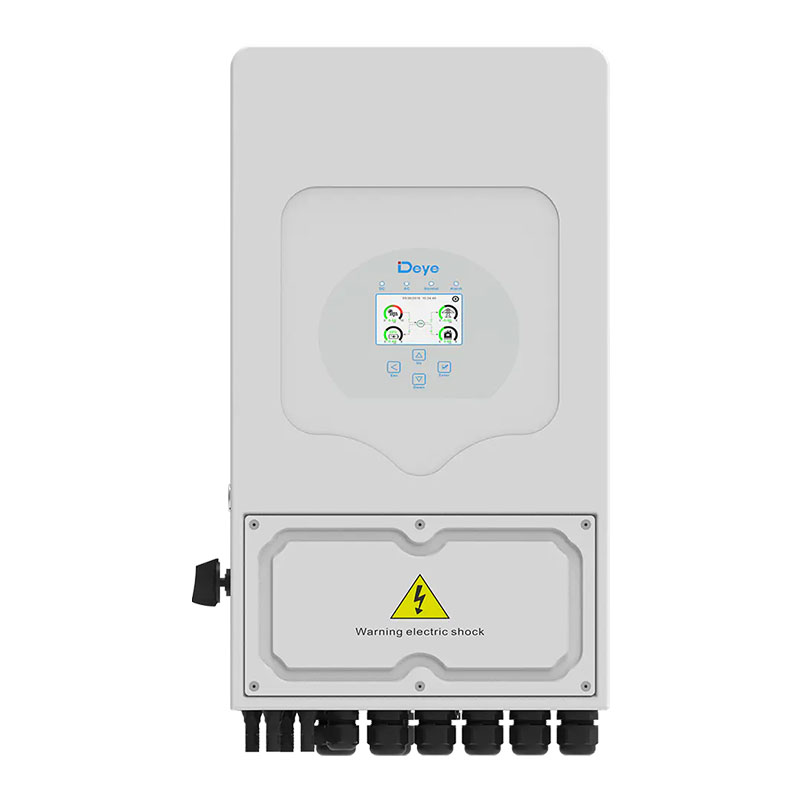
If you are building a new system, a hybrid inverter can make storage easier to add later; retrofitting an existing system usually means an AC-coupled battery, which is perfectly workable but needs a clear design. For a modest home with evening-heavy use, a 5kW PV kit with 5kWh of storage is a sensible reference point rather than a giant battery that sits full all afternoon.
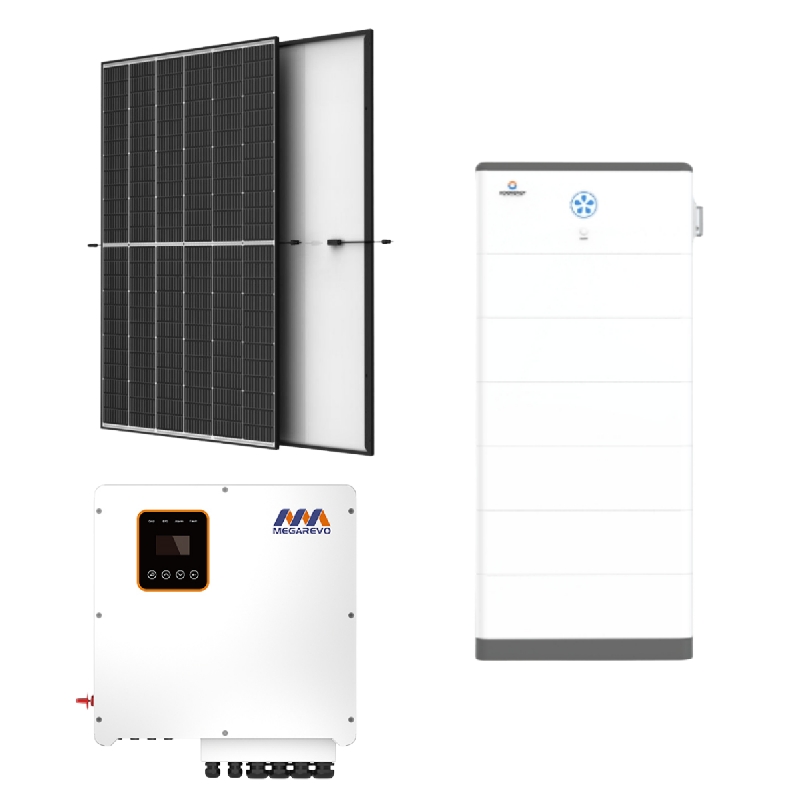
5kW Photovoltaic Kit with 5kWh Battery StorageResidential solar-plus-storage package with 12 425W modules, a 6kW hybrid inverter and 5kWh battery, suited as a reference for modest evening-heavy homes.View Product →A battery is hard to justify purely on payback when net metering is generous, outages are rare, and the home already exports most of its surplus at a fair rate. It also makes less sense if the roof array is small, heavily shaded, or sized mostly for daytime air-conditioning.
Watch for oversizing: a battery that never reaches a low state of charge is capital sitting on a wall. Also be wary of bargain storage with unclear certification, weak warranty support, or an inverter that cannot communicate with it. The cheapest quote can become expensive if the system cannot be commissioned properly or if replacement parts are hard to source. Efficiency and safety should come before the last few dollars of discount.
Nameplate capacity is only the starting point. A 10kWh battery with 90% usable depth of discharge gives about 9kWh of usable storage before round-trip losses, and not all of it may be available to backup circuits. Start with your evening and overnight consumption, then add a margin for cloudy days if backup matters.
Check the inverter’s continuous and peak output, the backup transfer time, and whether the battery can be charged from solar, grid, or both. Phase configuration matters too: single-phase and three-phase homes need matching equipment, and some backup designs require a dedicated panel. Our guide to sizing PV and battery capacity together explains a practical ratio approach; it is worth reading before anyone quotes a capacity at you.
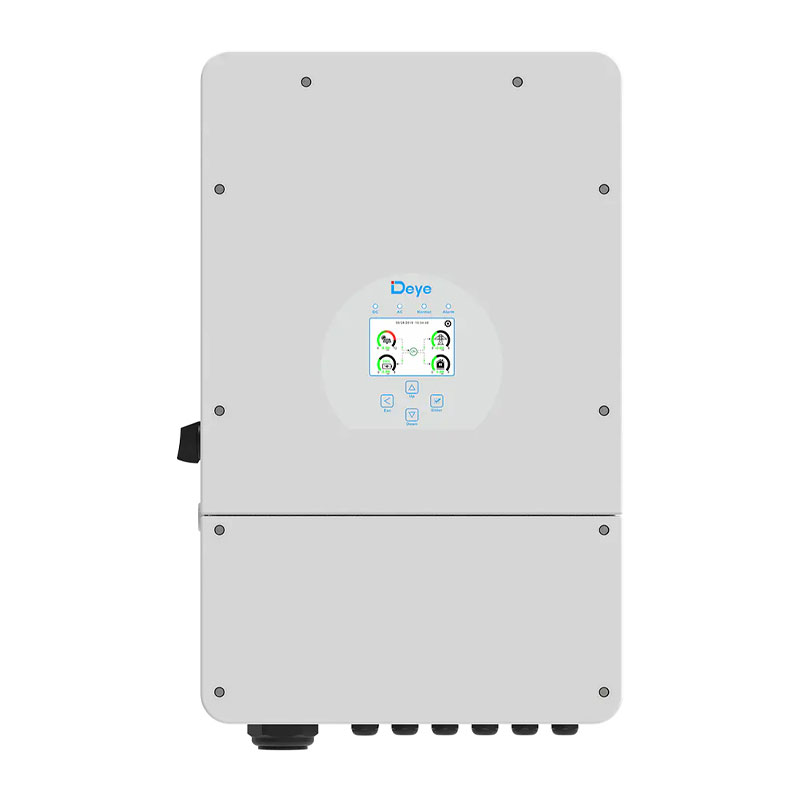
An 8kW array with 10kWh of storage is often a more realistic baseline for an all-electric home than a very small battery paired with a large array.
8kW Photovoltaic Kit with 10kWh High-Voltage StorageResidential kit combining 19 425W modules, an 8kW three-phase hybrid inverter and 10kWh HV battery, a realistic baseline for all-electric homes.View Product →Battery prices have fallen, but installed cost still varies widely by market, capacity, inverter compatibility, and labor. In many quotes, storage remains the premium line item, so the quality of the design matters more than the headline cost per kWh.
Incentives can change the answer, but eligibility is rarely automatic: capacity caps, approved equipment lists, installer certification, and paired-solar rules all appear in different markets. Policy is also moving in two directions. Some regions still offer strong net metering; others have moved to lower export credits or time-of-use rates. Both shifts can make storage more useful, but only when the battery is sized to actual evening demand.
Ask for an itemized quote, the warranty terms, expected degradation, and a realistic commissioning plan. A good installer will show you the assumptions, not just the payback number.
If you want a second set of eyes on your load profile, our team is happy to talk through the numbers without pressure. The right answer may be a battery now, a battery-ready inverter, or no battery at all.
Solar panel batteries are worth it when they do a defined job: capture low-value exports, cut high-value evening imports, or keep critical loads running. They are less compelling when the grid is stable, export credits are strong, and the purchase is driven only by the idea of independence. The technology is ready; the question is whether your tariffs, load shape, and resilience needs make storage useful. Size for the evening, design for backup only if you need it, and demand a clear calculation. Done that way, a battery is not a gadget. It is a quiet, practical piece of energy management, and sometimes that is exactly what a home needs.
+31610999937
[email protected]
De Werf 11, 2544 EH The Hague, The Nederland.
WhatsApp: +852 65283075Copyright © 2023 Uni Z International B.V. VAT: NL864303440B01 All Rights Reserved
Solar Energy Storage System Solutions and Products