How to Size a 2000 kWh Solar System: Panels, Inverters, and Battery Storage
Oct 10,202648V Battery Bank Guide: Sizing, Wiring, and Hybrid Inverter Matching for Homes
Sep 28,20263 Phase Inverter Guide: Types, Sizing, and How to Choose the Right One for Solar
Sep 21,20263 Phase Hybrid Inverter Guide: Sizing, Battery Pairing and Buying Advice
Sep 18,2026Which Type of Solar Panel Is Best? A Practical Buyer's Guide for Homes in 2026
Sep 11,2026Content
A "2000 kWh solar system" can mean two completely different things, and mixing them up is the fastest way to buy the wrong equipment. For a compact apartment in Europe, 2,000 kWh might be an entire year of electricity. For a large, all-electric house with a heat pump, a pool and an EV in the driveway, it is closer to a single month. The gap between those two readings is roughly a factor of twelve in system size, so it is worth settling the question before anyone quotes you a panel count.
We work with installers, distributors and project developers every day, and the questions are always the same: how many kilowatts of modules, which inverter, and how much battery. What follows is the honest arithmetic, including the places where the answer genuinely depends on your address and your habits.
Kilowatt-hours measure energy, kilowatts measure power. A system that generates 2,000 kWh over a period is not a 2,000 kW system, and that distinction sits behind most of the confusion. In practice, almost everyone searching this phrase means a household consuming 2,000 kWh of electricity per month that wants solar to cover it.
That works out to roughly 24,000 kWh a year, or about 65 kWh a day. For context, an average household in the United States uses somewhere near 10,500 kWh annually, while a typical home in Germany, Italy or the Netherlands sits closer to 2,500 to 4,000 kWh. A 2,000 kWh month almost always points to a large, all-electric property: heat pump, electric water heating, air conditioning, and quite possibly a pool and one or two electric vehicles.
The other reading, 2,000 kWh per year, is a much smaller job. At roughly 5.5 kWh a day, a modest 2 kW array, or even a well-chosen balcony kit, would cover a healthy share of it without touching the roof structure of the building.
The core equation is simple enough. Array size in kilowatts equals annual consumption divided by 365 days, divided again by the local peak sun hours, and then divided by a system derate that accounts for inverter losses, cabling, soiling, heat and shading. A derate of 0.75 to 0.85 is a reasonable starting point; shaded or older roofs sit at the lower end.
Peak sun hours are not the same as daylight hours. They describe the equivalent number of hours per day at 1,000 watts per square metre, and they range from about 3.0 in northern Europe to 5.5 or more in southern Spain, the Middle East, Australia and the sunnier US states. That single variable moves the answer more than anything else.
| Daily peak sun hours | Array size (kW) | Panels at 450 W | Panels at 620 W |
|---|---|---|---|
| 3.5 | 24 | 53 | 39 |
| 4.0 | 21 | 47 | 34 |
| 4.5 | 18 | 40 | 29 |
| 5.0 | 16 | 36 | 26 |
| 5.5 | 15 | 33 | 24 |
A house in southern Italy and a house in northern Germany can have the same bill and need arrays that differ by eight or nine kilowatts. This is why any panel count you read online should be treated as a starting point rather than a specification.
Panel count follows from the array size and the module you choose. Mainstream residential modules now sit between 420 W and 450 W, while large-format modules run from 550 W to 620 W. Choosing the larger format cuts the number of units, the number of rail metres and often the labour hours, which matters when you are covering 15 kW or more.
Physical space is the practical constraint. A 450 W module occupies roughly two square metres, and you need to add walkways, edge setbacks and row spacing on a flat roof. Twenty-four large panels might need 50 to 55 square metres of clear area; forty smaller ones can push past 80 square metres. If the roof cannot carry the load, ground mounting, an outbuilding or an agricultural mounting structure are all legitimate options, and they are frequently cheaper than a complicated roof layout.
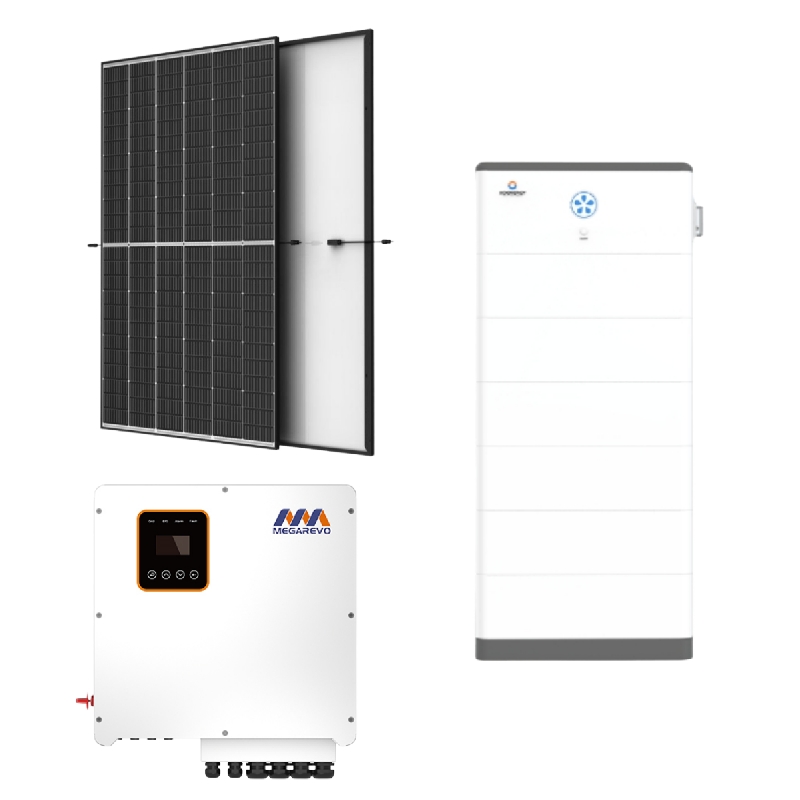
20 kW Photovoltaic Kit with 20 kWh StorageResidential PV storage kit with 47 x 425 W modules, a 15 kW three-phase hybrid inverter, and 20 kWh HV battery; mounting and cables excluded.View Product →Inverter sizing is not a one-to-one match with array size. A DC to AC ratio between 1.1 and 1.35 is normal and healthy, because modules rarely hit their nameplate output. A 20 kW array behind a 15 kW inverter will clip for a few hours on the best days of the year and still deliver more annual energy than an oversized inverter would.
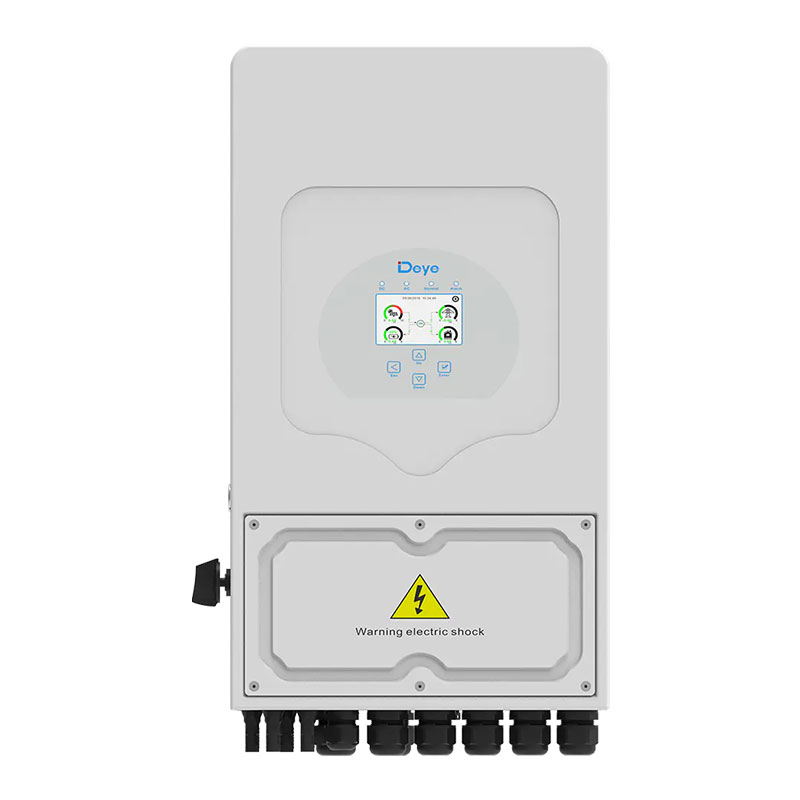
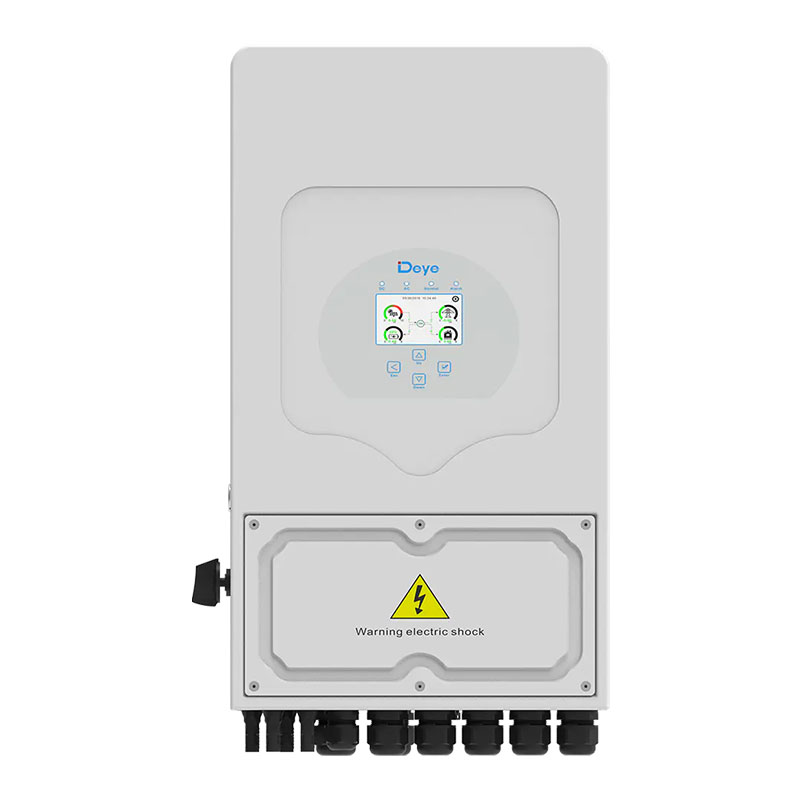
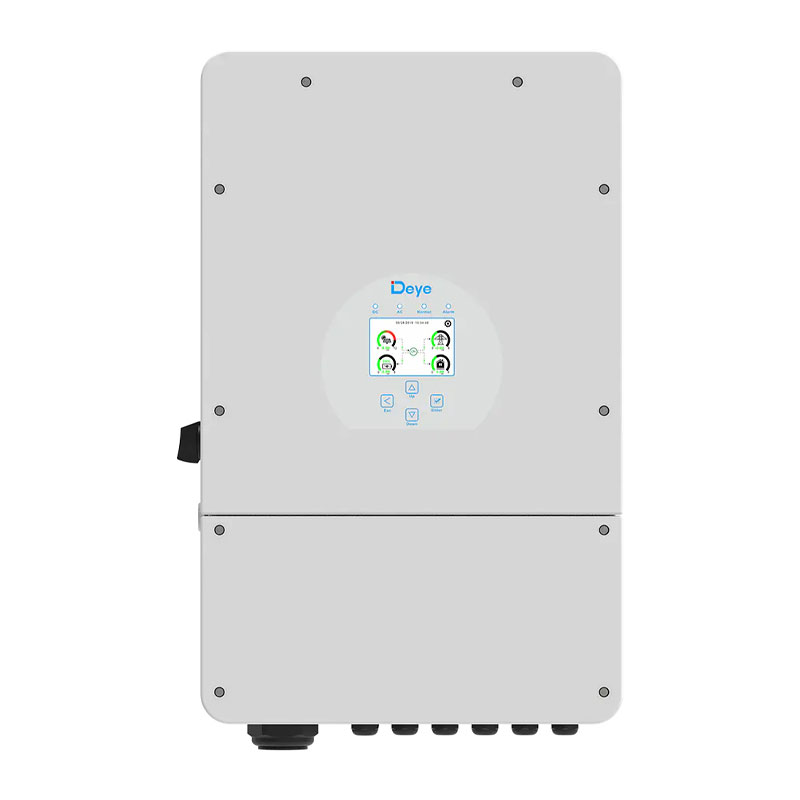
The bigger decisions are electrical. A single-phase supply suits smaller homes, but a house using 2,000 kWh a month is often three-phase, and a three-phase hybrid inverter with a high-voltage battery is usually the cleaner architecture at this scale. Three-phase balancing keeps the grid connection comfortable, and high-voltage batteries cut the current on the DC side, which means thinner cables and lower losses.
Whatever you choose, insist on real monitoring. Consumption data for twelve months is the only reliable way to know whether a design is working, and it is also what tells you when to add storage later.
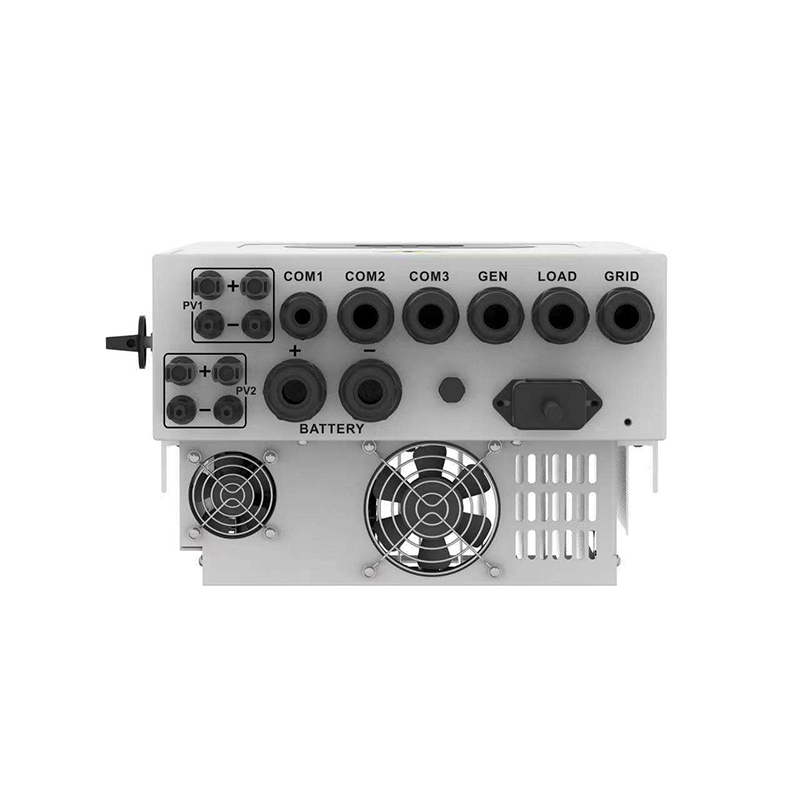
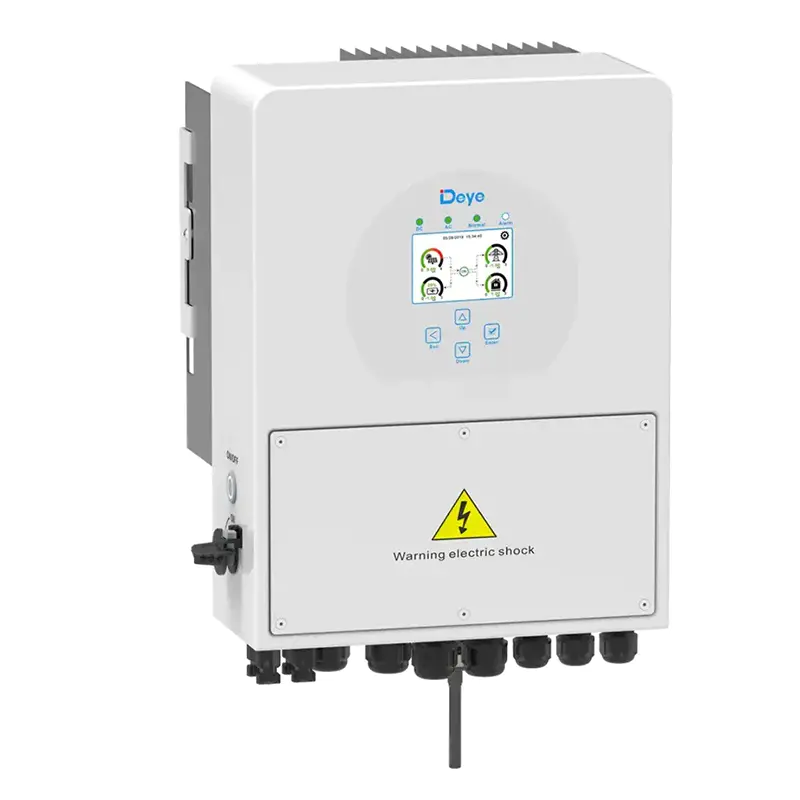
Deye 15 kW Three-Phase High-Voltage Hybrid Solar InverterThree-phase high-voltage hybrid inverter with 15 kW AC output, dual MPPT trackers, 80 A passthrough, and off-grid/parallel operation for residential storage systems.View Product →At 65 kWh of daily consumption, a battery is not going to run the whole house for a day unless you build something the size of a small commercial unit. What storage does well is shift the solar you generate at midday into the evening peak, when the grid is expensive and your consumption is highest. For most homes, somewhere between 40 and 60 percent of daily use happens outside daylight hours.
A self-consumption battery of 10 to 20 kWh is a sensible match for a 15 to 20 kW array. If your goal is genuine backup during outages, you need to decide which circuits must survive and for how long, then size from that list rather than from the array. Getting the panel-to-battery ratio right matters more than the headline capacity, because an undersized array will never refill an oversized battery in winter.
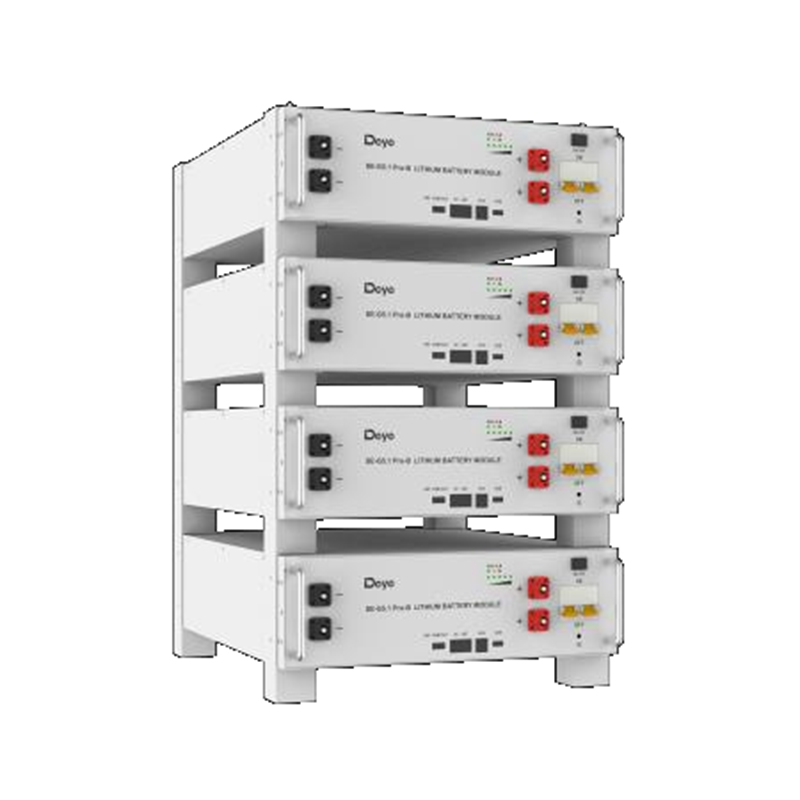
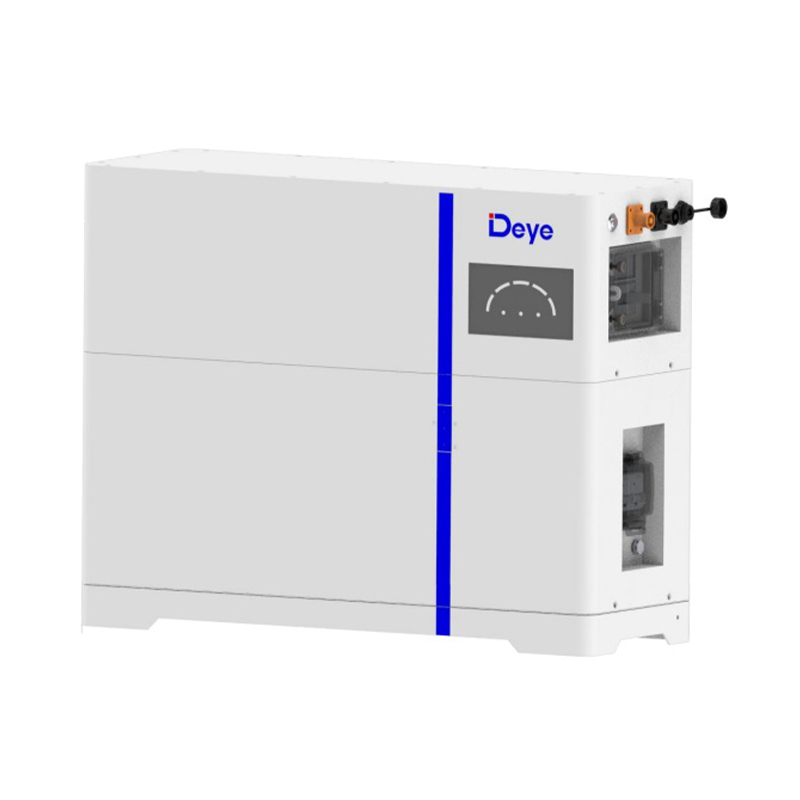
High-voltage battery stacks are the usual choice above 10 kWh, since they scale in tidy modules and pair naturally with three-phase hybrid inverters.
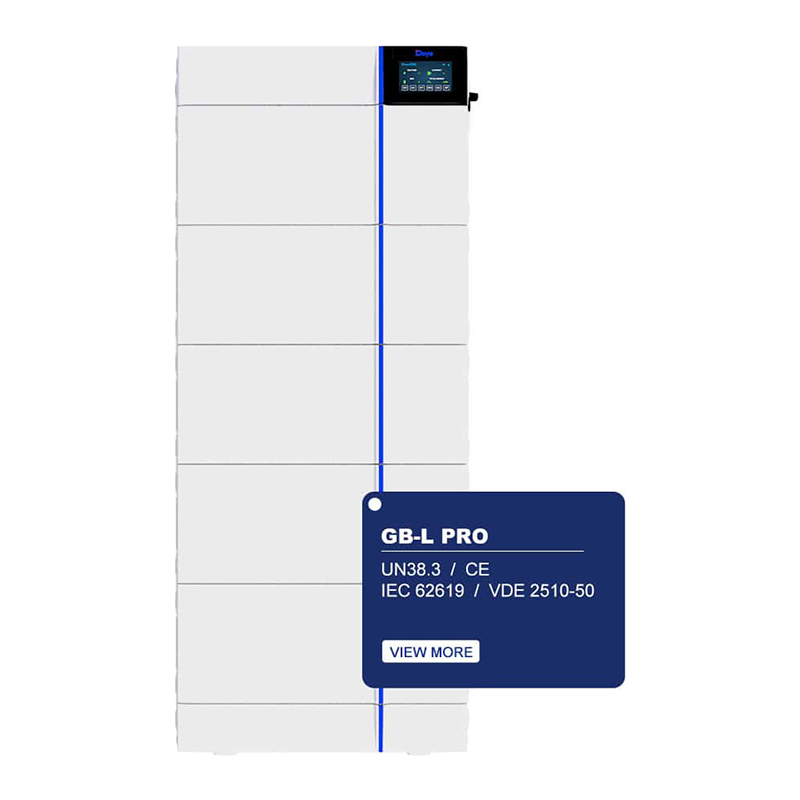
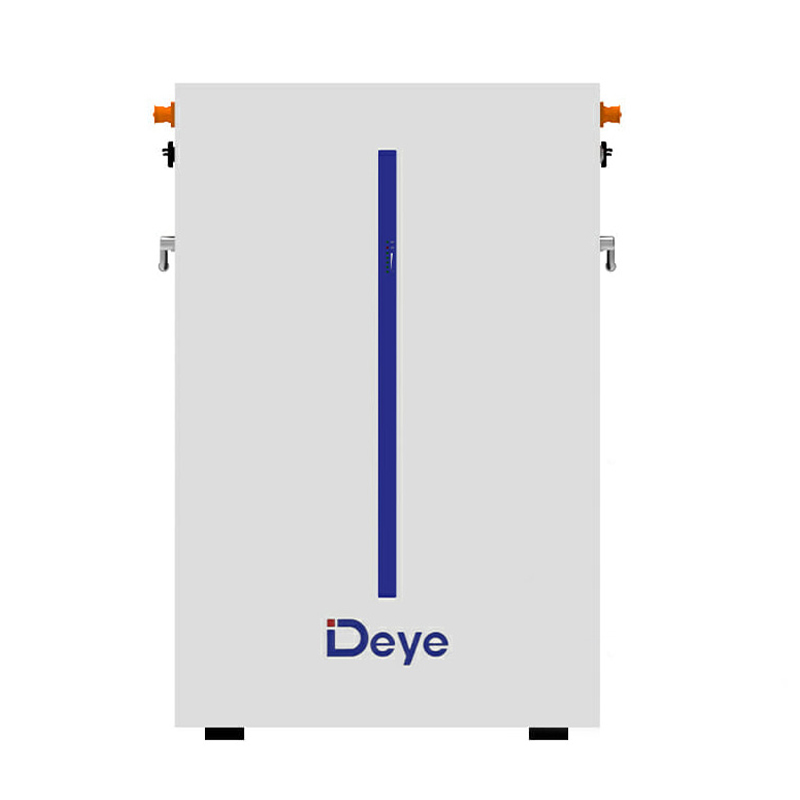
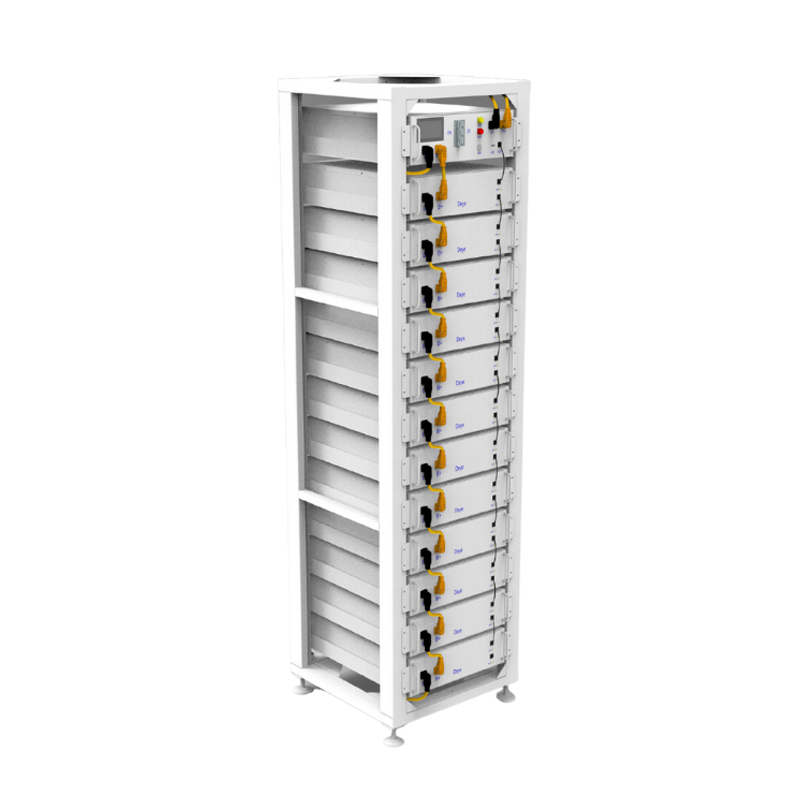
Deye GB-L Pro 20 kWh High-Voltage Battery Storage SystemHigh-voltage LFP battery system with 20 kWh nominal and 18 kWh usable capacity, five series modules, and IP65 enclosure for daily solar shifting.View Product →Two houses can both use 24,000 kWh a year and need very different systems. A house whose load is dominated by an EV charging overnight benefits enormously from storage, while a house dominated by daytime air conditioning benefits more from raw array size. Reading the load profile is the step most people skip.
| Load | Typical annual kWh | Share of a 24,000 kWh year |
|---|---|---|
| Heating and cooling (heat pump) | 6,000 to 9,000 | 25 to 38 percent |
| Electric water heating | 3,000 to 4,500 | 13 to 19 percent |
| EV charging | 3,000 to 4,000 | 13 to 17 percent |
| Lighting, appliances, electronics | 4,000 to 6,000 | 17 to 25 percent |
| Pool pump | 1,500 to 2,500 | 6 to 10 percent |
| Well pump, workshop, outbuildings | 1,000 to 3,000 | 4 to 13 percent |
There is no single answer to how big a 2000 kWh solar system should be, and anyone who gives you one without asking about your roof and your tariff is guessing. What we can do is hand you the modules, inverters, batteries, mounting and monitoring hardware as one coherent package, sized to your actual consumption and shipped quickly. If you would like a second opinion on a design, request a free quote and tell us your annual kWh, your supply type and your roof orientation.
←
No previous article
→
48V Battery Bank Guide: Sizing, Wiring, and Hybrid Inverter Matching for Homes
+31610999937
[email protected]
De Werf 11, 2544 EH The Hague, The Nederland.
WhatsApp: +852 65283075Copyright © 2023 Uni Z International B.V. VAT: NL864303440B01 All Rights Reserved
Solar Energy Storage System Solutions and Products