BOS-B Pro-A3 Battery System Explained: Capacity, Cycle Life, Configuration
Jul 07,2026SUN-MPPT-L01-EU-AM8 and SUN-STS500L Specs Explained: 8 Channels, 500kW STS
Jul 07,2026SUN-100K-PCS01HP3 vs SUN-125K-PCS01HP3: Comparing Specs to Choose the Right PCS
Jul 07,2026Solar Panels EV Charging: How Many Panels You Need & Full Setup Guide
Jun 30,2026Whole Home Backup System: AC vs DC Coupled, Cost & Sizing
Jun 24,2026Content
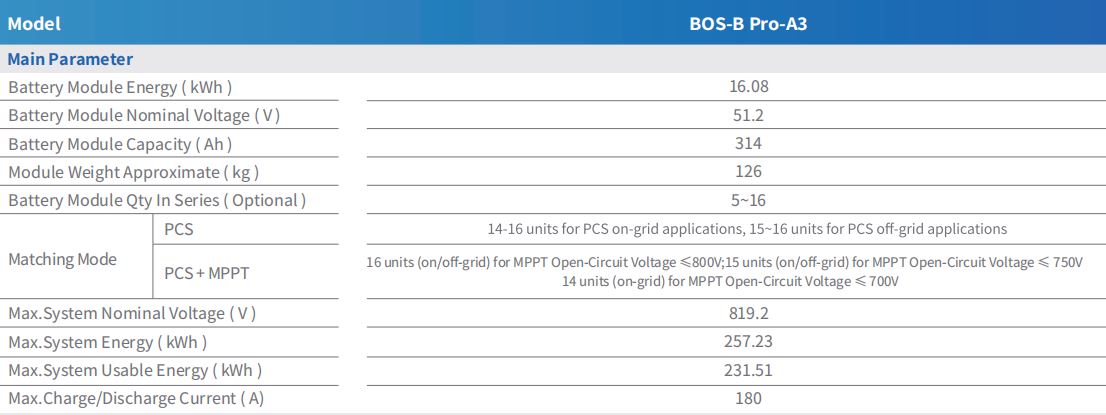
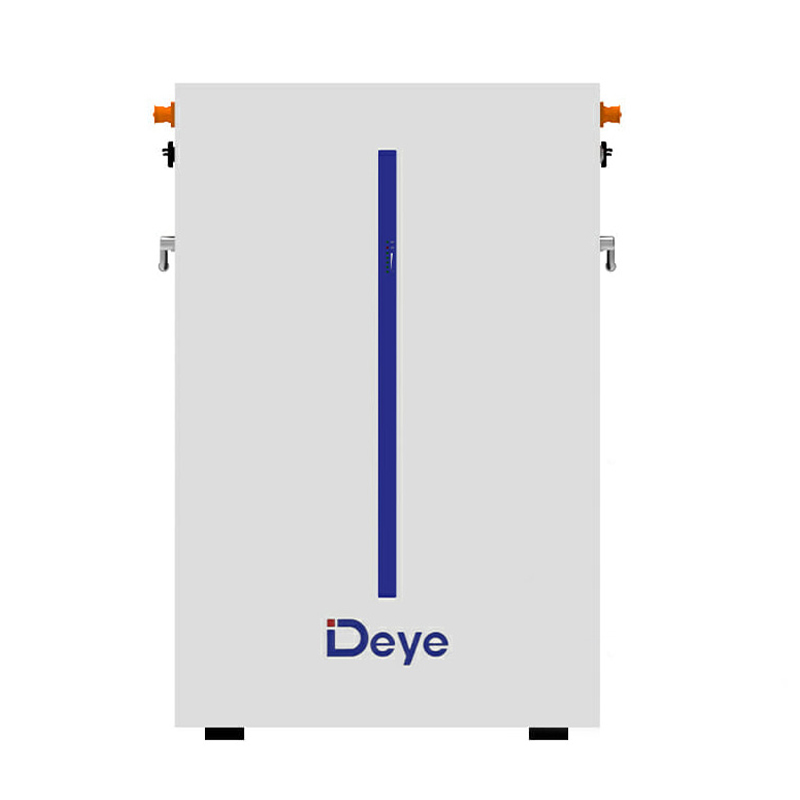
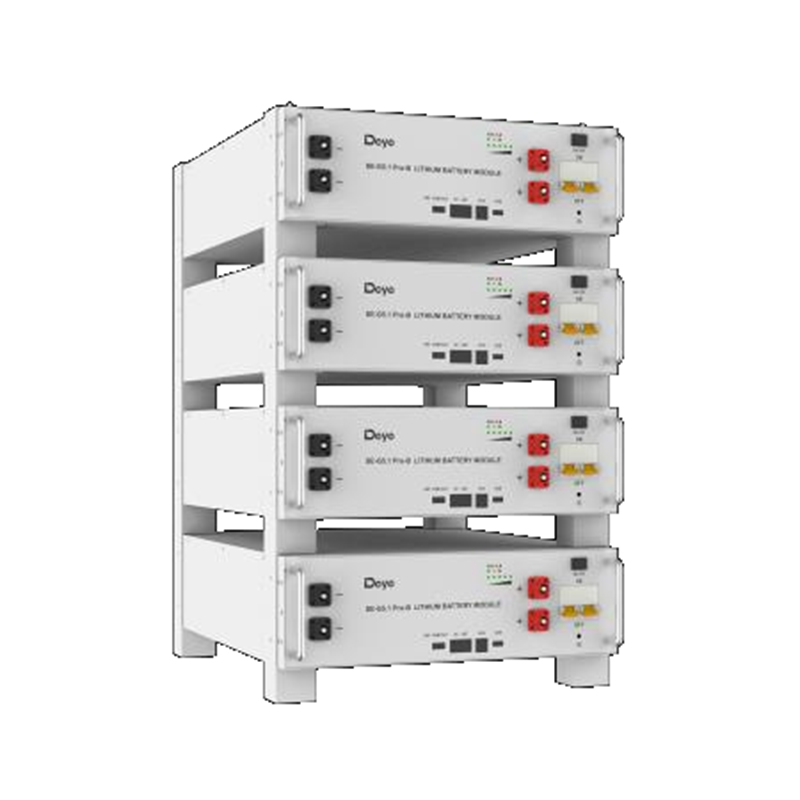
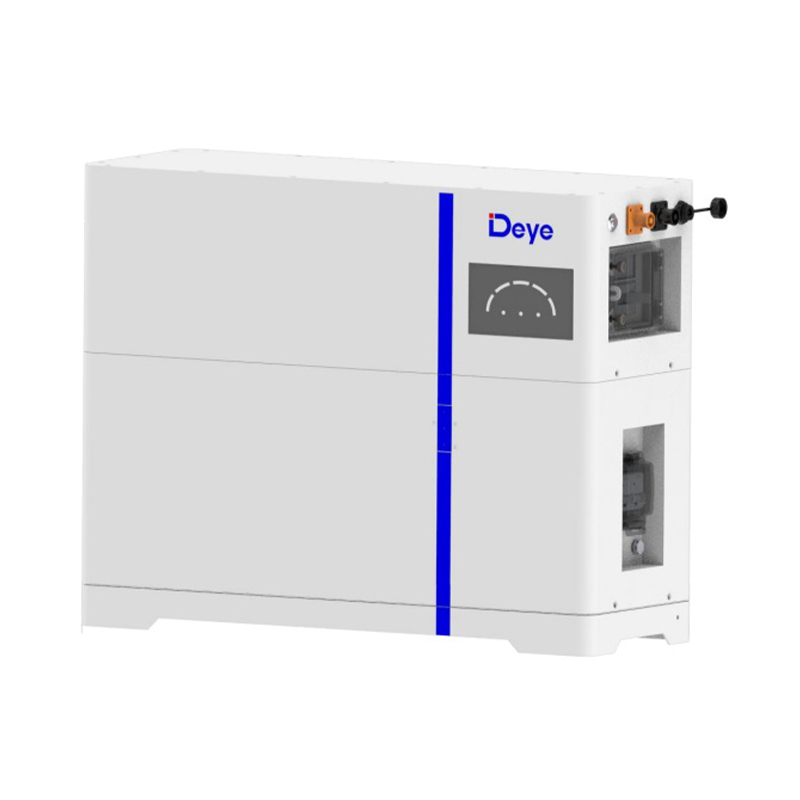
Every BOS-B Pro-A3 rack is built from the same base unit: a 16.08kWh module rated at 51.2V nominal voltage and 314Ah capacity, weighing 126kg. Everything else in the system — total rack energy, series configuration, matching PCS count — scales up from that single module spec.

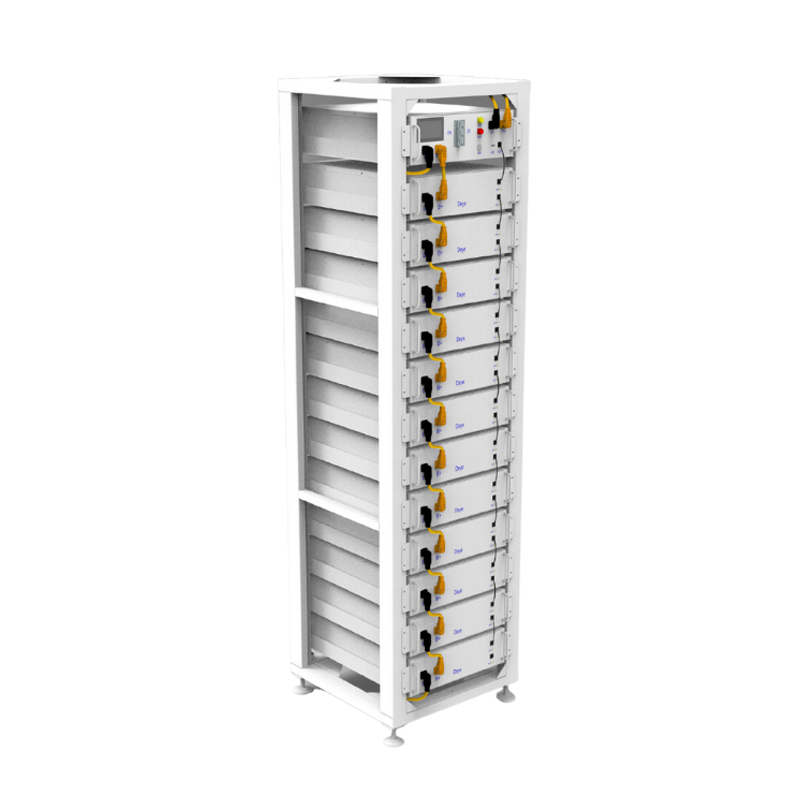
A rack can hold between 5 and 16 battery modules in series, but the actual ceiling depends on how the rack is wired. Connected straight to PCS with no MPPT in the string, 14 to 16 units are supported depending on whether the installation runs on-grid or off-grid. Once MPPT is added, the limit shifts with the PV open-circuit voltage: 16 units are allowed at 800V or below, 15 units at 750V or below, and 14 units on-grid only at 700V or below.
At the maximum 16-module configuration, the rack reaches a system nominal voltage of 819.2V, a maximum system energy of 257.23kWh, and 231.51kWh of usable energy — the gap between the two reflecting the recommended 90% depth of discharge.

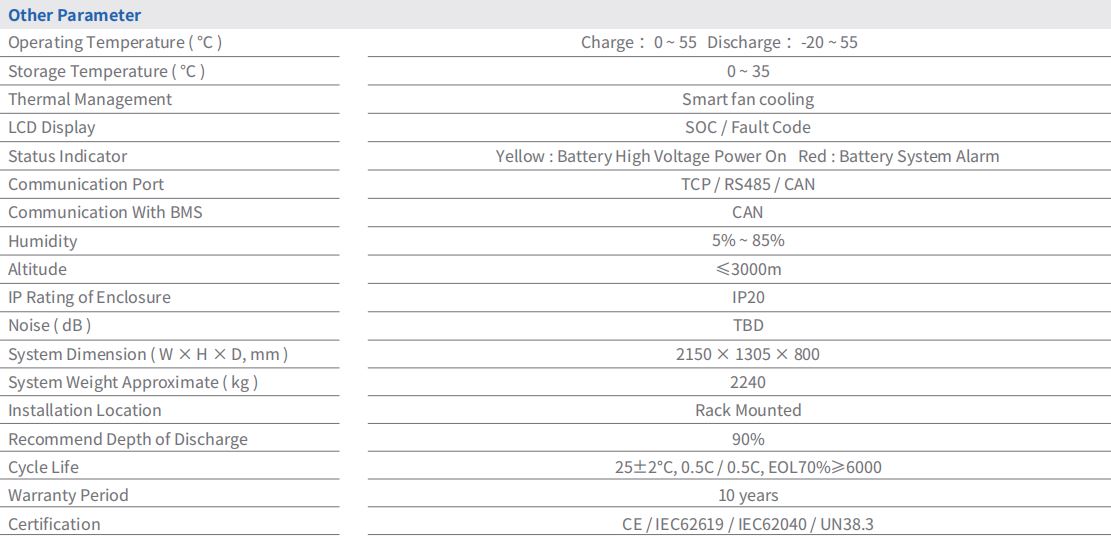
Regardless of module count, the rack's maximum charge and discharge current is capped at 180A. Charging is permitted across a 0°C to 55°C range, while discharging extends down to -20°C, giving the system more operational headroom in cold conditions when pulling power out than when putting it back in. Storage temperature, separate from operating temperature, is limited to 0-35°C.
Cycle life is rated at 6000 cycles or more to 70% end-of-life capacity, tested at 25±2°C with 0.5C charge and 0.5C discharge rates. That figure is what the 10-year warranty period is built around — a rack cycled once per day at the tested rate and depth of discharge should still retain meaningful usable capacity when the warranty period ends.
Recommended depth of discharge is set at 90%, and the module's LFP chemistry is what allows the combination of that discharge depth and the 6000-cycle rating to hold up over the warranty term, rather than trading one for the other the way some other chemistries require.
The full rack measures 2150 × 1305 × 800mm and weighs approximately 2240kg at maximum configuration, mounted as a rack-installed unit rather than free-standing. Communication runs over TCP, RS485, or CAN, with CAN specifically used for communication with the BMS. Thermal management is handled through smart fan cooling, and the enclosure carries an IP20 rating suited to indoor or sheltered installation rather than direct outdoor exposure.
Status is reported through an SOC and fault code display, backed by a two-color indicator system — yellow for high-voltage power on, red for a battery system alarm — so a technician can read rack status without opening a panel or connecting a laptop. Certification covers CE, IEC62619, IEC62040, and UN38.3.

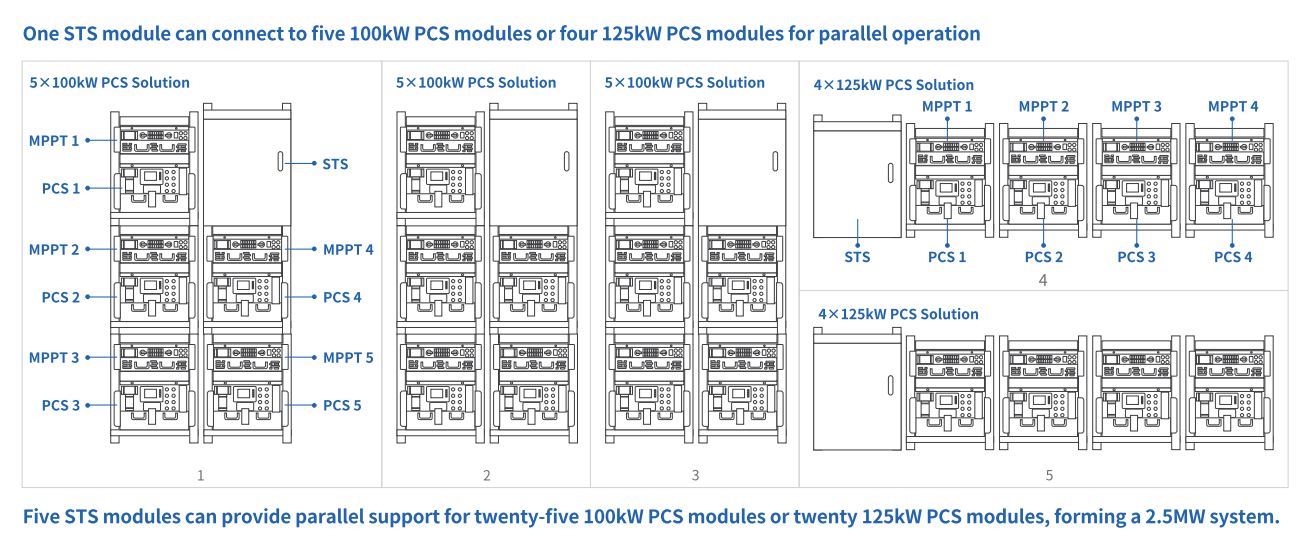
These per-rack numbers are the building block for anything bigger: one PCS can carry up to 16 racks in parallel, so a project's total energy capacity is really just the 257.23kWh per-rack figure multiplied by however many racks the PCS count allows. Anyone speccing a full cluster around this battery can review the broader large-scale battery energy storage system lineup to see how rack count, PCS rating, and total site capacity fit together.
+31610999937
[email protected]
De Werf 11, 2544 EH The Hague, The Nederland.
WhatsApp: +1 (917) 257 2995/Copyright © 2023 Uni Z International B.V. VAT: NL864303440B01 All Rights Reserved
Solar Energy Storage System Solutions and Products