Are solar panels reliable: Applications, Selection Criteria, and Practical Guidance
Nov 05,2026Are solar panel batteries worth it: Practical Applications, Selection, Performance, and
Oct 26,202612V Amp Hour Calculator: Convert Ah to Watt Hours and Estimate Runtime
Oct 23,2026Alternative to tesla powerwall: Applications, Selection Criteria, and Practical Guidance
Oct 16,2026How to Size a 2000 kWh Solar System: Panels, Inverters, and Battery Storage
Oct 10,2026Content
Ask an installer the direct question, are solar panels reliable, and you tend to get a direct answer. The modules themselves are usually the least troublesome part of a solar system: no moving parts, no fuel, nothing to top up. What actually disappoints people is usually something else in the chain, from a mismatched inverter to a connector that was crimped in a hurry on a wet afternoon.
We have supplied panels, inverters, batteries and complete kits to installers across Europe for years, and the pattern we see is consistent. Reliability is not a single product attribute. It is the result of honest sizing, decent hardware and a monitoring habit that catches small problems before they become expensive ones.
A module that hits its rated power on day one is not automatically reliable. Three things decide whether it still earns its keep in year twenty: how slowly its output declines, how well its materials survive ultraviolet light, thermal cycling and moisture, and how seriously the manufacturer stands behind it.
On the first point, most modern modules ship with a power tolerance of 0 to +5 W and a linear degradation curve of roughly 0.4% per year. A 25-year performance warranty guaranteeing around 87% of nameplate output at the end of that period is normal for a good panel today, and premium lines promise slightly more. On the second, glass-glass construction, well-sealed junction boxes and quality encapsulants do more for long-term reliability than a headline efficiency figure. On the third, a 12 to 15 year product warranty from a company with a real balance sheet matters as much as the numbers printed beside it.
Output falls when the sun goes in, but it does not stop. On a heavily overcast day a system might deliver 10 to 25% of its clear-sky output, because modern modules still convert diffuse light. Light rain rinses dust off the glass and can slightly improve yield. Heavy snow cover stops production until it slides off, though the angled surface and the module's own warmth usually clear it within hours rather than days.
Hail is the weather event worth taking seriously, and it is a certification question rather than a guess. Modules tested to IEC 61215 are subjected to impact testing, and products rated for higher hail classes exist for regions where that risk is real. Heat is the quieter issue. Panel output drops as cell temperature rises, typically by around 0.3 to 0.4% per degree above 25 °C, which is why roof clearance and airflow belong to reliability rather than to installation tidiness.
Field data and manufacturer curves broadly agree: a well-installed crystalline silicon array will still be producing 80 to 90% of its original output somewhere between year 25 and year 30. That is a long service life by any engineering standard. The catch is that a solar system is never one component, and the parts around the panel have their own clocks.
| Component | Typical service life | Most common weak point | What to verify before buying |
|---|---|---|---|
| PV module | 25-30 years | Micro-cracks, connector corrosion | Degradation rate and product warranty length |
| String inverter | 10-15 years | Fans, capacitors, DC isolator | Thermal design and local service network |
| Hybrid inverter | 10-15 years | Firmware issues, incorrect grid settings | Update policy and regional certification |
| LFP battery | 10-15 years or 6,000 cycles | Cell imbalance, sustained high temperature | Cycle rating at usable depth of discharge |
| Mounting and brackets | 20-25 years | Corrosion at fixings and roof penetrations | Coating specification, wind and snow load rating |
| Cable and connectors | 15-25 years | Poor crimping, UV damage, loose MC4 joints | Cable gauge and connector compatibility |
| Monitoring hardware | 5-10 years | Connectivity dropouts, retired portals | Logger type and platform track record |
Across the service cases our installation partners describe, failures cluster in a handful of predictable places, and very few of them sit inside the module itself.
A dependable array is designed rather than simply assembled, and the decisions that matter most happen long before anyone climbs onto the roof.
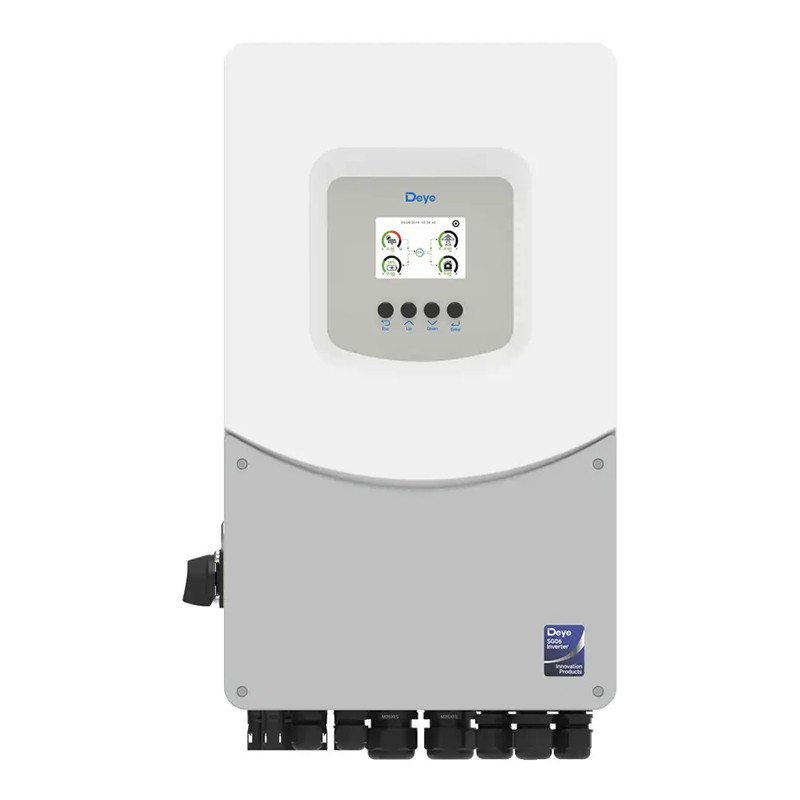
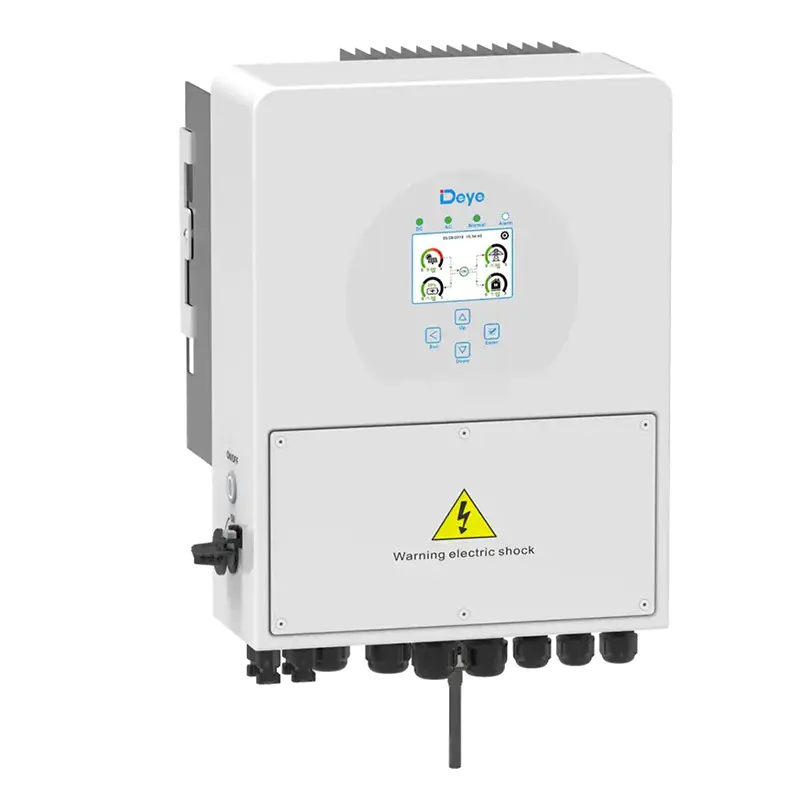
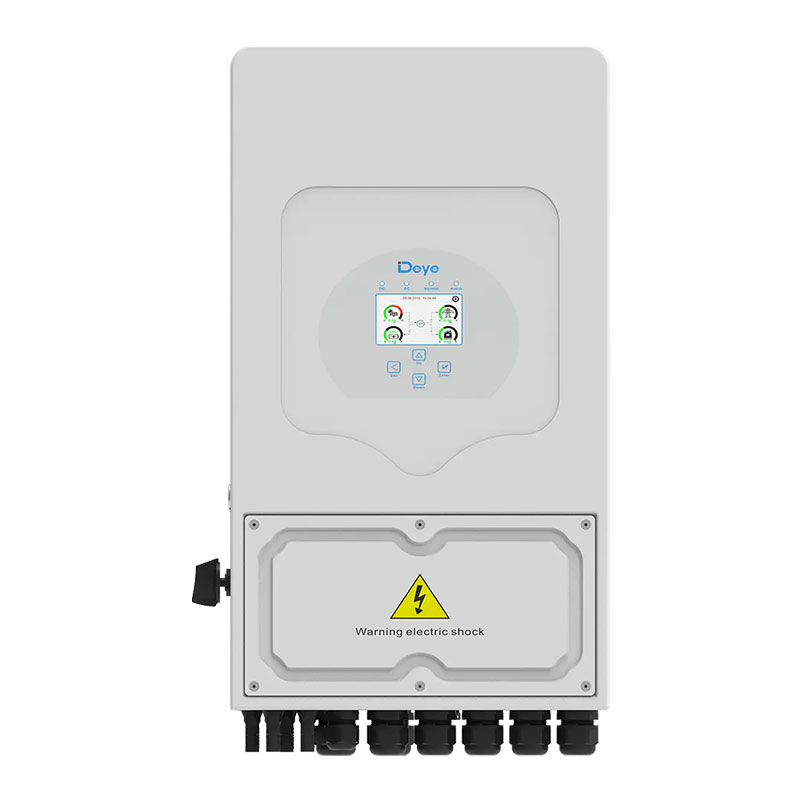
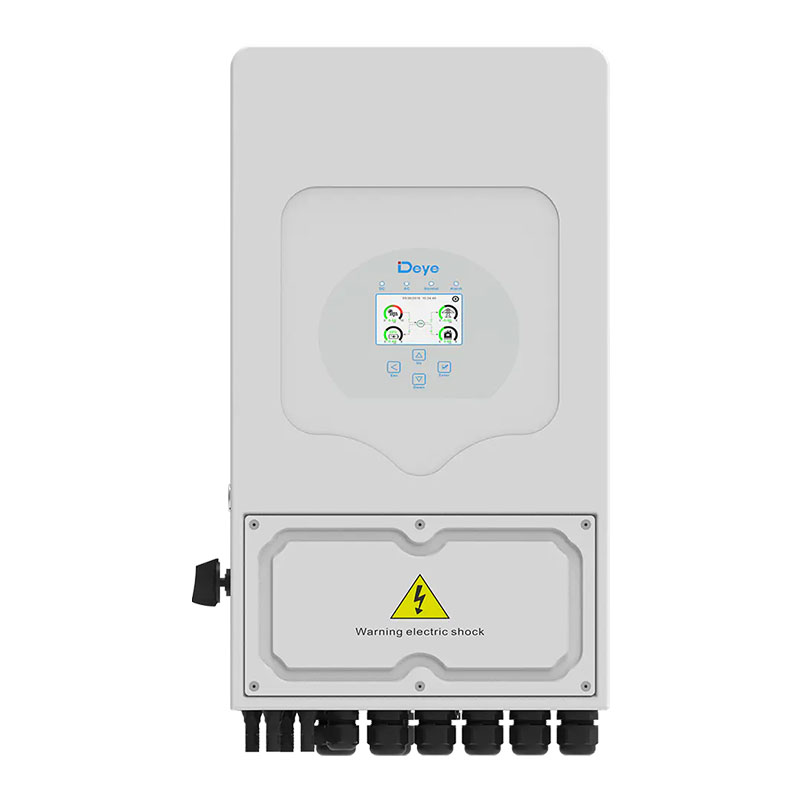
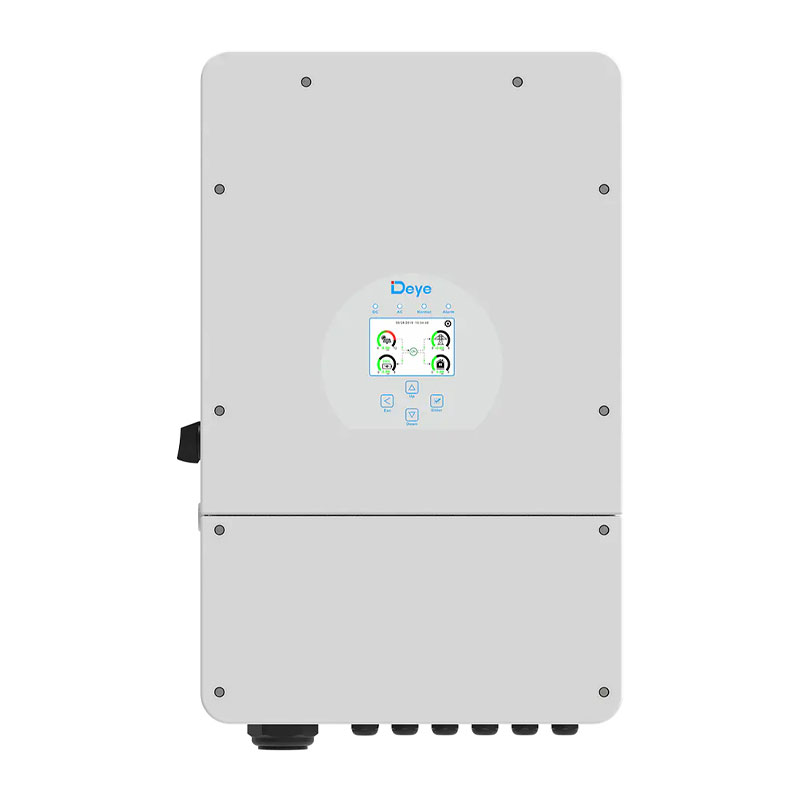
Deye 8 kW Single-Phase Hybrid Inverter with Three MPPTsThree MPPT trackers and 16 kW PV input make this 8 kW low-voltage hybrid inverter suited to complex roofs and large 48 V battery banks.View Product →
A hybrid unit with three MPPTs, such as the 8 kW single-phase models we stock, gives you far more freedom in string design than a single-tracker machine, which is exactly the kind of detail that quietly improves reliability on a complicated roof.
Reliability you cannot see is hard to trust. A data logger and an app turn a silent roof into a system you can check in ten seconds, and they surface the slow drift that no one would otherwise notice: a string running a few percent low, a battery charging more sluggishly than it used to, an inverter clipping for longer than it should.
Physical maintenance is light but not zero. An annual visual inspection of connectors, isolators and roof fixings, a clean when dust or pollen builds up, and a thermal scan every few years will catch most developing faults early. In our experience, owners who monitor regularly report fewer surprises, simply because they act on small anomalies instead of waiting for a failure.
For most buyers the practical question is not which single panel is best in a laboratory, but which combination will still be working in fifteen years. Three rules help. Buy modules from manufacturers with a long production history and a warranty that can actually be claimed where you live. Prefer inverter platforms with regional certification and a service network rather than an attractive price alone. And buy the system, not the pieces, so that responsibility for performance is not split between four suppliers.
That last point is worth dwelling on, because second-hand and misrepresented modules are a growing problem in some markets, and a bargain panel with no traceable history is the opposite of reliable. We wrote a short guide on verifying second-hand solar panels that covers the checks worth doing before money changes hands.
Longi Hi-MO 7 610 W N-Type TOPCon Bifacial ModuleA 610 W glass-glass bifacial module from LONGi's Hi-MO 7 series, backed by a 12-year product warranty and clear efficiency figures.View Product →
Modules such as the Longi Hi-MO 7 series are a good reference point for what a dependable panel looks like on paper: established cell technology, a clear linear degradation curve and a warranty backed by a manufacturer with volume behind it.
Are solar panels reliable? Yes, with the emphasis on the panels. A quality module is one of the most durable pieces of equipment on a building, and it will keep producing for decades with almost no attention. The reliability of the system as a whole depends on the engineering around it: correct sizing, sound connections, sensible placement and a monitoring habit that turns a vague hope into a measured fact.
If you are planning a system and want a second opinion on the combination, tell us your roof, your loads and your backup expectations, and we will suggest a configuration that holds up over time rather than only on the datasheet. You can start the conversation here, and we will come back with something practical.
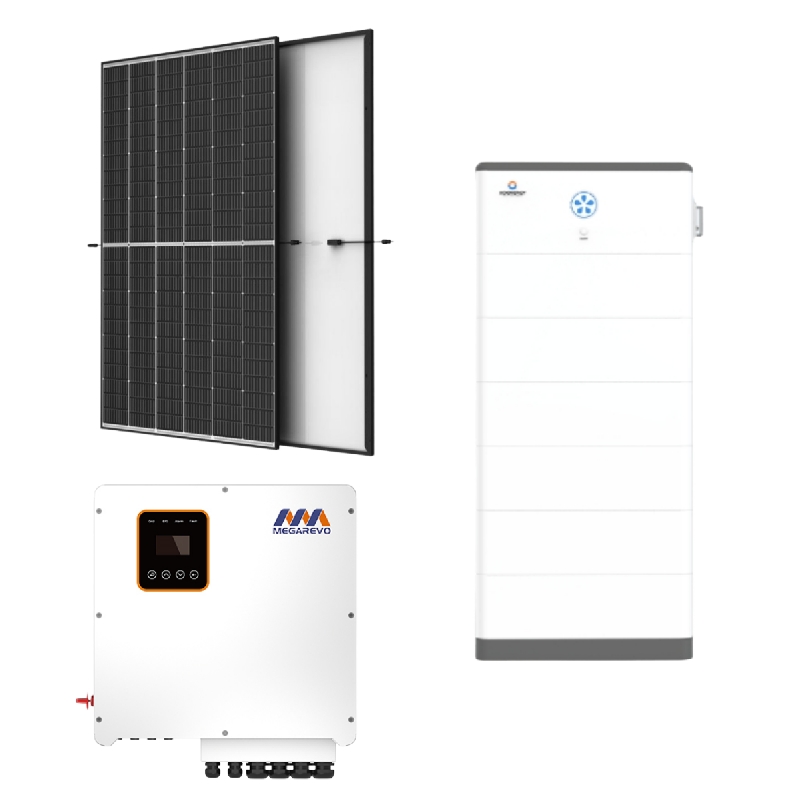
10 kW Photovoltaic Kit with 10 kWh Battery StorageA matched residential kit combining 24 × 425 W TW SOLAR modules, a 10 kW three-phase hybrid inverter and a 10 kWh high-voltage battery.View Product →
Many of our customers begin with a matched kit of this kind, then adjust modules, inverter and battery capacity to suit the site, which is usually the fastest route to a system that behaves predictably for the next twenty years.
←
No previous article
→
Are solar panel batteries worth it: Practical Applications, Selection, Performance, and
+31610999937
[email protected]
De Werf 11, 2544 EH The Hague, The Nederland.
WhatsApp: +852 65283075Copyright © 2023 Uni Z International B.V. VAT: NL864303440B01 All Rights Reserved
Solar Energy Storage System Solutions and Products