Pure Sinusoidal Wave Output: Why It Matters for Solar Inverters and Appliances
Aug 07,2026Solar Panels for EV Charging: System Setup, Savings & Panels Needed
Jul 23,2026314Ah Cells Explained: How Deye GE-F Series Reaches 8,000+ Cycles
Jul 14,2026Deye GE-F128/F240/F256 Series Outdoor Battery Cabinet: Small-Scale C&I ESS Guide
Jul 14,2026Sub-10ms STS Switching Explained: MS-MPPT400-2 vs MS-TS500-2
Jul 14,2026Content
An installer we work with recently investigated a service case that many solar companies know too well. A freezer was humming, the LED lighting in the same household was flickering, and after several weeks the compressor failed. The inverter behind the system was labelled "sine wave", but the waveform measured at its AC output was a stepped modified sine. That one specification, pure sinusoidal wave output, is the difference between a clean installation and an endless chain of appliance damage.
If you buy inverters for solar, battery storage or backup power, remember the conclusion first: pure sinusoidal wave output is the only type of AC that behaves like the grid you are replacing. Anything else introduces harmonics, heat and compatibility failures.
AC electricity from the grid is not arbitrary. It alternates at 50 or 60 Hz and, in a healthy grid, follows a sine function over time: a smooth rise to a positive peak, a fall through zero, a negative peak and back. This repeating curve is called a sine wave or sinusoidal wave.
An inverter converts DC power from solar panels or batteries into AC. The simplest method produces a stepped or square-wave approximation; the better method reconstructs the smooth sinusoidal curve using high-frequency switching and filtering. Inverter manufacturers express the result as total harmonic distortion (THD), the difference between the actual waveform and a perfect sine. A pure sine inverter typically keeps THD below 3% at rated load, while modified sine units can deliver 10% or more distortion.
Note that "pure sine wave" and "pure sinusoidal wave" are used interchangeably in datasheets and marketing. What matters is not the label but the measured THD and the real waveform. A standard multimeter shows the same RMS voltage on both outputs, so the difference cannot be detected with basic measurement tools.
Modified sine wave inverters are cheaper and still move power, but the way they move it creates problems. The voltage rises in steps instead of a smooth curve, so the instantaneous voltage jumps rather than flowing continuously. Motors and power supplies react to those jumps with harmonics, noise and heat.
| Aspect | Pure sine wave | Modified sine wave |
|---|---|---|
| Waveform shape | Smooth sinusoidal curve, similar to utility supply | Stepped staircase approximation of a sine |
| Total harmonic distortion | Typically below 3% at rated load | Often 10% or higher, depending on step count |
| Motor loads | Quiet operation, normal temperature | Audible hum, extra vibration, elevated heat |
| Electronics compatibility | Broad, matches grid behavior | Some switch-mode supplies and digital devices malfunction |
| Basic multimeter reading | Normal AC RMS voltage | Normal AC RMS voltage |
The price gap between the two technologies is small at the component level. The lifetime cost difference, in terms of appliance failures and service visits, is not small at all.
The weakest link in a solar system is often not the inverter itself but the loads connected to it. Appliances are designed to run on grid-quality AC; most tolerate a certain amount of distortion, but some pay a heavy price for it.
Fridges, freezers, well pumps, circulator pumps and fans all run on motors. A motor produces torque from a rotating magnetic field, and that field rotates most smoothly with a true sine wave. On modified sine, the field jumps step by step, producing torque ripple, mechanical humming, vibration and excess heat. In a refrigerator that runs around the clock, this heat accelerates thermal stress on the compressor and can noticeably reduce its service life.
Computers, TVs, phone chargers, LED drivers and many other appliances use switch-mode power supplies. Many of them run on modified sine, but some emit audible whine, some derate their output, and a few shut down completely. Devices that rely on zero-crossing of the sine wave, such as analogue clocks, timers and some smart-home modules, can lose accuracy. Audio equipment picks up mains hum. Medical and laboratory devices are commonly specified for pure sine input only.
Induction cooktops are the classic example. Their power stage looks for a clean input waveform, and on modified sine many models simply refuse to heat. Laser printers and microwave ovens can behave erratically, and equipment with active power-factor correction may trip. If the customer has one of these appliances, a modified sine inverter is not a budget compromise; it is a complete failure.
| Device or load | Pure sine wave | Modified sine wave |
|---|---|---|
| Refrigerator / freezer | Normal, quiet | Hum, hotter running, reduced compressor life |
| Induction cooktop | Works normally | Often refuses to start |
| Microwave oven | Normal | Reduced output, buzzing |
| Laser printer | Normal | Intermittent errors on some models |
| Audio equipment | Clean output | Mains hum and whine |
| CPAP / medical device | Manufacturer-recommended | May malfunction or alarm |
| Well pump / circulator | Normal | Vibration, overheating risk |
| Smart home dimmers / LED | Normal | Flicker or failure in some cases |
Harmonic currents do not contribute useful work; they convert into heat somewhere in the circuit. In motor loads, a modified sine waveform can increase total losses by roughly 10% to 20%, which shows up as higher operating temperature and louder fans.
This waste is a direct hit on battery runtime. For a 200 W freezer running 8 hours a night, a 15% efficiency penalty wastes about 0.24 kWh per night. On a 10 kWh battery that looks small, but over months of nightly discharge it accumulates, and the appliances themselves age faster. For installations where loads run continuously, the slightly higher initial cost of a pure sine unit pays for itself in energy and equipment lifespan.
Start with the output specification. Look for an explicit THD figure at rated load; 3% or below is the practical benchmark for grid-quality power. If the datasheet only claims "pure sine" without a harmonic figure, ask for the measured waveform.
Then check the surge or peak power rating. Motor loads draw 3 to 7 times their running current during startup, and compressors are the classic surprise for undersized inverters. A unit with documented surge capability handles refrigerators, pumps and air conditioners more safely.
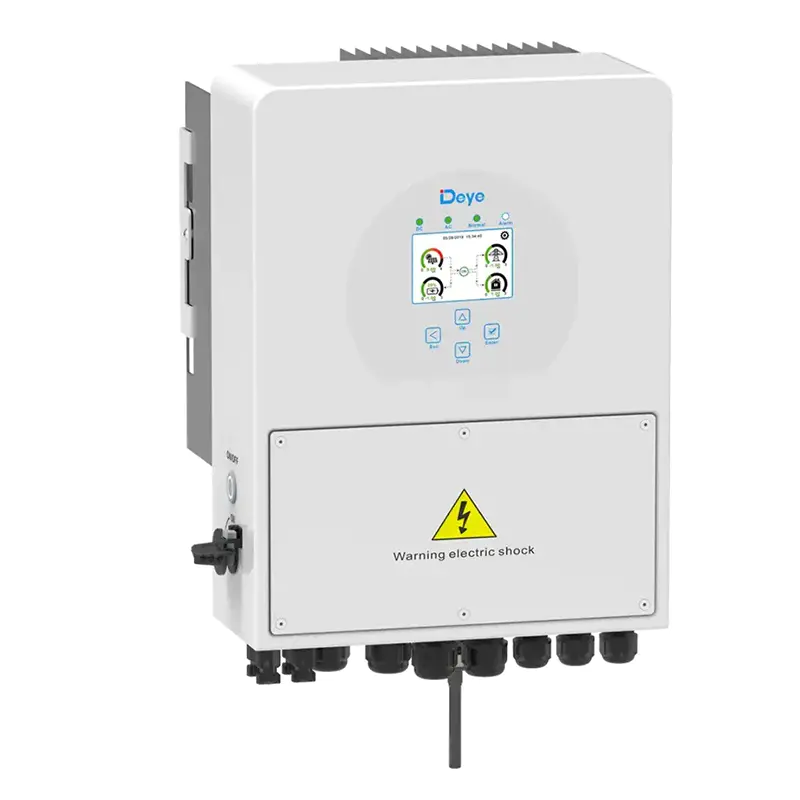
Third, confirm that the pure sine specification applies in every operating mode. Hybrid inverters often pass grid AC through when the grid is healthy and only generate their own waveform in off-grid or EPS mode. Read the backup-mode specifications carefully, and look for explicit pure sine output there too. Our wide selection of solar inverters includes models with documented pure sine output across operating modes.
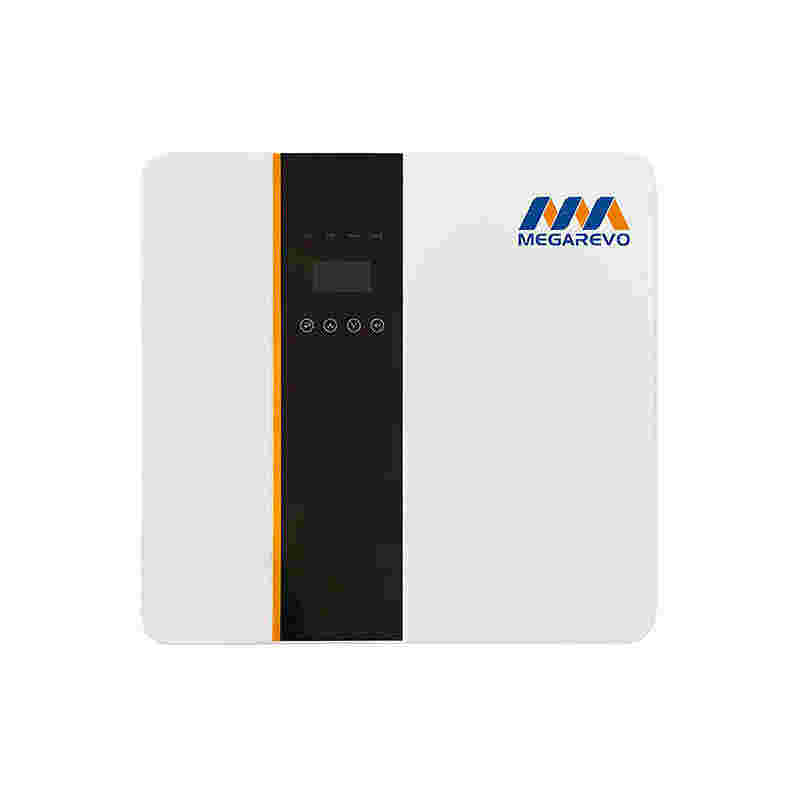
For smaller single-phase projects, a dedicated hybrid unit such as the 5 kW single-phase low-voltage hybrid inverter provides pure sinusoidal wave output in both grid-tied and EPS operation, with enough surge headroom for a refrigerator and a small pump.
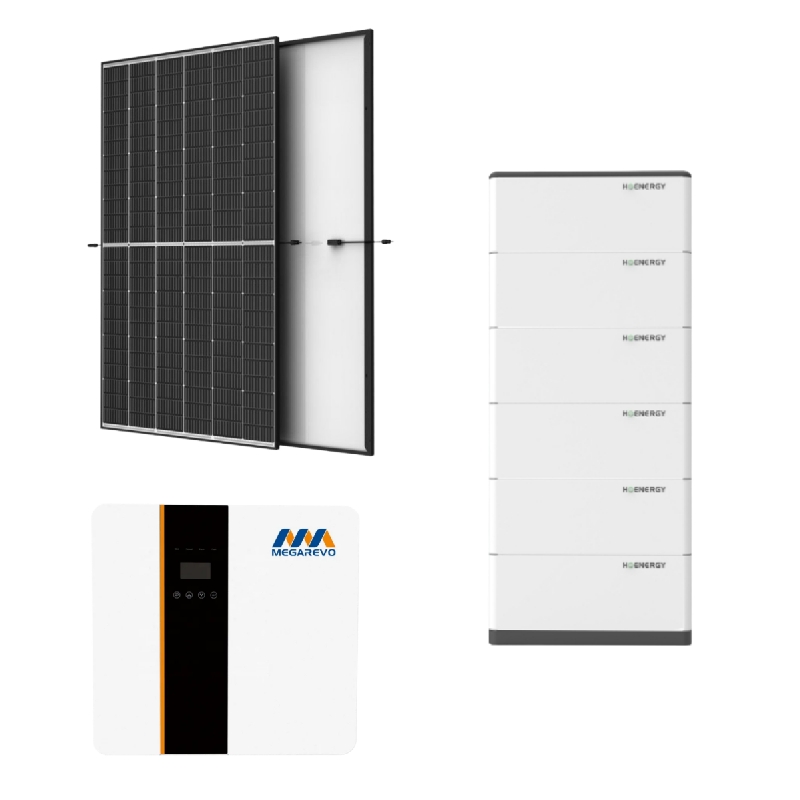
Megarevo 5KW Single Phase Low Voltage Hybrid Inverter Suppliers, Company - Uni ZUni Z International B.V. is China Megarevo 5KW Single Phase Low Voltage Hybrid Inverter Suppliers and Factory,L1 Series 3-6kW low-voltage...View Product →In a whole-home battery backup system, the inverter is the bridge between stored DC energy and household loads. When the grid disappears, the fridge, router, TV and boiler circulator all land on the inverter's AC output, and that output must behave like the grid. Pure sine is therefore an absolute requirement for residential photovoltaic energy storage systems. For a complete, tested package, a 5 kW photovoltaic kit with 10 kWh storage integrates panels, hybrid inverter and battery and delivers clean backup power as a single solution.
5KW Photovoltaic kit with 10KWh storage Suppliers, Company - Uni Z InternationalUni Z International B.V. is China 5KW Photovoltaic kit with 10KWh storage Suppliers and Factory,The 5KW photovoltaic kit with storage is ...View Product →
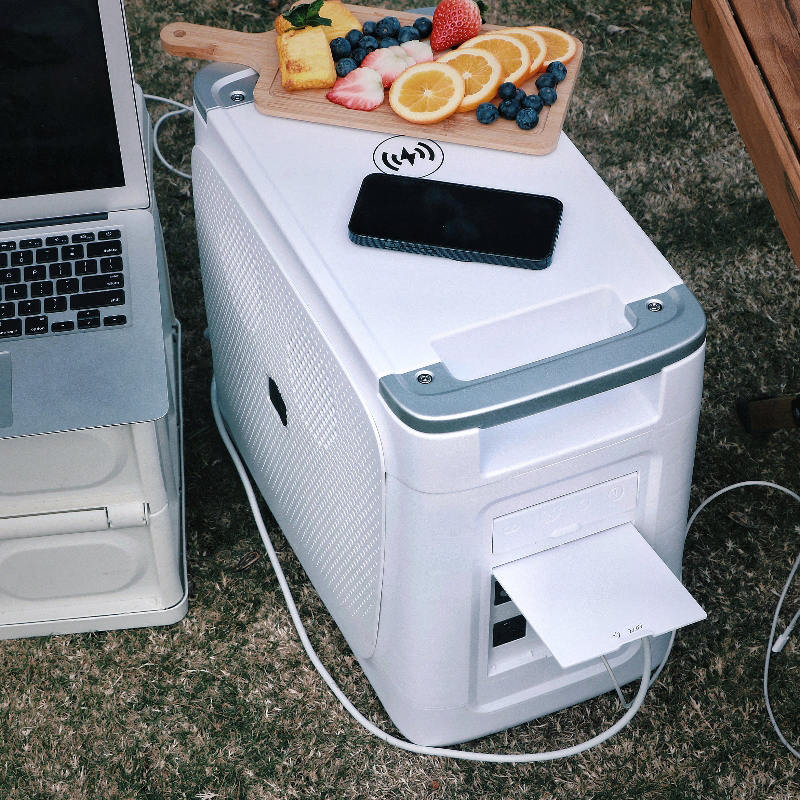
The same logic applies when power is taken away from the grid. Portable stations run laptops, CPAP machines, fridges in a van and pumps on a job site, and sensitive customers expect them to behave exactly like a wall socket. A 2000 W portable power station with a pure sine inverter covers these loads without hum or compatibility warnings; you plug in, and the equipment operates as if it were on the grid.
Alpha 2000 Portable Power Station 2000W / 2048Wh Suppliers, Company - Uni Z InteUni Z International B.V. is China Alpha 2000 Portable Power Station 2000W / 2048Wh Suppliers and Factory,The Most Reliable Backup Battery...View Product →
The pattern seen in thousands of installations is consistent: pure sinusoidal wave output is not a premium extra but the baseline for any system that feeds motors, electronics or both. Compare the small price difference against the value of the appliances it protects, the energy it saves and the service calls it prevents, and the selection becomes obvious.
+31610999937
[email protected]
De Werf 11, 2544 EH The Hague, The Nederland.
WhatsApp: +1 (917) 257 2995/Copyright © 2023 Uni Z International B.V. VAT: NL864303440B01 All Rights Reserved
Solar Energy Storage System Solutions and Products