6 Key Feature Upgrades in the Deye SG06 Series Hybrid Inverters
Sep 02,2026Deye SG06LP1 vs SG05LP1: Single-Phase Hybrid Inverter Comparison
Sep 02,2026How Does an Off-Grid Solar System Work? Components, Flow, and Sizing Explained
Aug 28,2026Current Solar Panel Efficiency: Real-World Module Ratings and Buying Guide
Aug 19,2026Solar Powered Electric Car Charger: Panel Sizing, Battery Storage, and Charger Choice
Aug 14,2026Content
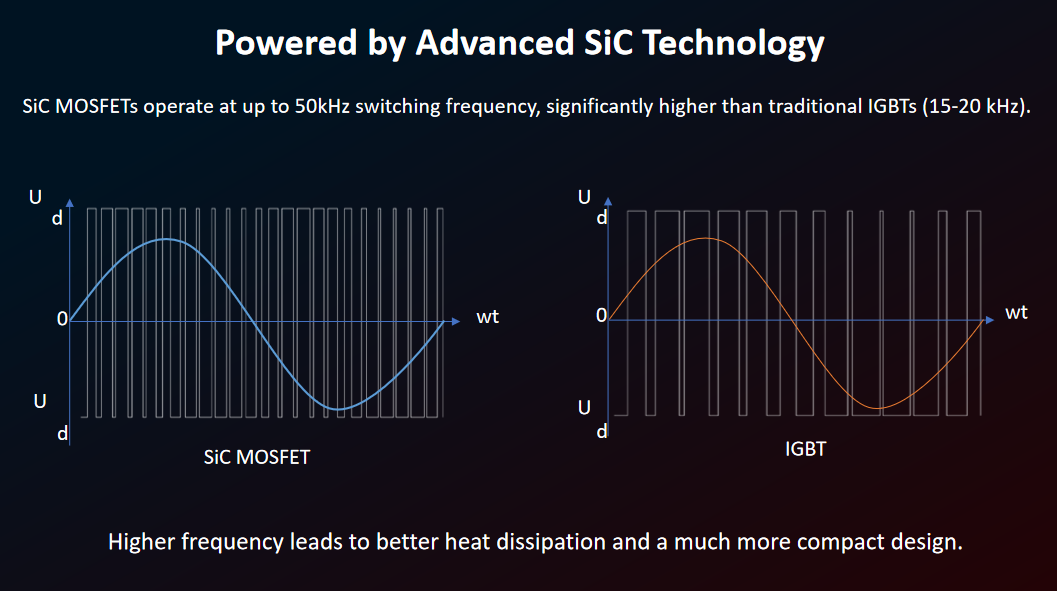
A single-phase hybrid inverter's size used to be dictated by how much heat its switching components could shed. Deye's SG06LP1 series changes that equation by replacing traditional IGBTs with silicon carbide (SiC) MOSFETs, which switch at up to 50kHz compared to the 15-20kHz typical of IGBT-based designs.
Higher switching frequency means the inverter's internal filtering components — inductors, capacitors — can shrink considerably while still shaping a clean output waveform. Less heat generated per cycle also reduces the size of the heatsink needed to keep the unit cool.

The practical result shows up directly on the spec sheet: single-phase low-voltage hybrid solar inverters built on this SiC platform achieve roughly 0.6% higher efficiency while cutting weight by as much as 42% on comparable power ratings.
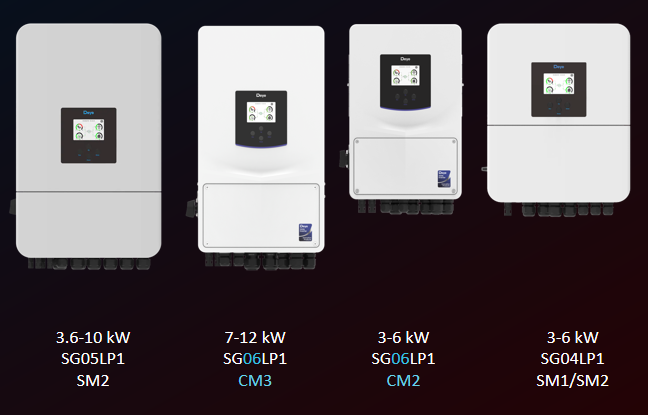
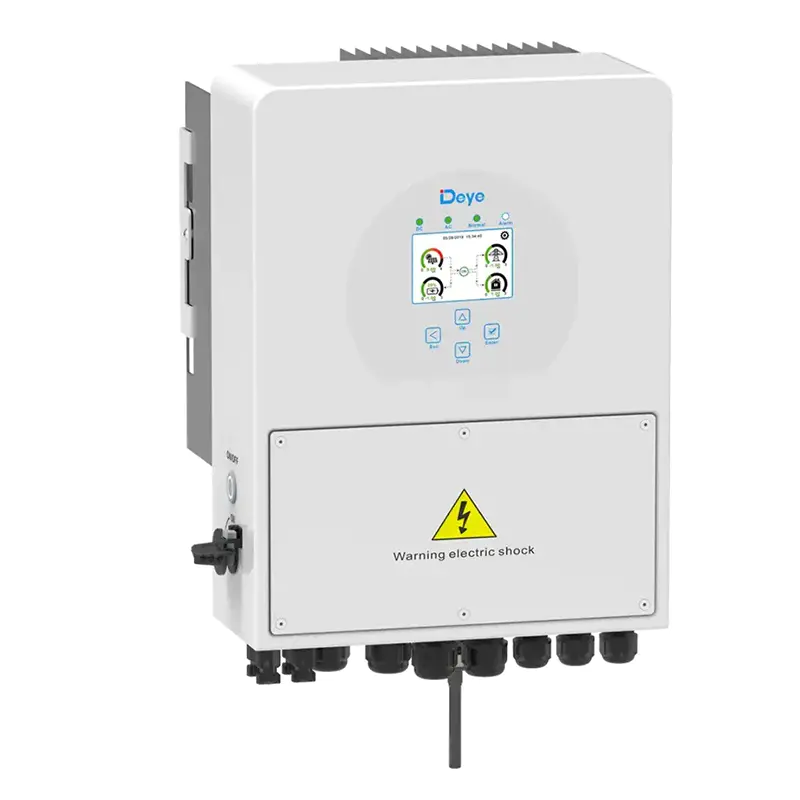
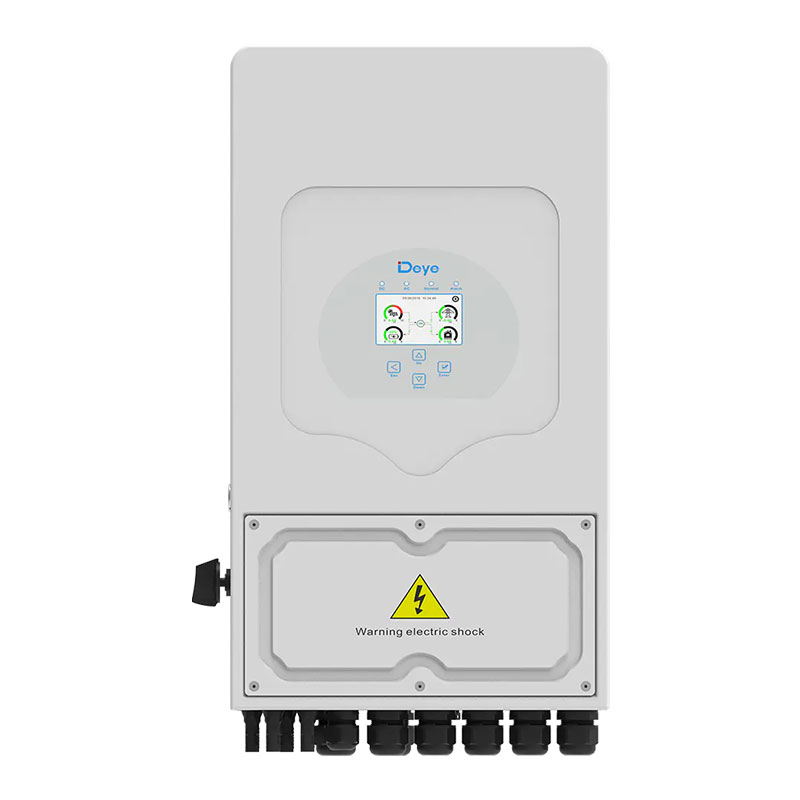
The SG06LP1 series is split into two power bands. The 3-6kW models (SG06LP1-CM2) target smaller residential installs, while the 7-12kW models (SG06LP1-CM3) cover larger homes or light commercial loads. Both sit alongside the earlier SG05LP1 series, which remains available across 3.6-10kW, and the SG04LP1 series at the 3-6kW entry tier.

The naming convention matters here. CM2 and CM3 designate the new SiC-based control boards, while SM1/SM2 marks the older IGBT platform still sold under the SG04LP1 and SG05LP1 badges. Knowing which suffix you're looking at tells you which generation of internal electronics you're actually buying.
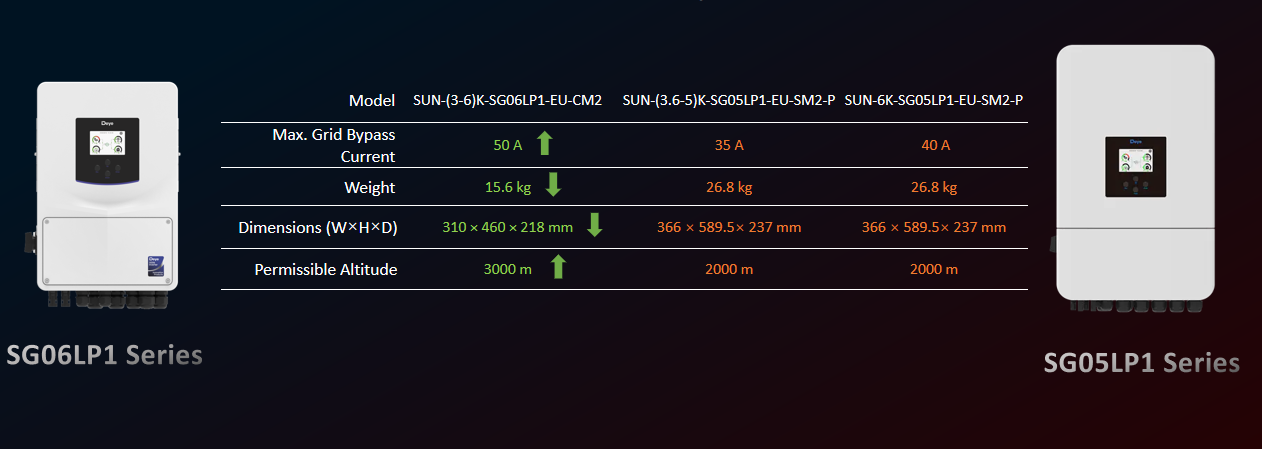
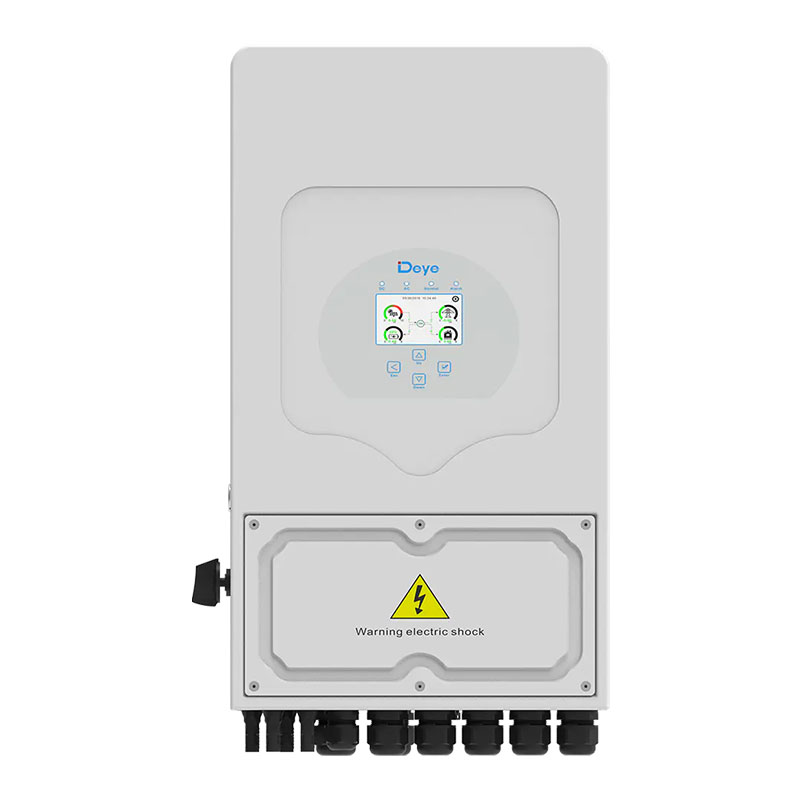
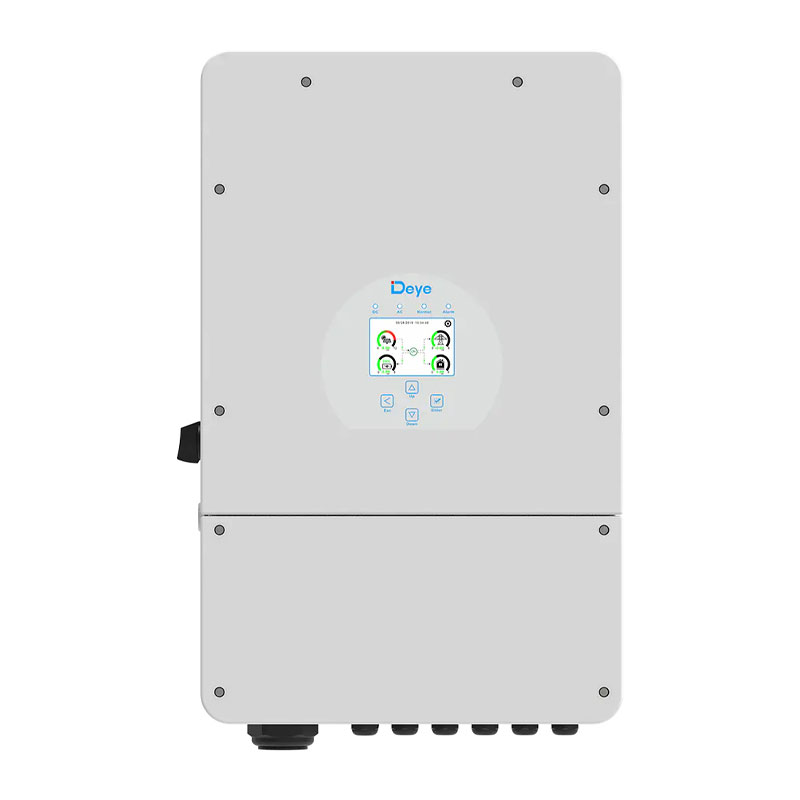
At the entry-level power tier, the generational gap is largest in physical footprint. The SUN-(3-6)K-SG06LP1-EU-CM2 weighs 15.6kg, against 26.8kg for both SG05LP1-SM2-P variants — a difference of over 11kg on units doing the same job.
Dimensions follow the same pattern: 310×460×218mm for the CM2 versus 366×589.5×237mm for the SM2-P models. That's a meaningfully smaller footprint for wall-mounted installs where cabinet or utility-room space is tight.

Two other numbers separate these models beyond size. Max grid bypass current on the CM2 reaches 50A, ahead of 35A (3.6-5K variant) and 40A (6K variant) on the SM2-P units — relevant for installations expecting higher grid pass-through loads. Permissible altitude also climbs from 2000m to 3000m, which matters for mountain or high-elevation sites where derating becomes a real design constraint.
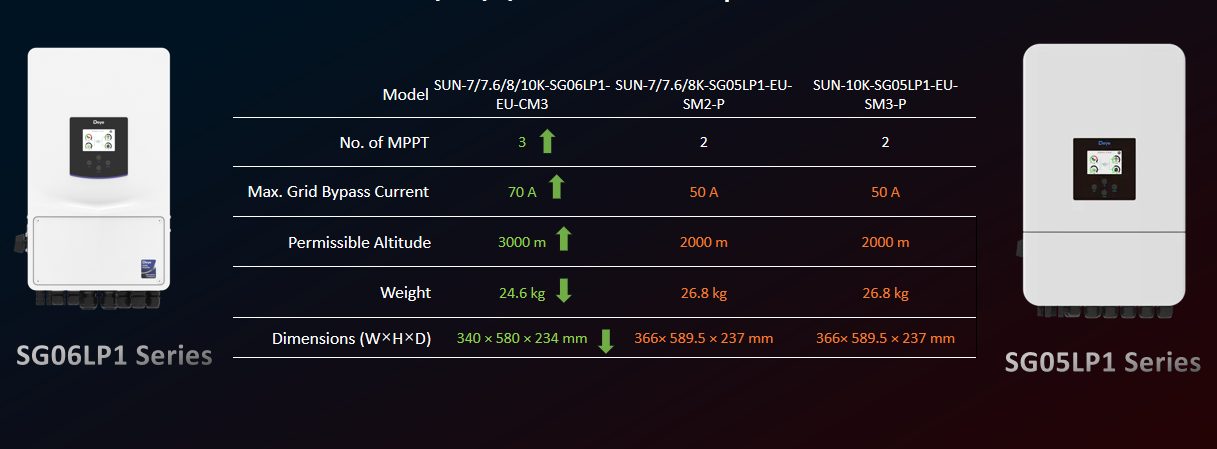
Scaling up to the 7-12kW tier, the SG06LP1-CM3 line adds a capability the SG05LP1 doesn't offer at this range: a third MPP tracker. Where the SUN-(7-8)K-SG05LP1-EU-SM2-P and SUN-10K-SG05LP1-EU-SM3-P both run 2 MPPTs, the CM3 runs 3, opening up more flexible string configurations for arrays split across multiple roof planes or orientations.

Bypass current sees the same generational jump seen at the lower tier: 70A on the CM3 versus 50A on both SG05LP1 variants. Weight drops from 26.8kg to 24.6kg, and the footprint shrinks from 366×589.5×237mm to 340×580×234mm. Permissible altitude again rises to 3000m, matching the improvement seen on the smaller-power CM2 models.
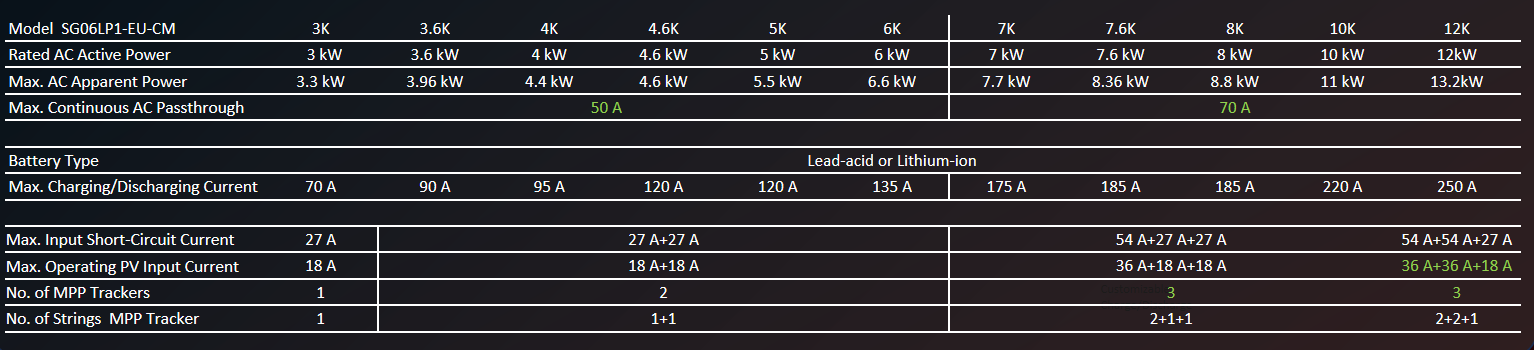
Beyond the headline comparisons, the complete SG06LP1-EU-CM lineup spans ten power ratings from 3K to 12K, all sharing the same lead-acid or lithium-ion battery compatibility. MPP tracker count scales with power: single-tracker configurations run through the 3-6K models, two trackers cover 3.6K-6K units, and three trackers appear starting at 7K.

Charging and discharging current climbs steadily across the range, from 70A on the 3K model up to 250A on the 12K flagship. Max operating PV input current follows a similar curve, reaching 36A+36A+18A on the 12K unit thanks to its three-tracker design. For anyone doing string layout planning, this table is the fastest way to check how MPP tracking capacity affects wiring options before committing to a specific model.
For most new installs, the SG06LP1 series is the more capable choice on paper: lighter, smaller, higher bypass current, and — at the 7kW-plus tier — an extra MPP tracker. The SG05LP1 series still makes sense where CM-series stock isn't yet available locally, or where an installer already has spare parts and commissioning familiarity with the SM platform.
Altitude is worth flagging separately. Projects above 2000m have no SG05LP1 option that meets that rating within this dataset — the SG06LP1's 3000m permissible altitude becomes a hard requirement rather than a nice-to-have. Beyond that, the decision often comes down to how much installation-space savings and bypass headroom are worth relative to component availability. Not every project needs the newest platform, but choosing the right-sized inverter for the load matters more than chasing the highest-rated model on the shelf.
←
6 Key Feature Upgrades in the Deye SG06 Series Hybrid Inverters
→
How Does an Off-Grid Solar System Work? Components, Flow, and Sizing Explained
+31610999937
[email protected]
De Werf 11, 2544 EH The Hague, The Nederland.
WhatsApp: +1 (917) 257 2995/Copyright © 2023 Uni Z International B.V. VAT: NL864303440B01 All Rights Reserved
Solar Energy Storage System Solutions and Products